2026 Best Piston Filler Buying Guide for Global Buyers?
Choosing the right Piston Filler is crucial for any manufacturing process. These machines are designed to accurately dispense liquids, pastes, and other products. In today's market, with so many options, it’s easy to feel overwhelmed. Selecting the best piston filler requires careful consideration.
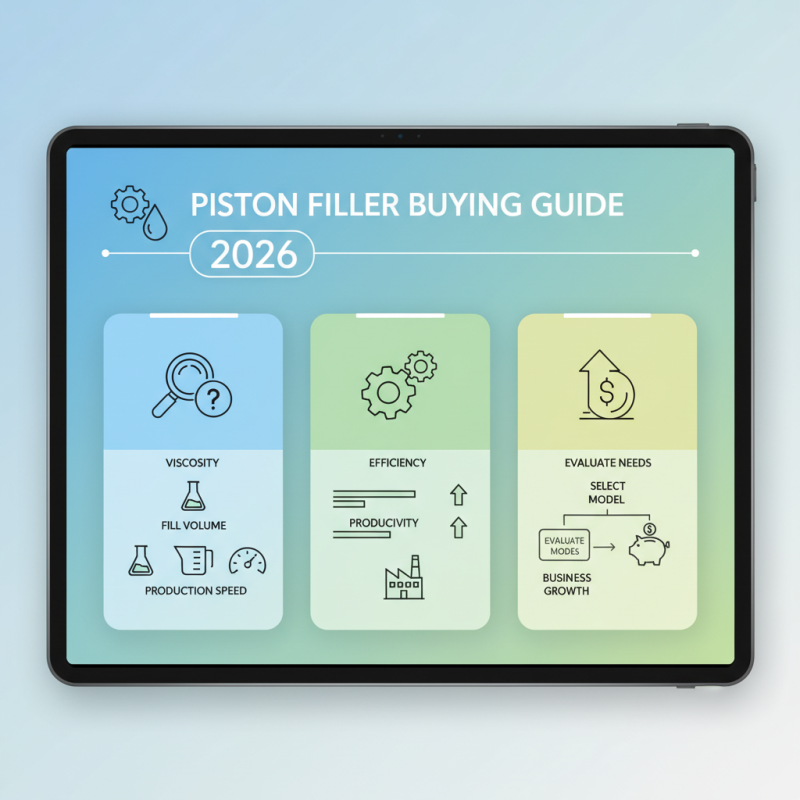
A high-quality piston filler can enhance efficiency and productivity. However, not all models are suited for every application. Buyers must evaluate their specific needs before making a choice. Factors such as viscosity, fill volume, and production speed must be considered. This complexity can create confusion, leading to potential mistakes in selection.
Investing in a piston filler is a significant decision. It’s essential to understand the features that matter most for your operations. The ideal model should not only meet your requirements but also adapt as your business grows. Reflecting on your needs will ensure a wise investment that pays off in the long run.
Understanding Piston Fillers: Definition and Functionality
Piston fillers are essential tools in various industries. They are used for dispensing liquids efficiently and accurately. A piston filler operates through a piston-driven mechanism. This method allows for precise filling of containers. It is particularly effective for viscous materials and liquids with varying densities.
According to a recent industry report, the global market for piston filling machines is projected to grow at a CAGR of 5.6% from 2021 to 2026. This growth indicates a rising demand across sectors such as food and beverage, pharmaceuticals, and cosmetics. Companies prefer piston fillers for their versatility. They can handle a wide range of products, from thick sauces to thin oils. However, not all piston fillers are created equal. Some models may struggle with accuracy over time.
Proper maintenance is critical. Regularly checking seals and calibrating the machine can help avoid discrepancies. Users must learn to recognize signs of wear. Inaccurate fills can lead to product losses and dissatisfied customers. Understanding the nuances of piston fillers is vital for making informed purchasing decisions.
Key Features to Consider When Buying a Piston Filler
When purchasing a piston filler, several key features deserve careful consideration. The filler’s construction plays a crucial role in its performance. Look for materials that ensure durability and hygiene. Stainless steel is often a top choice. It not only resists corrosion but is easy to clean. However, some models may use lower-quality materials, which can impact longevity.
Another vital aspect is the filling capacity. Determine your production needs beforehand. Piston fillers vary widely in capacity. Choosing one that aligns with your requirements can avoid frequent adjustments and downtime. Additionally, look at the adjustments available for different viscosities. This flexibility is essential for achieving precise fills, especially when dealing with various liquid types.
Moreover, check the filler’s compatibility with your existing equipment. Ensure it integrates seamlessly into your production line. User-friendly controls also enhance usability, reducing the learning curve for operators. However, some machines may have overly complex settings, leading to frustration. Investing time in understanding the operation manual can make a significant difference in efficiency. Don't overlook the importance of maintenance ease as well; frequent servicing is essential for optimal performance.
2026 Best Piston Filler Features Comparison
Types of Piston Fillers: Selecting the Right One for Your Needs
When choosing a piston filler, understanding the different types is crucial. Piston fillers vary in design and functionality, catering to diverse industries, from food and pharmaceuticals to cosmetics. The choice significantly affects production efficiency. A report from Smithers indicates that the global market for filling machines is projected to reach $3.6 billion by 2026. This growth underlines the importance of selecting the right technology for your workflow.
Different piston fillers serve different needs. For example, a standard piston filler is ideal for thick liquids, while a vacuum piston filler can handle more viscous materials. In contrast, a rotary piston filler offers high-speed filling for mass production. Such distinctions are essential for optimizing production lines and minimizing waste. Industry data reveals that about 35% of production downtime is attributed to equipment inefficiencies. By investing in the proper equipment, businesses can reduce these setbacks.
Evaluating your specific needs requires careful consideration. An inexperienced buyer may overlook critical factors such as material compatibility and maintenance needs. Additionally, while a more advanced machine may seem beneficial, it can lead to increased complexity and potential issues. Balancing performance with ease of use is vital. A mismatch can lead to operational challenges that undermine your productivity goals.
Comparative Analysis: Manual vs. Automatic Piston Fillers
When considering piston fillers, the choice between manual and automatic systems can be daunting. Manual piston fillers are often seen as economical options. They require more physical effort and time, making them suitable for small-scale operations. Operators can easily adjust the filling capacity, which provides flexibility for various products. However, the slower pace can be a limitation in high-demand situations.
On the other hand, automatic piston fillers offer efficiency and speed. They are ideal for larger production lines where consistency and volume are essential. The initial investment is higher, but long-term gains often outweigh costs. These machines reduce labor and minimize errors. It is crucial to analyze specific production needs before deciding.
Tip: Assess the production volume and product viscosity you are working with. An automatic filler excels with higher viscosity liquids, while manual may suffice for lighter substances. Choose wisely, as the wrong choice can lead to production inefficiencies.
Deciding on the right machine should involve careful consideration. Each type has its advantages and drawbacks. A better understanding of your production goals will facilitate a more informed choice. Sometimes, the allure of automation must be balanced against the simplicity and control of manual processes.
2026 Best Piston Filler Buying Guide for Global Buyers
| Feature | Manual Piston Fillers | Automatic Piston Fillers |
| Price Range | $200 - $1,000 | $1,500 - $10,000 |
| Filling Speed | 30 - 120 bottles/hour | 200 - 1,200 bottles/hour |
| Ease of Use | Moderate | Easy |
| Maintenance | Low | Moderate |
| Ideal for | Small production runs | Large scale production |
| Footprint | Compact | Larger |
| Precision | Good | High |
Top Brands and Models of Piston Fillers in 2026
In 2026, the piston filler market continues to evolve. Data indicates that the global demand for piston fillers has increased by over 15% in the last two years. Users seek precision and efficiency, particularly in food and beverage applications. Leading brands now focus on enhancing technology for better performance.
Top models in the market feature advanced design elements. Many fillers use stainless steel for durability and hygiene. The best models ensure accuracy within 1% of the targeted fill volume. However, complexity in design can lead to challenges in user operation. Companies need to invest in user training programs to avoid misuse.
Despite the growth of automated piston fillers, manual options still have demand. Some manufacturers report that about 25% of buyers prefer manual models for smaller batches. This highlights a gap in the market for simpler solutions. Balancing technology with ease of use remains a key challenge for brands. Overall, the sector requires continual innovation to meet diverse buyer needs effectively.