

Request a free quote Phone Icon
die cutting materials

Blog

7 Tips for Buying Mild Steel Pipe?

Buying a Mild Steel Pipe can seem straightforward, yet small specification errors may create expensive problems later. A pipe may look sound under warehouse lights, while its wall thickness differs from the drawing. The wrong grade can also affect welding, pressure performance, and service life. A practical buying decision should connect the project purpose with measurable requirements, not just the lowest quotation.

This guide presents seven useful tips for choosing with greater confidence. It covers outside diameter, wall thickness, steel grade, length, surface condition, applicable standards, and supplier reliability. Check whether the pipe is intended for structural frames, water lines, fabrication, or another application. Each use demands different performance. Ask for test certificates, clear tolerances, and traceable batch information. Inspect several pieces for dents, uneven ends, heavy scale, or visible cracks. A simple measuring tape helps, but calipers and ultrasonic testing provide stronger evidence when accuracy matters.

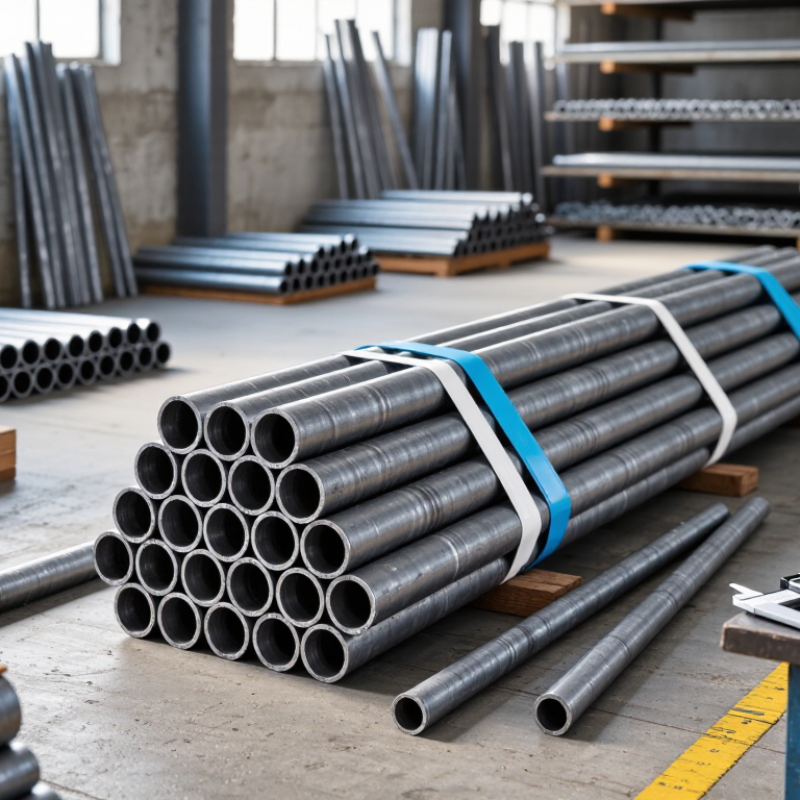
Do not ignore delivery details. Bundling, protective wrapping, and storage conditions can influence the pipe’s final condition. A low price may hide extra cutting, rejection, or transport costs. It may not be cheaper. I have seen purchasing teams focus on diameter while overlooking coating needs and welding compatibility. That mistake is easy to repeat. Review the supplier’s technical responses carefully, compare like-for-like quotations, and record every assumption before approval. Some projects also need an engineer’s confirmation, especially where loads, pressure, or safety-critical connections are involved. The best purchase is not merely affordable; it is documented, suitable, and dependable in actual service.
7 Tips for Buying Mild Steel Pipe?

Define Mild Steel Pipe Grades and Common Applications

Mild steel pipe is low-carbon steel, usually valued for weldability, formability, and reasonable cost. Its carbon content is commonly below 0.25%, although exact limits depend on the specification. Grade selection should begin with pressure, temperature, corrosion exposure, and connection method. Do not choose by diameter alone.

Common grades include ASTM A53 Grade B for general water, air, structural, and low-pressure service. ASTM A106 Grade B suits seamless pipe exposed to higher temperatures. Carbon steel line-pipe grades, such as API 5L grades, are more appropriate for controlled pipeline systems. The grade is not the same as the schedule. Schedule indicates wall thickness, while grade describes mechanical and chemical requirements. This distinction is often missed.

Global demand gives this material practical context. The World Steel Association reported 1,888.2 million tonnes of crude steel production in 2023, showing the scale of the supply chain. The International Energy Agency’s World Energy Outlook 2024 also identifies continuing investment in electricity, gas, and industrial infrastructure. These sectors commonly use steel pipe for water circulation, fire protection, compressed air, scaffolding, and non-corrosive process lines. Check mill certificates, hydrostatic test results, outside diameter, wall thickness, and coating details before buying. A pipe can look perfectly clean and still have unsuitable chemistry. I have seen this mistake delay installation. Soil moisture, chloride exposure, and stagnant water may require lining, galvanizing, or a different alloy. Evaluate the actual service environment, not only the purchase price.

Match Pipe Dimensions, Wall Thickness, and Pressure Requirements

7 Tips for Buying Mild Steel Pipe

Match the pipe’s outside diameter, inside diameter, and wall thickness to the actual installation. A drawing may show nominal size, but nominal size is not the measured diameter. Check the supplier’s dimensional tolerance before ordering. Measure the connection space, flange opening, and available clearance on site. Small errors can create expensive fitting problems.

Wall thickness controls strength, weight, and usable flow area. Compare the required pressure with the pipe’s rated working pressure, temperature, fluid type, and operating cycle. Ask a qualified engineer to verify the calculation, especially for steam, compressed air, or buried service. Do not rely on pressure rating alone. Corrosion allowance matters. Welding also reduces practical thickness in some applications. I have seen buyers choose a heavier wall without checking internal flow, then face unnecessary pumping costs. Review the material certificate, manufacturing standard, test results, and traceability records. Confirm whether the pipe is seamless or welded, because that detail can affect inspection and service decisions. Check length and end preparation too. It sounds minor. It is not. Request samples or independent inspection when tolerances are critical, and record every requirement before purchase.

Check Surface Quality, Manufacturing Standards, and Certifications

7 Tips for Buying Mild Steel Pipe

Buying mild steel pipe requires more than comparing price and diameter. Start by examining the surface under clear light. Look for deep scratches, open seams, heavy rust, peeling scale, or uneven coating. Light oxidation may be removable, but deep pitting can reduce service life. Check that pipe ends are cut cleanly and remain round. Measure wall thickness at several points, because one reading can be misleading.

Ask how the pipe was manufactured. Confirm whether it is seamless, welded, hot-rolled, or cold-formed, and match that process to your application. Request the applicable manufacturing standard, steel grade, outside diameter, wall thickness, and length tolerance. Heat numbers should connect the material to production records. Do not accept vague claims such as “industrial quality.” Written details matter.

Certifications deserve careful checking. Review the mill test certificate for chemical composition, mechanical properties, heat treatment, and test results. The document should identify the producer, batch, standard, and inspection date. A certificate can look convincing and still contain missing information. I have seen buyers overlook mismatched heat numbers. That mistake is costly. Ask for independent inspection when pressure, structural loading, or corrosion exposure is significant. Keep samples, photographs, and measurements in your purchasing file. Small records help resolve large disputes.

7 Tips for Buying Mild Steel Pipe? - Check Surface Quality, Manufacturing Standards, and Certifications

No. Buying Tip What to Check Relevant Standard or Document Practical Acceptance Guidance
1 Inspect Surface Quality Look for cracks, laps, seams, deep pits, excessive rust, dents, sharp edges, and visible weld irregularities. Check both the outside and inside surfaces where accessible. The specified product standard and purchaser’s surface-finish requirements. Reject or investigate defects that may reduce wall thickness, interfere with welding, or compromise pressure-tight service. Light, removable surface oxidation is generally different from deep corrosion.
2 Confirm the Correct Grade Verify carbon, manganese, phosphorus, sulfur, and mechanical-property requirements against the purchase specification. Do not select pipe by appearance alone. ASTM A53/A53M for general mechanical and pressure applications; ASTM A106/A106M for seamless carbon-steel pipe for high-temperature service; EN 10255 for steel tubes suitable for screwing or welding. The grade, delivery condition, nominal size, schedule or wall thickness, and intended service should match the project design and applicable code.
3 Verify Dimensions and Tolerances Measure outside diameter, wall thickness, length, ovality, straightness, end squareness, and thread dimensions when threaded pipe is specified. Applicable dimensional requirements in ASTM, EN, or ISO product standards; ISO 4200 provides dimensions and masses per unit length for welded and seamless steel tubes. Use calibrated instruments and sample measurements from each production lot. Confirm that the actual wall thickness is adequate for the required design pressure and corrosion allowance.
4 Identify the Manufacturing Process Determine whether the pipe is seamless, electric-resistance welded, or another permitted welded construction. Review weld placement, forming quality, and heat-treatment requirements. ASTM A53/A53M covers seamless and welded pipe; ASTM A106/A106M covers seamless carbon-steel pipe; EN 10219 covers cold-formed welded structural hollow sections. Choose the process according to pressure, temperature, structural loading, forming, and welding requirements. A seamless pipe is not automatically the correct choice for every application.
5 Request Test Reports Ask for heat numbers, chemical analysis, tensile and yield results, elongation, hydrostatic or approved nondestructive test results, and dimensional inspection records. EN 10204 Type 3.1 inspection certificate provides specific inspection results for the supplied product, when required by the order. Match the heat number on the certificate with the marking or bundle identification on the pipe. Check that test results meet the ordered grade and standard.
6 Check Certifications and Traceability Confirm the supplier can provide a valid quality-management certificate, product conformity documentation, heat traceability, and records required by the project. ISO 9001 relates to a quality-management system; EN 10204 defines inspection-document types. These documents do not replace compliance with the pipe product standard. Verify certificate scope, validity, issuing body, product coverage, and consistency between certificates, markings, packing lists, and purchase-order requirements.
7 Evaluate Corrosion Protection and Delivery Review bare, painted, galvanized, or coated condition; inspect bevels and end protectors; check packaging, storage exposure, quantity, and identification at delivery. ASTM A123/A123M applies to zinc coatings on iron and steel products; project coating specifications may impose additional requirements. Select protection based on moisture, soil, chemicals, temperature, and service environment. Record delivery damage and quarantine pipes with missing or conflicting traceability.

Note: The applicable standard, grade, dimensions, inspection level, and certification requirements should always be stated in the purchase specification and confirmed against the intended service.

Compare Suppliers, Prices, Delivery Terms, and Customization Options

Buying mild steel pipe requires more than checking a low price.

Tip 1: Compare suppliers by mill certificates, inspection records, and response speed. I once received a cheaper quotation with unclear testing details, which created extra checking work later. Reliable suppliers should state grade, outside diameter, wall thickness, length tolerance, and surface condition clearly.

Tip 2: Request quotations using identical specifications. Otherwise, the cheapest offer may simply exclude important items.

Tip 3: Separate the pipe price from freight, cutting, packing, taxes, and inspection fees. A detailed cost sheet makes hidden expenses easier to spot.

Tip 4: Compare delivery terms carefully. Ask whether the quoted date means production completion, port departure, or arrival at your facility. For a project with tight installation dates, a seven-day difference matters.

Tip 5: Confirm stock before paying a deposit. “Available” can mean available raw material, not finished pipe.

Tip 6: Discuss customization in practical detail. Suppliers may offer fixed lengths, beveling, threading, painting, bundling, or special markings, but each option can change cost and lead time. Ask for a sample drawing or packing photo.

Tip 7: Check replacement and claim procedures before ordering. Minor dimensional variation may be acceptable, yet serious defects need documented handling. I would also keep one written comparison table; memory is unreliable, especially when several quotations look almost identical.

Inspect Samples and Confirm Quality Before Placing an Order

7 Tips for Buying Mild Steel Pipe

Inspect Samples and Confirm Quality Before Placing an Order

A sample inspection can reveal problems that product photos never show. Check the pipe surface for deep scratches, rust patches, dents, and uneven welds. The cut edge should look clean, not crushed or badly distorted. Measure the outside diameter, wall thickness, and length with calibrated tools. Small differences may affect fitting and structural performance.

Tip 1: Request a sample from the actual production batch. A perfect showroom sample may not represent the shipment. Tip 2: Compare measurements with the stated tolerance. Mild steel pipe can vary slightly, but unexplained differences deserve attention. Tip 3: Ask for a material test report showing grade, chemical composition, yield strength, and tensile strength. Check that the report matches the sample markings and order documents.

Look inside the pipe, too. Internal scale, heavy oil, or trapped moisture can create handling and coating problems. A simple flashlight inspection helps. For welded pipe, examine the seam along its full length. It should appear continuous and reasonably uniform. I have seen buyers focus on price and overlook packaging damage, which later caused avoidable rejection. That judgment can be improved. Photograph each sample, record measurements, and confirm acceptance criteria in writing before ordering. Suppliers should also explain the inspection method, packing details, and replacement process for nonconforming material. Credible documentation matters as much as a polished sample.