



Awd Electric Cars use power at all four wheels, often through separate electric motors driving the front and rear axles. This layout can help distribute torque quickly when a road is wet, snowy, or uneven. Some models use different hardware, so “AWD” does not describe one standard design. The details matter.
The market is growing rapidly. The International Energy Agency’s Global EV Outlook 2025 reports that electric car sales exceeded 17 million worldwide in 2024, representing more than 20% of new car sales. That figure covers electric cars broadly, not AWD models alone. It shows why understanding drivetrain choices matters as more drivers compare electric vehicles. An AWD version may offer added traction, but it can also weigh more or use more energy than a comparable two-wheel-drive model. Actual efficiency depends on the vehicle, tires, temperature, and driving conditions.
Not a magic shield. AWD can help a car move off on slippery ground, but it cannot guarantee grip or replace careful braking. The U.S. Department of Energy’s Alternative Fuels Data Center explains that electric vehicles can use electric motors to drive their wheels, while vehicle designs vary. Buyers should compare range, efficiency, tire specifications, and how the system behaves in everyday conditions. A model’s range estimate is useful, but cold weather and fast highway driving can reduce real-world distance. The badge is only a starting point. Understanding the hardware—and its limits—makes the choice clearer.
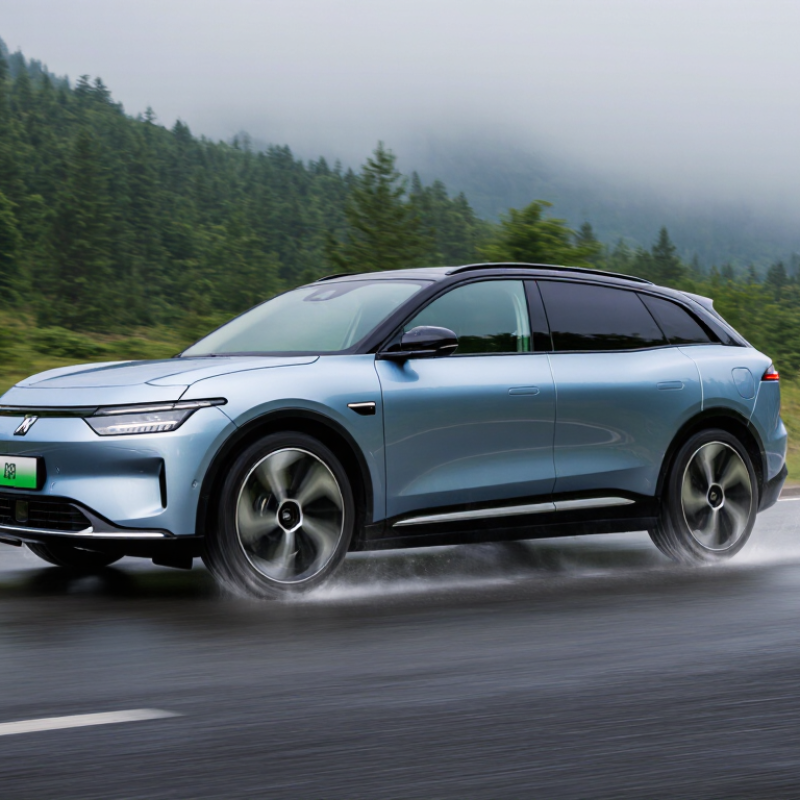
In an electric vehicle, AWD means the system can send power to all four wheels. Many AWD electric cars use one motor for each axle, rather than a traditional driveshaft linking the front and rear wheels. A control system adjusts motor output using information such as wheel speed and accelerator input. On a slick driveway, it can direct more power toward wheels with better grip. That distinction matters. AWD does not mean each wheel always receives equal power, or that the car can overcome every slippery surface.
The IEA’s Global EV Outlook 2024 reports that nearly 14 million electric cars were sold worldwide in 2023, around 18% of new car sales. As electric vehicles grow more common, understanding AWD helps shoppers compare how power reaches the road. Separate motors can respond quickly, but AWD systems may add weight and use more energy than simpler layouts. The real-world difference depends on the vehicle, tires, weather, and driving style. Not magic. AWD can help a car accelerate on loose or wet roads, but it does not shorten braking distance or create extra tire grip. That part is easy to overlook.
| Topic | How It Works in an AWD Electric Car | What It Means for the Driver |
|---|---|---|
| Meaning of AWD | All-wheel drive (AWD) means that the vehicle can deliver driving force to all four wheels. In an electric vehicle, the system is usually controlled electronically. | Power can be sent to the front wheels, rear wheels, or both axles as driving conditions and system design allow. |
| Typical motor layout | Many AWD electric cars use at least two electric motors, commonly with one motor driving the front axle and another driving the rear axle. | Separate axle motors can provide all-wheel drive without a conventional mechanical driveshaft running between the axles. |
| Power distribution | Control software can adjust the output of the motors. The exact distribution strategy varies by vehicle and may change with acceleration, traction, or selected drive settings. | AWD does not necessarily mean that each axle receives an equal amount of power at all times. |
| Traction on slippery roads | If one axle has limited grip, the vehicle may be able to use the other driven axle to help maintain forward motion. | AWD can help with acceleration on slippery surfaces, but it cannot guarantee grip or prevent skidding. |
| Acceleration | Motors on both axles can contribute driving force, subject to the vehicle’s power limits and available tire grip. | Some AWD EVs accelerate faster than comparable two-wheel-drive versions, but performance depends on the vehicle’s design. |
| Energy use and range | An additional motor and AWD operating strategy can increase energy consumption compared with an otherwise similar two-wheel-drive configuration. | Driving style, temperature, speed, tires, terrain, and vehicle design also affect energy use and range. |
| AWD versus 4WD | AWD generally describes a system intended to manage power to all wheels during everyday driving. Four-wheel drive (4WD) often refers to systems designed for more demanding off-road use, although terminology varies. | AWD alone does not establish a vehicle’s off-road capability; ground clearance, tires, suspension, and control systems also matter. |
| Braking and handling | AWD controls driving force, not the vehicle’s basic braking capability. Brakes and tires remain essential for slowing down and maintaining control. | AWD is not a substitute for safe speeds, suitable tires, or careful driving in poor conditions. |
| What to check when comparing | Compare the number and placement of motors, official energy-use and range figures, tire specifications, and available traction or drive modes. | These details provide a clearer picture of how an AWD EV may suit a driver’s climate, routes, and driving needs. |
In short: AWD in an electric car means the vehicle can drive all four wheels, often using separately controlled motors on the front and rear axles. The exact benefits and energy use vary by vehicle and conditions.