


Request a free quote Phone Icon
die cutting materials

Blog

What Are the Best Heavy Duty Pallet Racks in 2026?

In 2026, the best Heavy-Duty Pallet Racks are not necessarily the tallest or thickest systems available. They are the racks that safely fit a facility’s loads, equipment, and daily workflow. A pallet of dense materials puts different demands on a beam than a lighter, evenly stacked load. That detail matters. So do aisle width, clear height, forklift turning space, and how often inventory moves.

This guide compares common rack types and the practical trade-offs behind them. Selective racks provide direct access to each pallet, while drive-in and push-back designs can increase storage density. But higher density may slow picking or require changes to forklift procedures. Frame capacity, beam ratings, anchoring, and floor conditions also deserve careful review. Use current manufacturer load charts and have qualified professionals verify designs for the actual site. Posted capacities are not a substitute for checking the complete rack configuration.

There is no universal winner, despite how product lists sometimes make it sound. The right choice depends on pallet dimensions, load weights, turnover, expansion plans, and local operating conditions. A frequent planning mistake is focusing on purchase price while overlooking installation, inspection, and future reconfiguration. That can become expensive. This overview highlights what to compare, which questions to ask suppliers, and where a lower-cost option may bring compromises. The goal is a clear, evidence-led shortlist—not a promise that one rack system suits every warehouse.
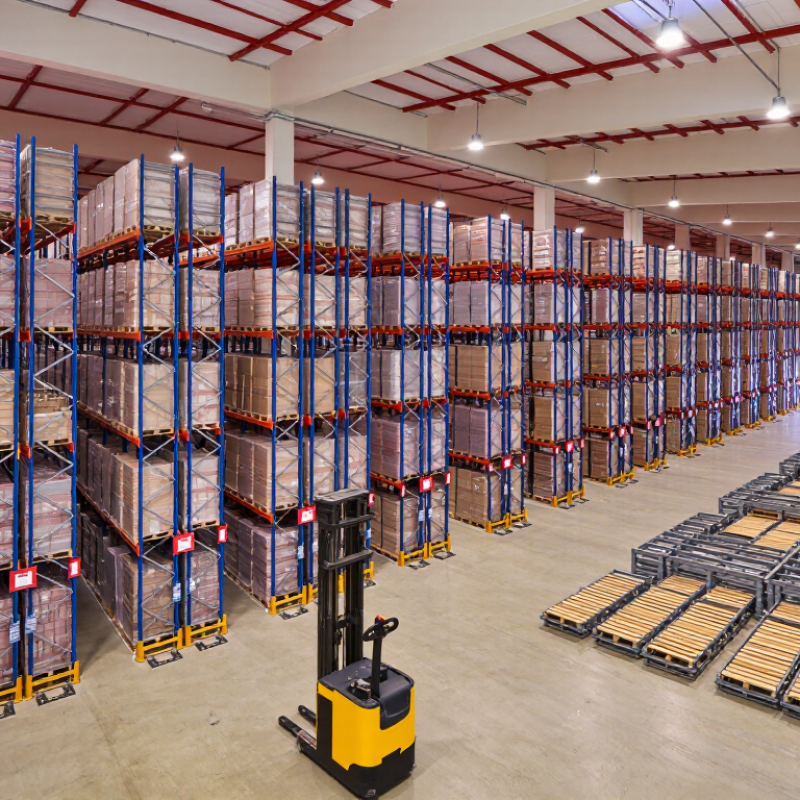
What Are the Best Heavy Duty Pallet Racks in 2026?

What Heavy-Duty Pallet Racks Are and How They Support Warehouse Storage

What Are the Best Heavy Duty Pallet Racks in 2026?

What Heavy-Duty Pallet Racks Are and How They Support Warehouse Storage

Heavy-duty pallet racks are steel structures that store palletized goods in vertical levels. Upright frames, horizontal beams, and bracing create bays that forklifts can access. Selective racks provide direct access to each pallet, while denser layouts may reduce aisle space and limit access. The right setup depends on pallet size, load weight, forklift type, and how quickly stock must move. Details matter. Beam and frame capacities must match the actual loads, not rough estimates.

Racks support warehouse storage by using overhead space, organizing inventory, and keeping goods accessible for picking. MHI’s 2024 Annual Industry Report, produced with Deloitte, found that 55% of surveyed supply-chain professionals planned to increase technology investment over the next two years. That figure is not rack-specific, but it reflects growing attention to warehouse capability and planning. OSHA’s materials-handling rule, 29 CFR 1910.176(b), requires stored materials to be stable and secure against sliding or collapse. A tidy aisle alone does not guarantee safe storage. Check load signage, anchors, floor conditions, and damage regularly. Even a small beam dent deserves attention; it is easy to overlook, and that is precisely the problem.

Which Rack Types Suit Different Loads and Warehouse Layouts

Heavy-duty pallet racks are not one-size-fits-all. The right type depends on pallet weight, inventory turnover, and forklift movement.

Selective rack gives direct access to every pallet, making it practical for mixed inventory and frequent picking. It uses more aisle space, though. That trade-off matters.

For deep quantities of similar goods, drive-in or drive-through racks increase storage density by reducing aisles. They suit predictable loads, but forklift traffic needs careful control because operators enter the rack lanes. Push-back racks store pallets several deep while keeping loading and retrieval at the aisle. They can speed handling, yet pallet dimensions and load consistency must match the system. Small differences matter.

A narrow-aisle layout can add storage positions without changing the building footprint, but it may require specialized trucks and accurate floor conditions. For very heavy or unusually sized loads, check structural capacity, beam spacing, and upright protection. Confirm the rated capacity for each beam level, not just the rack’s overall figure. Site conditions change.

A layout that looks efficient on paper can feel cramped when pallets overhang or staging blocks an aisle. Measure actual loads, including packaging, and have a qualified rack designer verify the plan against daily operating conditions.

How to Compare Load Capacity, Materials, and Safety Features

What Are the Best Heavy Duty Pallet Racks in 2026?

Compare load capacity by beam level and full rack bay. A pallet’s total weight includes its goods, packaging, and pallet. Check whether the listed rating assumes evenly distributed loads; a heavy item placed at one end can stress a beam differently. Leave a practical margin for changing inventory. Small details matter. Capacity can also vary with beam length, upright height, and rack configuration, so verify the rating for the exact setup rather than relying on a general figure.

Material choice depends on the warehouse environment and expected use. Steel racks are common for heavy loads, but steel thickness, construction, and protective finish all affect durability. In damp or washdown areas, ask how the finish resists corrosion. Look closely at welds, beam connectors, and upright surfaces for visible damage. A coating may look tough, but appearance alone does not confirm its performance.

Safety features deserve the same attention as capacity. Check for beam locks, upright guards in forklift lanes, and suitable floor anchors. Confirm that posted load signs are readable from aisle level. A rating can look clear on paper, yet I would still verify it against the rack’s actual configuration and installation. It is easy to miss a changed beam position or an overloaded level during a busy shift. Regular inspections help catch both.

What Are the Best Heavy Duty Pallet Racks in 2026? - How to Compare Load Capacity, Materials, and Safety Features

Rack Type Load Capacity Considerations Materials and Construction Space and Access Safety Features to Compare Best Suited For
Selective pallet rack Capacity is determined by the rated beam-pair load, frame capacity, rack height, and the loads stored. Each pallet position is directly accessible. Commonly made from formed steel upright frames and horizontal beams. Finish may be painted or powder-coated; coating choice should suit the operating environment. High selectivity, but typically requires an aisle for each rack row. Look for visible load-rating plaques, beam-locking devices, upright protection where exposed to vehicles, and properly anchored frames. Warehouses storing many product types with frequent direct access to individual pallets.
Double-deep rack Must be engineered for the combined stored loads and the deeper rack arrangement. Reach-truck access and load placement affect practical use. Uses steel frames and beams similar to selective rack; deeper rows may require configuration-specific bracing and components. Stores pallets two positions deep, reducing the number of aisles but limiting direct access to rear pallets. Use equipment suitable for deep-lane access; compare load ratings, beam locks, anchorage, and protection at aisle ends. Operations seeking greater storage density while retaining access to multiple product lines.
Push-back rack Capacity depends on the engineered lane, number of pallet positions, cart design, and stored-load characteristics. Confirm the rating for the complete system. Steel rack structure with nested carts and rails; moving components require inspection and maintenance. Multiple pallets are stored in depth and accessed from the aisle, generally using a last-in, first-out flow. Check cart stops, lane-end retention, rail condition, load-placement instructions, and clear operating procedures. High-volume storage of several pallets per SKU where last-in, first-out rotation is acceptable.
Pallet-flow rack System capacity and roller or wheel-track selection must account for pallet weight, dimensions, condition, and flow characteristics. Steel rack structure with gravity-fed roller or wheel tracks; track components must be matched to the intended pallet and load. Supports first-in, first-out rotation. Loading and picking typically occur from opposite ends of a lane. Compare flow-control devices, lane separators, end stops, brakes or speed controllers where specified, and access for maintenance. High-throughput applications needing FIFO rotation, such as dated or perishable inventory.
Drive-in / drive-through rack Loads, bay geometry, entry conditions, and forklift impact exposure must be included in the rack design and capacity rating. Heavy steel frames, rails, and bracing form deep storage lanes; inspect rail supports and structural connections. High storage density with reduced aisle space. Drive-in commonly operates as last-in, first-out; drive-through can support access from both ends. Consider upright and rail protection, entry guidance, clear load-placement rules, and routine inspection for impact damage. Large quantities of similar products with relatively low SKU variety.
Structural pallet rack May be specified for demanding loads or operating conditions, but capacity still depends on the engineered design, components, layout, and anchorage. Uses heavier structural steel sections rather than only roll-formed rack members; exact steel specification varies by design. Available in different layouts, including selective and high-density configurations; footprint and access depend on the chosen system. Verify engineered drawings, component compatibility, connection details, anchorage, load plaques, and protection from vehicle impacts. Applications requiring a rack system designed around heavy loads, specialized layouts, or demanding operating conditions.

Important: There is no universal load capacity for a rack type. Confirm the allowable load from the rack’s engineered design and posted capacity information, including beam-pair and frame limits. Actual capacity depends on the rack configuration, component condition, anchorage, pallet and load characteristics, and applicable local requirements. Do not exceed posted ratings; have damaged or altered racks assessed by a qualified rack professional.

What to Consider When Choosing a Heavy-Duty Rack in 2026

Choosing a heavy-duty pallet rack starts with the load, not the advertised capacity. Record each pallet’s maximum weight, dimensions, and overhang, then check beam capacity and the full bay configuration. A load chart for a different beam spacing is not a safe substitute. Measure aisle width, forklift turning clearance, ceiling height, sprinkler lines, and floor condition. Small details matter.

Ask for a design based on your actual layout and local conditions. ANSI MH16.1 sets structural design criteria for industrial steel storage racks, while OSHA 29 CFR 1910.176(b) requires tiered materials to remain stable and secure against sliding or collapse. MHI’s 2024 Annual Industry Report found that 55% of respondents planned to increase investment in supply-chain innovation. That points to a practical question: can the rack adapt if inventory or handling equipment changes? I would keep future beam levels and aisle needs in view, but avoid paying for capacity the operation cannot use. I still treat any capacity estimate without verified pallet weights as provisional. A damaged upright also deserves prompt assessment, not a guess based on appearance.

How Installation and Maintenance Affect Rack Performance

What Are the Best Heavy Duty Pallet Racks in 2026?
How Installation and Maintenance Affect Rack Performance

A heavy-duty rack is only as dependable as its installation. Before loading, installers should check floor condition, upright plumb, beam engagement, and anchor placement against the approved design. Small errors matter: an uneven slab can leave a frame leaning, while a loose anchor can weaken its connection to the floor. Load signs should be visible from the aisle and match the actual beam configuration. ANSI/RMI MH16.1 provides design and testing criteria for steel storage racks; it is a useful reference, not a substitute for site-specific engineering. Perfect on paper.

Maintenance keeps that design credible. Inspect frames, braces, beams, anchors, and safety locks on a scheduled basis, and after any forklift impact. Record damage, unload affected bays when needed, and have qualified personnel assess repairs. Do not straighten bent uprights by guesswork. The U.S. Bureau of Labor Statistics reported 4.8 recordable cases per 100 full-time workers in warehousing and storage in 2023. That figure covers the sector, not rack failures, but it underscores why routine checks and clear traffic practices matter. Keep it practical. A simple inspection log—with date, bay location, damage, and corrective action—can reveal repeated impacts before they become a larger structural problem. One missed check is easy to explain; repeated missed checks are harder.

What Are the Best Heavy Duty Pallet Racks in 2026?

How installation and maintenance affect rack performance

Correct installation, intact components, and timely repairs help preserve rack performance. The index values shown are illustrative comparisons, not measured industry data or engineering load ratings. Always follow the rack manufacturer’s specifications and have damaged systems assessed by a qualified professional.