


Request a free quote Phone Icon
die cutting materials

Blog

What Is the Best Steel Frame Carport to Buy?

Choosing the best Steel Frame Carport depends on more than price or appearance. The right model should suit your vehicle, available space, local weather, and plans for everyday use. A compact carport may shelter one sedan, while a wider design can leave room to open doors or store garden equipment. Measure the site and vehicle before comparing products. Small oversights can matter.

Pay close attention to the frame’s steel thickness, protective coating, connection design, and stated wind or snow-load ratings. These details help you judge whether a product’s specifications match the conditions it will face. Check what the price includes: roof panels, anchors, installation hardware, and clear assembly instructions may be separate items. Details matter. A long warranty can be reassuring, but read its exclusions and maintenance requirements rather than treating it as proof of quality.

Also consider the roof style, drainage, headroom, and how firmly the structure can be anchored to your surface. Confirm any local requirements before ordering, especially if the site is exposed or the carport will be attached to another building. Compare written specifications from several sellers, and ask for clarification when load ratings or materials are vague. That step is easy to skip. It shouldn’t be. The best choice is not always the largest or cheapest; it is the one whose documented features fit your site and needs. Even careful research has limits, so leave room to reassess after measuring the space and checking the manufacturer’s guidance.
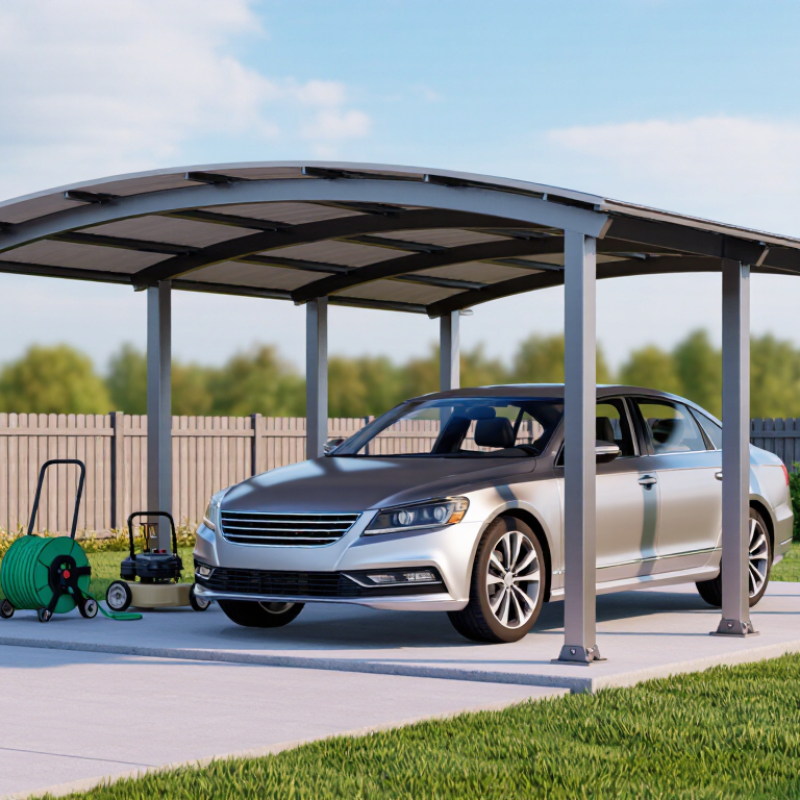
What Is the Best Steel Frame Carport to Buy?

What Defines a Steel Frame Carport?

A steel frame carport is an open-sided shelter built around a load-bearing skeleton of steel posts, beams, and roof supports. The frame carries the roof and transfers wind and snow forces into the ground through anchored feet. It is more than a metal roof on four poles. Details matter.

Steel type and construction affect durability. Galvanized steel has a protective zinc coating that helps resist rust, especially around exposed edges and fasteners. Look closely at joints: clean welds or well-fitted bolts should connect the main members without obvious gaps. Tube thickness matters, but a heavy-looking post alone does not prove the whole structure is strong. Ask for material specifications and rated load information, then compare them with local weather conditions.

The roof shape also defines how the frame performs. A modest slope helps rain drain instead of pooling, while bracing can reduce side-to-side movement in gusts. Check whether the anchors suit your surface, such as concrete or compacted soil. An installation can look solid and still shift if its footing is poorly matched. That part is easy to overlook. Measurements deserve a second look, too: a few inches can decide whether a vehicle door opens comfortably beneath the eaves.

What Defines a Steel Frame Carport?

A frame’s steel specification is one factor to check when comparing carports. This chart shows the minimum specified yield strength for selected ASTM steel grades.

Yield strength is not the same as a carport’s overall load capacity. Tube dimensions, frame spacing, connections, anchoring, and local wind and snow requirements also matter. Values shown are minimum specified yield strengths; 1 ksi ≈ 6.895 MPa.

Which Carport Design and Size Suit Your Needs?

What Is the Best Steel Frame Carport to Buy?

Which Carport Design and Size Suit Your Needs?

Start with the space you need to protect. Measure your vehicle, including mirrors, and allow room to open doors comfortably. A single carport may suit one car, while two vehicles usually need a wider frame and clear access between them. Check the height of roof racks or a raised tailgate, too. A few extra inches can prevent daily frustration. Still, measurements on paper can feel more generous than a real driveway.

Choose a roof shape that works with your site. A sloped roof can direct rain away from an entrance, while a gable design offers more headroom and a familiar profile. Consider where water will drain and whether nearby trees drop branches or leaves. Steel frame thickness, protective coating, and secure anchoring matter for durability. Match these details to local wind and snow conditions, and ask the seller for product specifications rather than relying on appearance alone. A larger structure can be useful, but it may crowd the yard.

How Do Steel Gauge, Roof Style, and Coatings Affect Durability?

When comparing steel-frame carports, do not judge strength by the gauge number alone. A lower gauge usually means thicker steel, but numbering can vary by standard and component. Ask for the actual steel thickness, such as millimeters, and check whether the frame and roof panels use the same specification. That detail matters.

Roof style affects how a carport handles weather. Vertical roof panels guide rain and melting snow toward the sides, while horizontal seams can collect debris or hold water if drainage is poor. The roof shape is only part of the picture. Frame spacing, anchoring, and local wind or snow requirements also matter. A steep-looking roof is not proof of a stronger structure.

Coatings help slow rust, especially around scratches, fasteners, and cut edges. Galvanized or zinc-aluminum-coated steel offers corrosion resistance, while a painted finish adds another protective layer. In coastal air or damp climates, inspect exposed edges regularly and rinse away salt or dirt when needed. I would not choose by coating name alone; coverage and maintenance count too. This is easy to overlook. A small chip can become a weak spot, and real outdoor wear is less tidy than a product description suggests.

What Is the Best Steel Frame Carport to Buy? — How Do Steel Gauge, Roof Style, and Coatings Affect Durability?

Buying Factor Options or Specification What It Means for Durability What to Check Before Buying
Steel gauge Compare the stated gauge and actual steel thickness. In common U.S. sheet-steel references, 14 gauge is about 1.90 mm (0.075 in), while 12 gauge is about 2.66 mm (0.105 in). A lower gauge number generally indicates thicker steel, which can improve resistance to denting and bending. Gauge alone does not establish the capacity of a frame or its connections. Ask whether the gauge refers to the frame, roof panels, or both. Confirm the stated thickness and request structural load information for the complete design.
Frame design and spacing Compare frame-member dimensions, bracing, connection details, and spacing between frames. Overall strength depends on the frame system as well as the steel thickness. Wider frame spacing or weak connections can affect performance under wind or snow loads. Look for documented design loads and installation details, not just a claim that the structure is “heavy duty.”
Roof style Regular (rounded), boxed-eave (horizontal panels), or vertical-panel roof. A vertical-panel roof has seams running from ridge to eave, which can help water and debris move downhill on a pitched roof. Roof style by itself does not determine the structure’s rated wind or snow capacity. Check panel orientation, roof pitch, drainage, and the manufacturer’s load rating for the exact size and configuration.
Protective coating Common choices include zinc galvanizing, zinc-aluminum alloy coatings, and painted finishes over coated steel. Metallic coatings help protect steel from corrosion. Paint can add color and another protective layer, but scratches and cut edges may still need attention. Performance depends on coating specification and exposure conditions. Ask for the coating type and specification, care instructions, and warranty terms. Pay particular attention to coastal, humid, or chemically aggressive environments.
Fasteners and cut edges Corrosion-resistant fasteners, compatible washers, and properly protected exposed edges. Fasteners and damaged or unprotected edges can become vulnerable points for corrosion, even when the main panels have a protective coating. Check fastener material, installation guidance, and whether touch-up protection is recommended after cutting or repair.
Wind and snow ratings Ratings should match the intended location, building-code requirements, dimensions, and installation method. Loads vary by location and design. A rating for one size or anchoring arrangement may not apply to another configuration. Request the applicable design documentation and confirm required anchoring, foundation, and permitting with local authorities.
Anchoring and installation Anchors and base details suited to the site surface, soil, and structure design. A well-built frame still depends on secure anchoring and correct assembly. Installation quality affects stability and long-term service. Confirm the approved anchor type, substrate requirements, installation instructions, and whether professional installation is advised.

Practical buying guide: prioritize documented structural ratings for your location, a suitable frame and anchoring system, corrosion protection appropriate to the environment, and clear installation instructions. Steel gauge and roof style are useful comparisons, but neither alone guarantees durability.

What Site, Weather, and Installation Factors Should You Consider?

A steel-frame carport should fit the site, not just the vehicle. Measure the widest vehicle, open doors, and turning path; then allow extra clearance for roof overhangs and future equipment. Check whether the ground is level and drains away from the posts. A puddle beside an anchor is a small warning with a long memory. Soft fill, slopes, and buried utilities can also change foundation requirements. Ask the installer how the frame will be anchored to your actual soil, not an assumed standard slab.

Weather loads are location-specific. ASCE/SEI 7-22 maps basic wind speeds as three-second gusts and provides ground-snow loads by location and risk category. Use the values for your address when comparing frame and roof options; a light roof is not automatically suitable for heavy snow. NOAA’s 1991–2020 U.S. Climate Normals draw on 30 years of station observations, useful for checking local temperature and precipitation patterns. Still, long-term averages cannot predict every storm. Consider wind exposure, drifting snow, roof drainage, and coastal corrosion, too. Finally, confirm access for delivery and installation, including overhead wires and room for equipment. I would not choose from a brochure alone; a site visit can reveal details the brochure misses.

How Do Price, Warranty, and Maintenance Shape Long-Term Value?

A steel frame carport is not automatically a good buy because its price looks low. Compare the full installed cost, including anchoring, delivery, and any site preparation. A thinner frame may save money upfront, but can feel less rigid in wind or under a heavy snow load. Check the frame dimensions, steel thickness, finish, and stated load ratings against local weather conditions. The cheapest quote may leave out important details.

Read the warranty carefully. Look for separate coverage terms for the frame, roof panels, and corrosion protection, and note what maintenance is required to keep coverage valid. A long warranty has limited value if exclusions are broad or replacement parts are difficult to obtain. Ask how claims are handled and keep the written terms. Details matter.

Maintenance affects value, too. Inspect connections after installation, clear leaves from roof edges, and touch up scratches before rust spreads. Keep water from pooling around the posts. These checks take little time. Still, maintenance needs vary with humidity, salt exposure, and tree cover, so a simple annual routine may not be enough everywhere. I would not judge value by warranty length alone; the better choice is a structure whose cost, documented protection, and upkeep feel manageable over many seasons.