Top Chenille Yarn Properties for Global Buyers in 2026?
As the global textile market evolves, understanding the essential Chenille Yarn Properties becomes increasingly important for buyers in 2026. The demand for chenille yarn is projected to grow by approximately 5% annually, driven by its unique texture and versatility. Chenille yarn is celebrated for its plush feel, vibrant colors, and durability. Buyers must be aware of these properties to make informed decisions.
Recent industry reports highlight that the chenille yarn market is expected to reach $1.2 billion by 2026, indicating a strong demand. However, not all products on the market meet the same standards. Different suppliers can offer varying quality levels, making it essential to evaluate yarn properties like fiber composition and pile height. These factors significantly influence the final product's aesthetic and functional qualities, yet many buyers overlook them.
In a fast-paced market, relying solely on price can lead to compromises on quality. Reflecting on these properties can enhance product offerings and customer satisfaction. Buyers must take the time to understand and evaluate Chenille Yarn Properties critically. Failure to do so could result in subpar products that do not meet consumer expectations.
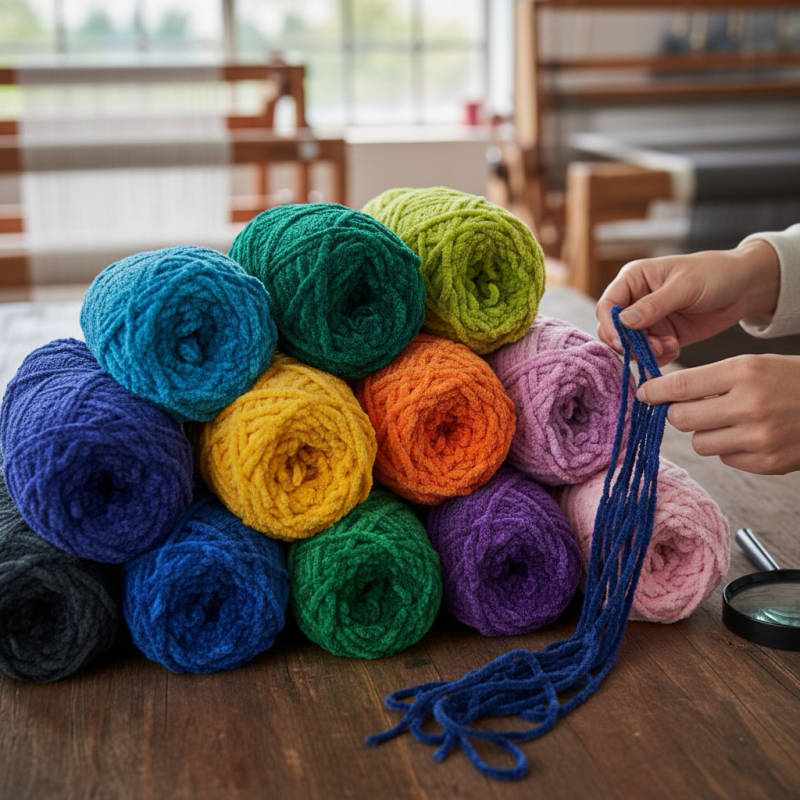
Key Characteristics of Chenille Yarn to Consider in 2026
Chenille yarn is gaining popularity among global buyers. Its unique properties make it desirable for various applications. One key characteristic is its softness. Chenille yarn has a velvety texture that feels luxurious against the skin. This softness is essential for products intended for children or sensitive individuals. However, not all chenille yarns are created equal, and softness can vary significantly between different manufacturers.
Durability is another crucial factor. A good chenille yarn should withstand frequent use without showing signs of wear. This property is particularly important for items like blankets or throw pillows that endure daily use. Buyers should check the yarn's fiber content carefully. While synthetic fibers often enhance durability, they may compromise breathability. Balancing these factors can be challenging, as buyers seek longevity without sacrificing comfort.
Color retention adds another layer of complexity. Chenille yarns often come in vibrant colors, but these may fade over time. Consider selecting yarns treated for UV resistance or fade prevention. While this may increase costs, it often results in better long-term value. In 2026, ensuring the quality of chenille yarn will be paramount. Buyers need to be cautious and conduct proper research before making purchasing decisions.
Global Market Trends Influencing Chenille Yarn Demand
The demand for chenille yarn is influenced by several global market trends. In 2026, the growing popularity of sustainable textiles is a major factor. Consumers increasingly seek eco-friendly options, pushing manufacturers to innovate. According to a recent market analysis, the sustainable yarn segment is projected to grow by 12% annually.
Another trend is the rise of online retail platforms. These platforms offer greater accessibility and visibility for chenille yarn products. A study from TechNavio estimates that online sales channels will expand by nearly 15% in the next few years. As more buyers shift to digital shopping, suppliers must adapt their strategies to meet this change.
Furthermore, the rise in home crafting and DIY projects has led to increased yarn consumption. Reports indicate that home-based crafting activities surged by 30% during the pandemic. This trend has not completely faded, as many consumers continue exploring creative endeavors. However, suppliers must acknowledge challenges in inventory management to adjust to fluctuating demand effectively.
Sustainability and Eco-friendliness in Chenille Yarn Production
The production of chenille yarn is increasingly focused on sustainability. Eco-friendly practices are now essential for yarn manufacturers in 2026. Using recycled materials is one way to reduce environmental impact. Many companies are adopting techniques that minimize waste in production.
Choosing organic fibers can also enhance sustainability. These fibers are grown without harmful pesticides. This method supports healthier ecosystems and reduces chemical runoff.
Tips: Consider suppliers who emphasize recyclability. Verify if the dyes used are low-impact. Look for certifications that ensure eco-friendly practices.
Manufacturers need to reflect on their practices continuously. An urgent need for sustainability awareness persists. Addressing these elements can lead to improvements in the global yarn market. The journey toward eco-friendliness involves constant evaluation and adaptation.
Innovative Applications of Chenille Yarn Across Industries
Chenille yarn has gained traction across various industries due to its unique texture and versatility. By 2026, experts anticipate a significant increase in its applications. According to a recent report by the Global Textile Association, the global chenille yarn market is projected to reach $1.8 billion, exhibiting a growth rate of 7.5% annually. This surge is driven by rising demand in upholstery, fashion, and home decor sectors.
In the textile industry, chenille yarn is being used creatively. Designers are exploring its potential in sustainable fashion. The soft, plush feel enhances comfort while also providing aesthetic appeal. Reports from the Sustainable Materials Coalition indicate that more than 20% of textiles now incorporate eco-friendly fibers, including recycled chenille. As brands prioritize sustainability, this trend is likely to continue.
Consumer preferences are evolving. Softness and flexibility are becoming essential qualities. However, there's a challenge: maintaining quality while scaling production. Traditional production methods can be resource-intensive. Some manufacturers face difficulties in sourcing sustainable raw materials. This creates a paradox where demand rises, but eco-compliance needs stronger infrastructure.
Quality Standards and Testing for Chenille Yarn Buyers in 2026
As global demand for chenille yarn rises, quality standards become more crucial. Buyers must emphasize rigorous testing to ensure product reliability. The first step in the process involves checking the yarn's tensile strength. This measure indicates how much stress the yarn can endure. Inadequate strength can lead to product failure in various applications.
Another key property to evaluate is colorfastness. This aspect determines how well the color withstands washing and exposure to sunlight. Poor colorfastness can result in fabric that fades quickly. Buyers should request samples to assess these properties before committing to a purchase.
Even slight variations in manufacturing can impact yarn quality. It’s vital to engage with suppliers who understand these standards deeply. Buyers might find it beneficial to consult experts for guidance. Ultimately, maintaining rigorous testing protocols can prevent costly mistakes and ensure long-term satisfaction. Quality assurance is not merely a checkbox; it’s a commitment to excellence and reliability in the yarn industry.
Top Chenille Yarn Quality Properties in 2026