China Top 10 Metering Equipment Manufacturers
China’s Metering Equipment sector serves utilities, factories, commercial buildings, and water networks. Its products range from electricity and gas meters to flow instruments, communication modules, and complete data-management systems. For overseas buyers, the challenge is not simply finding a low quotation. Accuracy, calibration support, protocol compatibility, delivery consistency, and long-term parts availability all shape the real cost of ownership.
The U.S. Energy Information Administration reported that about 119 million advanced meters were installed in the United States in 2022, representing roughly 72% of electric meters. That figure shows how widely digital measurement has spread, while also highlighting the importance of dependable equipment and data handling. Process-improvement expert H. James Harrington wrote, “Measurement is the first step that leads to control and eventually to improvement.” The principle applies directly to modern Metering Equipment: readings are useful only when customers can trust and act on them.
This guide introduces ten leading Chinese manufacturers and compares their product focus, technical capabilities, certifications, and service strengths. Some companies specialize in utility-scale smart meters; others build industrial flow meters or integrated reading systems. The differences matter. A polished catalogue cannot replace independent testing, clear warranty terms, or a factory audit. Rankings also have limits: public information varies, and product quality can differ between models. Buyers should verify specifications against their own operating conditions before making a decision.
Metering Equipment: Types, Functions, and Industrial Applications
Metering Equipment: Types, Functions, and Industrial Applications
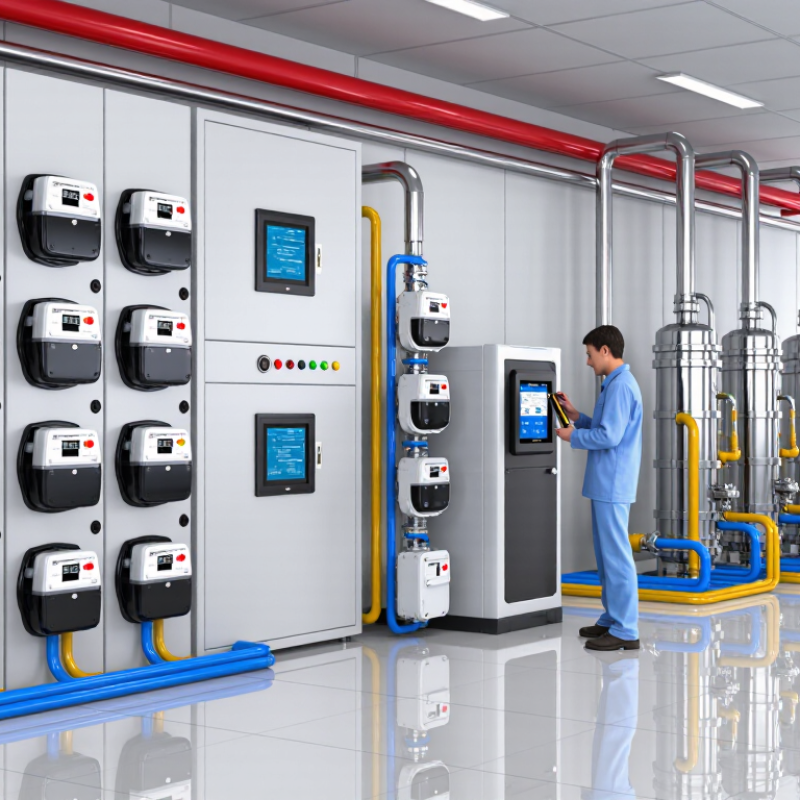
Metering equipment measures quantities such as electrical energy, liquid flow, gas volume, pressure, and heat. Electricity meters track consumption; flow meters help operators monitor liquids moving through pipes. Pressure and temperature instruments add process context. Together, these readings support billing, process control, leak detection, and equipment checks.
Small differences matter.
The U.S. Energy Information Administration’s Electric Power Annual reports about 119 million advanced meters installed nationwide in 2022, representing roughly 72% of electricity customers. These meters can record usage at intervals and transmit readings, helping utilities identify demand patterns. In factories, flow meters monitor cooling water and compressed air, while energy meters reveal consumption across production lines.
Selection depends on the fluid, operating range, accuracy needs, and installation conditions. A meter suited to clean water may perform poorly with abrasive slurry.
Real sites are messier than specifications suggest.
Reliable readings require correct installation and periodic calibration. Pipe vibration, deposits, temperature changes, and incorrect sizing can distort results. Operators should compare meter readings with process conditions, not trust a display blindly.
That check is easy to neglect.
The Development of China’s Metering Equipment Industry
China Top 10 Metering Equipment Manufacturers
The Development of China’s Metering Equipment Industry
China’s metering equipment industry has moved beyond basic measurement toward connected, application-specific instruments. Factories increasingly combine flow, pressure, temperature, and electrical readings to monitor production. A meter on a water line, for example, may reveal a small leak before it appears on a monthly bill. Useful detail matters. Demand from utilities, building systems, and process plants has encouraged investment in sensor stability, digital communication, and automated calibration. Yet progress is not uniform across every application.
The shift is not simply about adding screens or wireless links. Reliable readings still depend on installation, operating conditions, maintenance, and traceable calibration. A poorly positioned meter can produce confident-looking data that is still wrong. This is an awkward lesson, but an important one. More manufacturers are developing remote diagnostics and industrial control integration. Buyers also expect clear test records and practical service support. Smaller suppliers may face limits in testing capacity, component access, or overseas certification. Progress takes time. Long-term competitiveness will depend on repeatable accuracy, repairability, and honest performance claims, not feature counts alone.
China Top 10 Metering Equipment Manufacturers - The Development of China’s Metering Equipment Industry
Industry overview by equipment segment; entries are not a company ranking.
| No. | Equipment Segment | Quantity Measured | Common Units | Typical Applications | Industry Development Focus |
| 1 | Electricity meters | Electrical energy consumption | kWh | Residential, commercial, and industrial energy billing | Remote reading, interval data, and integration with smart-grid systems |
| 2 | Water meters | Volume of water delivered | m³ | Utility billing, building management, and water-network monitoring | Automated meter reading, leak detection, and low-flow measurement |
| 3 | Gas meters | Volume of gas consumed | m³ | Household, commercial, and industrial gas supply | Connectivity, consumption monitoring, and improved safety diagnostics |
| 4 | Heat meters | Thermal energy transferred | kWh or GJ | District heating and building-level heat allocation | Combined flow and temperature measurement with remote data collection |
| 5 | Industrial flow meters | Liquid or gas flow rate and total volume | m³/h, L/min, or kg/h | Water treatment, chemical processing, energy, and manufacturing | Digital output, process integration, and measurement under demanding conditions |
| 6 | Pressure instruments | Fluid or gas pressure | Pa, kPa, or MPa | Pipelines, equipment monitoring, and industrial process control | Digital sensing, calibration traceability, and condition monitoring |
| 7 | Temperature instruments | Temperature | °C or K | Manufacturing, laboratories, HVAC, and cold-chain monitoring | Improved sensor stability, digital transmission, and multi-point monitoring |
| 8 | Weighing instruments | Mass or weight | g, kg, or t | Trade, logistics, production lines, and material handling | Automatic data capture, process connectivity, and verification management |
| 9 | Level meters | Liquid or bulk-material level | m, mm, or % of range | Tanks, reservoirs, silos, and process vessels | Non-contact sensing, continuous monitoring, and integration with control systems |
| 10 | Environmental gas analyzers | Concentration of specified gas components | ppm, mg/m³, or % by volume | Industrial emissions monitoring, workplace safety, and environmental assessment | Continuous monitoring, data logging, and remote reporting |
How to Evaluate Metering Equipment Manufacturers in China
China Top 10 Metering Equipment Manufacturers
How to Evaluate Metering Equipment Manufacturers in China
Choosing a metering equipment manufacturer takes more than comparing prices. Check whether the supplier can explain measurement range, accuracy, repeatability, and operating conditions in plain terms. Ask for calibration records and test procedures for the specific model you plan to buy. A factory visit can reveal how components are assembled, inspected, and documented. Look for clear quality-control steps, not just polished brochures. Request references from customers with similar fluids, temperatures, or production volumes.
Tips: Send a written application brief. Include flow range, fluid properties, installation limits, and required output signals. Ask for a sample test report, warranty terms, and spare-parts lead times.
Evaluate communication as carefully as specifications. Can the engineering team explain how a meter behaves at low flow or during pressure changes? Confirm what is included in delivery, commissioning, and after-sales support. Compare the same requirements across suppliers, then record unanswered questions. A low quotation may omit testing or accessories, so check the itemized scope. No checklist catches everything. Even careful reviews can miss a mismatch between laboratory conditions and a real production line; plan a site trial where practical.
Profiles of 10 Leading Metering Equipment Manufacturers in China
China’s metering equipment sector includes manufacturers with different technical strengths. One focuses on residential water meters, with compact bodies designed for apartment utility cupboards. Another develops ultrasonic meters for district heating, where stable readings matter during seasonal demand changes. A third supplies industrial flow meters for chemical and water-treatment processes. Details matter. Buyers should check operating ranges, calibration records, and service availability.
A fourth manufacturer concentrates on smart electricity meters and remote data collection. A fifth produces gas meters for household and commercial use, with attention to sealing and low-flow performance. A sixth makes electromagnetic flow meters for conductive liquids. A seventh serves irrigation and agricultural water measurement, where dust and outdoor exposure can challenge equipment. An eighth builds weighing and batching meters for production lines. Their strengths may differ by application.
The remaining two profiles represent manufacturers of pressure and differential-pressure instruments, and specialized dosing meters for controlled fluid delivery. This is a practical comparison, not a verified ranking; product quality can vary within any portfolio. Before choosing a supplier, request test reports, installation references, accuracy specifications, and clear warranty terms. A polished catalogue is useful, but it cannot replace field checks. Some published specifications may also leave questions unanswered.
Products, Certifications, and Market Applications of Chinese Manufacturers
Chinese metering-equipment makers supply electricity, water, gas, and industrial flow meters. Product selection depends on accuracy, operating conditions, communication options, and service life. A smart electricity meter may record interval use and transmit readings, while a flow meter on a factory pipe must withstand pressure, vibration, and changing fluid conditions. Small details matter. The China Electricity Council reported national electricity consumption of 9.22 trillion kilowatt-hours in 2023, underscoring the scale of the measurement task across the power system. That figure describes electricity demand, not meter sales, so it should not be treated as a market-size estimate.
When comparing manufacturers, check the evidence behind each specification. Relevant documentation may include ISO 9001 quality-management certification, test reports against applicable IEC meter standards, and CCC certification where required for the product. These credentials serve different purposes. A certificate is not a field test. Ask whether calibration records are traceable, whether accuracy is maintained across the stated operating range, and how devices perform under heat, moisture, or electrical interference. Catalog claims alone cannot show years of wear; this is an easy point to overlook.
Applications range from household billing and water-network leakage monitoring to energy tracking in commercial buildings and process control in factories. For export projects, confirm that the product’s approvals match the destination and intended use. Compare communication protocols, data retention, installation needs, and local service capacity alongside price. A technically sound meter can still disappoint if readings are hard to integrate or maintain.