


Request a free quote Phone Icon
die cutting materials

Blog

China Top 10 Turbidity Sensor Manufacturers for Buyers

A Turbidity Sensor helps buyers track suspended particles in water, but choosing one involves more than comparing prices. In a treatment plant, a stable reading can support process checks. In a river-monitoring station, the same instrument may face changing temperatures, sediment, and weather. Small details matter. A poorly matched probe can create extra calibration work or unreliable readings.

China has a broad supplier base, from established instrument makers to specialized sensor producers. This guide presents ten manufacturers for buyers to investigate, not as a guaranteed ranking. Their product ranges, service options, and technical strengths may differ. Compare the measurement range, stated accuracy, response time, output signals, and probe materials against your actual application. Ask for datasheets and test records. If possible, review a sample unit under realistic water conditions.

Installation details deserve attention too. Check whether the sensor fits your pipe, tank, or open-channel setup. Confirm cleaning needs, calibration procedures, enclosure protection, and compatibility with your controller. A low purchase price may not reflect maintenance costs. Nor does a long specification sheet prove field performance. No supplier is perfect. That is worth remembering. Some buyers may also need local technical support, clear warranty terms, and spare parts they can obtain without delay. This overview offers a starting point for those comparisons, while leaving room for site trials and careful supplier checks.
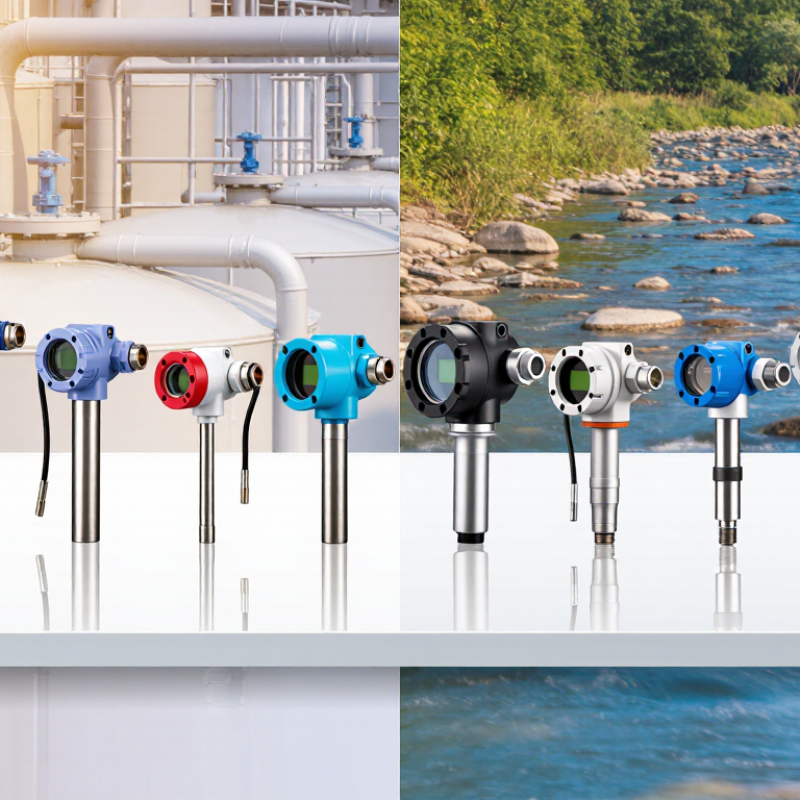
China Top 10 Turbidity Sensor Manufacturers for Buyers

What Turbidity Sensors Measure and Where They Are Used

Turbidity sensors estimate how cloudy water is by measuring how suspended particles scatter or block light. Results are commonly reported in nephelometric turbidity units, or NTU. A higher reading often signals more particles, but it does not identify what those particles are. It also cannot confirm that water is free from microbes or dissolved chemicals. Small details matter. A trapped air bubble, dirty optical window, or poorly mixed sample can shift the reading.

These sensors are used in drinking-water treatment, wastewater plants, rivers, and some food-processing lines. At a treatment plant, operators may track turbidity after filtration; a sudden rise can prompt a check of the filter or sampling point. In a river, readings help reveal changes after heavy rain, when runoff carries fine soil into the water. Field conditions are rarely perfect. A reading can look precise while the sample is not representative.

For buyers comparing manufacturers, ask how the sensor handles bubbles, fouling, and changing water conditions. Check its measurement range, calibration method, response time, and the availability of clear maintenance instructions. A sensor that is easy to clean may be more useful than one with impressive specifications but awkward access. Calibration records help operators spot drift over time. Calibration still depends on careful handling.

How China’s Turbidity Sensor Market Is Organized

China’s turbidity sensor market is organized around several layers rather than one uniform supplier group. Some companies focus on optical probes, using infrared light to estimate suspended particles in water. Others integrate sensors with transmitters, controllers, or monitoring platforms. This difference matters when buyers need a probe for an existing system versus a complete installation. The market also includes component makers, contract manufacturers, and distributors serving municipal water, wastewater, food processing, and industrial plants.

Capabilities can vary even among suppliers offering similar-looking instruments. A buyer should compare measurement range, response time, materials, cleaning requirements, and the method used for calibration. Ask how a sensor performs in colored water or under heavy fouling. Request test records and confirm whether the stated accuracy applies to real operating conditions. Small details count. A cable length, connector type, or mounting thread can delay installation. Export-oriented suppliers may offer customization, while domestic project suppliers may provide closer support for site commissioning. The map is not perfectly tidy, and product categories sometimes overlap. That deserves a closer look. A careful shortlist should separate verified technical evidence from catalog claims, then match each supplier’s strengths to the water conditions and maintenance capacity at the intended site.

Profiles of 10 Chinese Turbidity Sensor Manufacturers

China’s turbidity-sensor manufacturers differ in measurement range, probe design, and support for process integration. These ten capability profiles help buyers compare suppliers without relying on unverified rankings. One focuses on drinking-water treatment; another designs probes for wastewater plants. A third supplies compact instruments for laboratories. A fourth emphasizes online monitoring, while a fifth builds systems for industrial process water.

The remaining profiles include suppliers specializing in optical probes, portable meters, multi-parameter controllers, custom installation fittings, and export-oriented technical support. These are comparison categories, not verified company identities. Ask each supplier for calibration records, sample response times, and performance data in your actual water conditions.

The U.S. EPA’s Surface Water Treatment Rules require filtered systems to meet a turbidity limit of 0.3 NTU in at least 95% of monthly measurements, with a 1 NTU maximum. That benchmark makes low-range accuracy and stable readings practical buying priorities.

Tips: Request a trial using your own water sample. Check for bubbles, color, and fouling; each can distort optical readings. A neat specification sheet is not enough. Verify service access and replacement-part lead times before ordering.

How the Manufacturers Compare on Key Buying Factors

When comparing China-based turbidity sensor manufacturers, treat the quotation as only one data point. A low price can hide costs for calibration, replacement parts, or custom fittings. Check the stated measurement range, resolution, response time, and operating temperature against your water conditions. Ask how readings are verified and request a sample calibration record. Small details matter.

For a fair comparison, review probe materials, cable length, cleaning options, and compatibility with your controller. Then assess practical support: lead time, spare-part availability, documentation quality, and response speed to technical questions. Request test results from water similar to yours; clean laboratory water may not represent a tank with bubbles or suspended solids. Compare warranty terms in writing, too. Some specifications still leave room for interpretation, so confirm them before ordering.

Tips: Ask for a short pilot using your own sample or process loop. Record readings beside a trusted reference instrument, and note any drift after cleaning. A tidy datasheet helps. Real operating behavior can still surprise you.

How Buyers Can Evaluate Suppliers and Select a Sensor

Selecting a turbidity sensor is not just a catalog exercise. Start with the water: drinking-water samples, wastewater, and fast-moving process streams create different measurement demands. Note the expected turbidity range, temperature, flow rate, and likely fouling. A sensor that performs well in a clear sample may struggle in a tank with bubbles or suspended solids. Ask suppliers how their instruments handle these conditions. Small details matter.

Compare measurement range, stated accuracy, response time, and calibration method. Request test records, not only a datasheet, and check whether the results were measured across the range you actually need. Ask about calibration standards, cleaning intervals, replacement parts, and the format of the output signal. A neat specification sheet can still leave practical questions unanswered. That is easy to miss.

Probe material and enclosure protection should suit the installation point, especially where equipment faces moisture or frequent cleaning. Confirm lead time, warranty terms, technical support hours, and whether staff can help troubleshoot installation errors. For a fair comparison, send each supplier the same sample conditions and questions. A short trial can reveal drift, slow readings, or awkward maintenance before purchase. It may not predict every site condition, but it gives buyers evidence beyond a sales claim.

China Top 10 Turbidity Sensor Manufacturers for Buyers - How Buyers Can Evaluate Suppliers and Select a Sensor

This is a supplier-evaluation checklist, not a ranked list of named manufacturers. Turbidity performance depends on the sensor, measurement method, sample, and installation. Verify all specifications against the supplier’s current datasheet and test documentation.

No. Evaluation Dimension What Buyers Should Check How to Compare Suppliers Useful Evidence to Request
1 Measurement method and applicable standard Confirm the optical measurement geometry, light source, and stated method. ISO 7027 methods use infrared light; U.S. EPA Method 180.1 specifies a nephelometric method using white light. Choose a method compatible with the target application and any regulatory or project requirements. Do not assume readings from different methods are interchangeable. Datasheet, method declaration, optical-geometry description, and applicable test or conformity documents.
2 Measurement range and resolution Check the specified range, resolution, range-switching behavior, and performance across the range—not just the maximum value. Match the range to expected process values and occasional peaks. Confirm that low-level monitoring needs are supported by stated performance data. Full-range specification, sample readings or test report, and details of any automatic or manual range selection.
3 Accuracy, repeatability, and drift Review how accuracy and repeatability are specified, including test conditions, reference material, temperature, and measurement range. Ask how drift is assessed. Compare specifications only when the test conditions and definitions are comparable. A single accuracy figure without conditions is not enough to judge performance. Calibration or validation records, test conditions, repeatability data, and recommended verification interval.
4 Sample and installation suitability Check whether the sensor is designed for immersion, an in-line installation, or a flow-through cell. Review flow, bubbles, suspended solids, and fouling limitations. Select the installation format that represents the process sample and allows the required inspection, cleaning, and maintenance access. Installation drawing, operating instructions, sample-condition limits, and recommendations for avoiding air bubbles or deposits.
5 Wetted materials and environmental protection Identify all wetted materials, seals, cable materials, operating-temperature limits, and enclosure protection rating. Confirm chemical compatibility with the actual process. Evaluate the complete assembly for the process chemistry and installation environment; do not rely on a housing material description alone. Bill of materials for wetted parts, temperature limits, protection-rating documentation, and chemical-compatibility guidance.
6 Calibration and verification Ask which calibration standards or reference materials are supported, how calibration is performed, and whether field verification can be completed without removing the sensor. Prefer a documented procedure that fits the site’s quality system and can be carried out with available equipment and staff. Calibration procedure, supported standard details, example certificate, and guidance on verification frequency.
7 Cleaning and maintenance Determine how the optical surfaces are cleaned, whether an automatic cleaning option is available, and what routine maintenance and consumables are required. Estimate maintenance effort for the actual sample. Automatic cleaning can reduce manual work but does not remove the need for inspection and verification. Maintenance schedule, cleaning instructions, spare-parts list, and service-life assumptions for wear components.
8 Outputs and system integration Verify available outputs and protocols, power requirements, wiring, signal scaling, units, alarms, and compatibility with the site’s controller or data system. Confirm the exact interface configuration offered; product-family options may differ from the configuration in a quotation. Wiring diagram, communication protocol details, configuration list, and an integration test or demonstration where practical.
9 Documentation and quality controls Review the datasheet, user manual, inspection records, traceability information, and the supplier’s manufacturing and change-control processes. Assess whether documentation is complete, consistent, and available in the languages and formats required for installation and ongoing operation. Document index, sample inspection report, quality-system certificates if claimed, and product revision or traceability details.
10 Service, delivery, and total ownership cost Clarify warranty terms, lead time, technical support, spare-parts availability, repair process, training, and recurring maintenance costs. Compare the full expected cost and support plan—not purchase price alone—over the intended service period. Written quotation, warranty terms, service response process, spare-parts schedule, and itemized operating-cost assumptions.

Buyer tip: request comparable quotations using the same sample conditions, measurement method, installation arrangement, required interfaces, and documentation requirements. Independently verify certifications and performance claims before purchase.

Article Source: