


Request a free quote Phone Icon
die cutting materials

Blog

7 Tips for Choosing a Flexible LED Work Light

A work light can look powerful on a product page and still leave a mechanic’s hands in shadow. The U.S. Department of Energy’s 2019 Energy Savings Forecast of Solid-State Lighting projected that LED adoption could save about 569 terawatt-hours of electricity annually in the United States by 2035. That figure covers general illumination, not every portable task lamp, but it shows why LED efficiency matters. Real jobs are messier. A tight engine bay, a dusty workshop, and a damp crawlspace each demand different light placement and protection.

A Flexible Led Work Light should offer more than a bendable neck. Beam spread, measured brightness, color quality, battery runtime, charging options, and resistance to impact all shape its usefulness. A narrow beam may reveal a small fastener, yet create harsh shadows across a wider repair area. I’d be cautious about treating a high lumen rating as proof of better visibility. The lamp’s position and beam pattern matter, too. Small details matter.

This guide’s seven tips focus on practical checks before you buy: where the light will sit, how it adjusts, and whether its power source suits a full shift. We’ll also consider durability claims and specifications worth verifying, rather than relying on vague labels. No single model fits every job. A little skepticism helps.
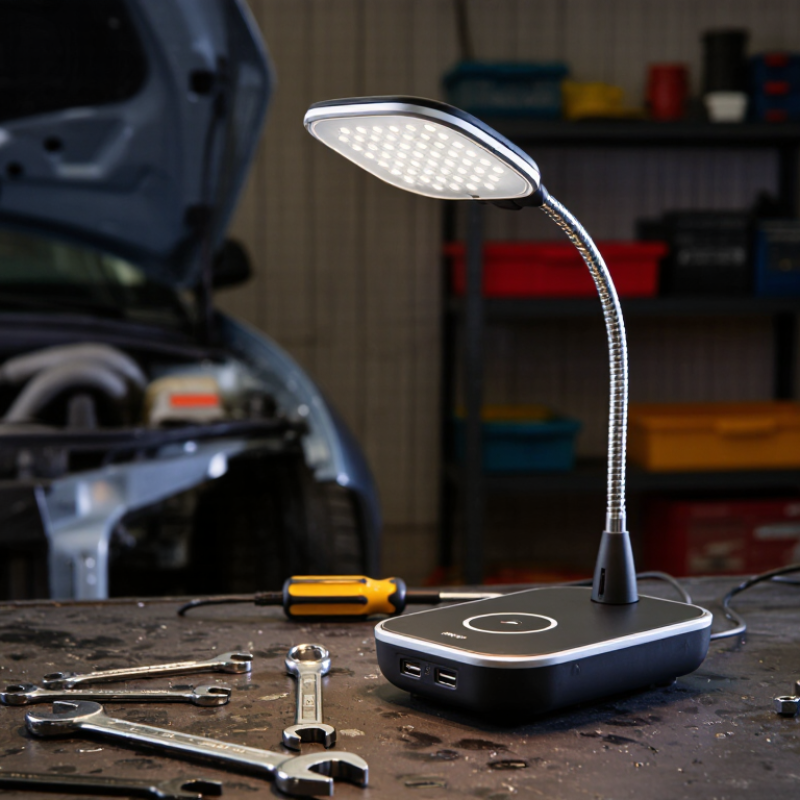
7 Tips for Choosing a Flexible LED Work Light

Identify the Tasks and Work Areas the Light Must Cover

Identify what you need to see and how close you can place the light. A mechanic checking a belt needs broad, steady illumination under the hood. Someone inspecting a small connector needs a tighter beam that can reach into narrow gaps. Different tasks call for different coverage.

Measure the work area, including its height and likely obstructions. A light aimed at a bench may leave the back corner dim, while a light placed too close can create harsh glare. Measure the space. Look for adjustable heads or a stable mount that lets you direct light around shelves, pipes, or machinery. Shadows matter. Test the position from where you will actually work, not just from the doorway.

Consider how the task changes during the day. Wiring checks may benefit from neutral-looking light that makes colors easier to distinguish, while general cleanup may need wider coverage. Check whether the light can hold its angle without slipping, and whether its cable or battery arrangement fits the work area. It is easy to overvalue maximum brightness. That can mean more glare, not better visibility. A quick trial in the actual workspace often reveals gaps you missed on paper.

7 Tips for Choosing a Flexible LED Work Light - Identify the Tasks and Work Areas the Light Must Cover

Match the light’s output, beam, and mounting options to the work being done.
Task or Work Area Coverage to Consider Useful Light Output Beam and Color Flexible Features to Look For
Close-up repairs on a workbench A small, nearby area where shadows from hands or tools can obstruct details. About 500–1,000 lumens, with adjustable brightness. A focused or adjustable beam; neutral white light around 4,000–5,000 K can help reveal surface details. A pivoting head, stable base, and diffuser or glare control.
Vehicle inspection and maintenance Engine bays, wheel wells, and other confined spaces with changing angles. About 500–1,500 lumens, depending on the space and distance. A combination of focused light for inspection and broader light for general visibility. A slim profile, magnetic or hook mounting, and a head that can be repositioned.
Cabinet, plumbing, or electrical work Under cabinets, inside cupboards, and around pipes or wiring. About 300–1,000 lumens for close-range work. A broad, even beam helps limit harsh shadows in tight spaces. A compact body, clamp or hook, and a flexible neck or rotating head.
Painting, sanding, and surface preparation Walls, ceilings, and larger surfaces where uneven illumination can hide imperfections. About 1,000–3,000 lumens for a portable area light; required output varies with distance and room size. A wide, diffuse beam reduces concentrated bright spots. A consistent color appearance helps assess finishes. A tilting stand, broad light panel, and brightness adjustment.
Garage or workshop cleanup Open floor areas, storage corners, and general work zones. About 1,000–3,000 lumens for portable task lighting. A wide beam provides general coverage; a separate focused mode can help with detailed tasks. A stable base, carry handle, and hanging or tripod-compatible mounting option.
Outdoor or roadside work Uneven ground and work areas exposed to dust, moisture, or changing weather. About 500–2,000 lumens, selected for the working distance and ambient conditions. A focused beam can reach farther; a flood beam is better for nearby footing and tools. A weather-resistant housing, secure footing, and a rechargeable battery with a clear charge indicator.
Inspection inside machinery or equipment Narrow openings and recessed spaces where a full-size lamp may not fit. About 200–800 lumens can be sufficient at close range. A narrow beam can reach into openings; an adjustable beam helps adapt to different inspection points. A slim, lightweight design with a hook, clip, or magnetic attachment where suitable.

Compare Brightness, Beam Shape, and Color Temperature

When choosing a flexible LED work light, compare brightness in lumens and the actual light reaching your work surface in lux. A high lumen rating can still leave a dim patch if the beam spreads too widely. ANSI/IES RP-7-21 provides industrial lighting recommendations that vary by task; roughly 300–500 lux is a useful reference range for many general work areas, not a universal target. Check with a light meter if precision matters.

Beam shape changes how that light feels. A broad flood beam helps illuminate a bench evenly, while a narrower beam can reveal detail inside a cabinet or beneath a vehicle. Watch for harsh shadows from your hands. They happen. Color temperature affects contrast and comfort: around 3,500–5,000 K gives a neutral appearance, while cooler light can make small edges look clearer but feel stark during long jobs. The IES Lighting Handbook treats color appearance and illuminance as separate considerations, so don’t use a cool-looking beam as proof of sufficient brightness. I’ve found that a swivel head is useful, but it can still drift when its joint is loose. Check the beam at your real working distance, not just against a white wall.

Choose a Power Source and Runtime for Your Work

A flexible LED work light is only useful if it stays on through the job. Match its power source to where you work. A rechargeable battery suits moving between rooms or inspecting a vehicle, while a corded light can be practical near a reliable outlet. No outlet nearby? Battery power may save time, but check how long it lasts at the brightness you actually need.

Read the runtime details carefully. A light may run much longer on a dim setting than at full output. Compare the stated hours with your typical task, then leave a reasonable buffer for delays. Cold conditions can reduce battery performance, and frequent changes between brightness modes may affect how long the light lasts. Check it twice. If the battery is removable, consider whether a charged spare is practical to carry.

Think about charging, too. A built-in battery is convenient, but it can leave the whole light unusable while charging. A replaceable battery offers flexibility, though it adds another item to manage. I would not plan a full shift around the maximum runtime printed on a package; real tasks rarely follow neat schedules. That estimate can be optimistic. Choose a light with a charging method and backup plan that fit your workspace, rather than paying for capacity you may never use.

Assess Flexibility, Mounting Options, and Portability

A flexible LED work light is useful when its beam reaches the task without forcing you to move the workpiece. Check how far the head tilts and whether it stays in position. A stiff hinge can be frustrating; a loose one may slowly droop. That matters. At a repair bench, a narrow beam aimed into a cabinet can reveal screw threads while leaving your hands free. Still, more adjustment points do not always mean better control.

Look closely at the mounting options. A magnetic base can attach to a steel shelf or machine, but it will not help on wood or aluminum. A clamp suits a bench edge, provided its jaws fit securely and do not block the light. A hook is handy overhead, though a swinging lamp can cast distracting shadows. Check whether the mount can be adjusted after attachment. I sometimes overlook that small detail.

Portability depends on more than weight. Consider the folded size, handle, cord length, and whether the light runs on a battery or needs an outlet. A compact lamp is easier to carry between rooms, but a tiny base may feel unstable on uneven flooring. If you work outdoors, check the stated weather resistance rather than guessing from a sealed-looking casing. One trade-off is easy to miss: a longer cord offers reach but can snag around tools.

Check Durability, Safety Ratings, and Ease of Maintenance

A flexible LED work light must handle more than an occasional bump. Check the housing, joints, and cable for sturdy construction, especially if the light will move between a garage and a job site. Look for an ingress-protection rating that matches likely exposure to dust or splashes; a high rating does not make every lamp suitable for every wet environment. Small details matter. A stiff hinge may slowly sag, while a loose cable entry can invite damage.

Read the safety label and confirm that the light has appropriate electrical safety certification for your region. Ratings are useful, but they do not replace sensible use: keep the lamp away from standing water, and let hot components cool before handling them.

Maintenance should be simple. A smooth lens wipes clean with a soft cloth, and accessible fasteners make inspection less frustrating.

Check the cord, plug, and pivot points regularly for cracks or looseness. A minor flaw can be easy to overlook. I might choose a brighter model and later regret its awkward cleaning routine, so consider how dust and grease will collect around its joints.

Don’t ignore that.