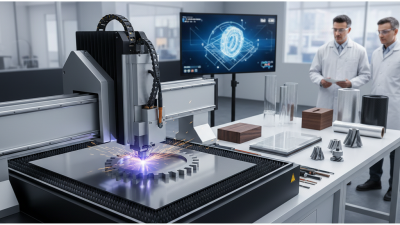
How to Choose the Best Foam CNC Machine in 2026?
Choosing the right foam CNC machine in 2026 starts with the work it must do. A display model carved from soft EPS has different needs from a detailed architectural pattern cut from dense tooling board. The same machine may handle both, but speed, rigidity, spindle power, and dust control affect the finish. Look closely at the working envelope, too. A large table is useful only if your shop can fit it and safely load full-size blocks.
The supplied material does not identify a verifiable industry expert or quotation, so I won’t invent one. A useful buying principle for this guide is: “Match the machine to the foam, toolpath, and finish—not the biggest advertised number.” It is a practical rule, not a complete answer. Small details matter. Ask vendors for sample cuts in your actual material, and inspect corners, narrow ribs, and deep pockets. Request details about controller support, training, service response, and replacement parts. A fast demonstration can look convincing; it may not reveal vibration during a long cut or cleanup time after machining. That deserves a second look. This guide compares machine types, essential specifications, software, and ownership costs, helping you choose a foam CNC machine for real jobs—not just a brochure.
Define Your Foam Materials, Part Sizes, and Production Requirements
Choose a foam CNC machine around the material you actually cut, not a broad “foam” label. EPS and XPS suit hot-wire cutting for clean profiles, while dense polyurethane or polyethylene may need a spindle and suitable tooling. Ask suppliers to cut samples from your own stock. Watch for melted edges, torn cells, dust, and changes in finish across the block. Small details matter.
Part dimensions set the machine’s usable travel, not just its advertised table size. Measure your largest part, then allow room for fixtures, tool access, and safe loading. A long panel may fit on the bed but still collide with the gantry. Record required tolerances and inspect a real test part; a neat sample can hide problems in deep pockets or thin walls. There is no perfect setup for every geometry.
Production needs matter just as much. Note daily volume, batch sizes, changeover time, and expected shifts before comparing cycle times. Grand View Research’s 2024 Polyurethane Foam Market report estimated the global market at USD 47.47 billion in 2023, with projected annual growth of 6.3% from 2024 to 2030. That market context is not a machine-sizing rule, but it supports planning for changing demand. Build in extraction and cleanup time, too. I would still leave room for uncertainty: early production estimates are often optimistic.
Compare Foam CNC Machine Types and Cutting Methods
How to Choose the Best Foam CNC Machine in 2026?
Compare Foam CNC Machine Types and Cutting Methods
A hot-wire CNC machine suits EPS and XPS foam when the job involves broad profiles, insulation panels, or architectural shapes. A heated wire moves through the material and leaves a clean cut with little debris. It is less suited to fine internal features, and sharp corners may come out slightly rounded. That matters. Check the wire path and minimum feature size against your actual design.
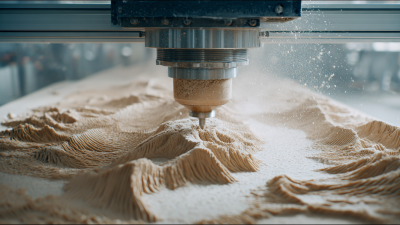
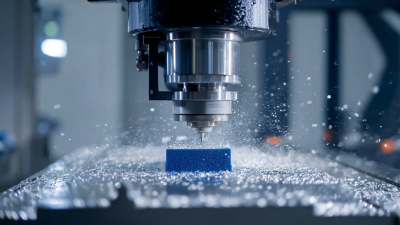
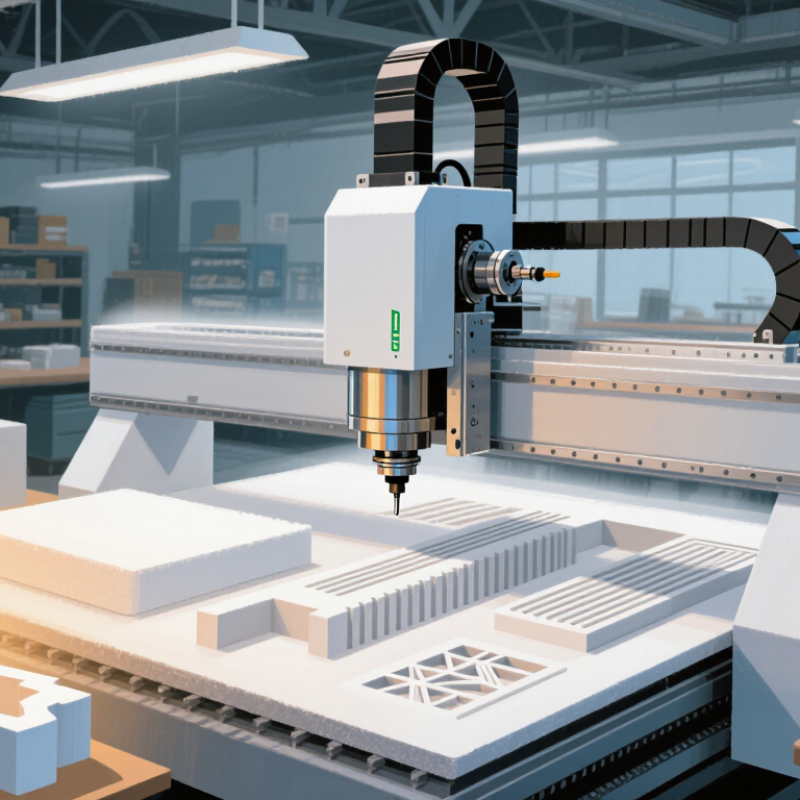
A router-style CNC machine uses a rotating bit to mill foam blocks into molds, props, or three-dimensional parts. It offers more detail than hot-wire cutting, but tool choice and feed speed affect the finish. Soft foam can tear; denser foam may produce dust and visible chips. Dust is real. Extraction and a test cut help reveal whether the chosen bit leaves a surface that needs sanding. Five-axis machines can reach complex angles, though their added motion is not useful for every part.
Flexible sheet foam may be better suited to an oscillating knife than a spindle. The blade cuts without the same heat or rotating-tool action, but thick or dense stock can challenge it. Compare the material, thickness, shape, finish, and expected production volume before choosing. Test a sample. One method is rarely best for every foam, and that is easy to overlook when comparing machine specifications alone.
Evaluate Work Area, Precision, Spindle, and Motion Specifications
A foam CNC machine should fit the parts you actually make, not just the largest dimensions on a brochure. Measure the longest blank, then allow room for clamps, spoilboard, and tool movement. A 1,200 mm panel may need more than 1,200 mm of usable travel. Check twice. Also compare Z clearance with your tallest fixture and foam block; a deep work area is not useful if the spindle cannot reach the surface safely.
Precision depends on more than the advertised resolution. Look for repeatability data, gantry stiffness, and backlash control, then consider the foam itself. Soft foam can hide small errors, while dense tooling foam may reveal ridges or uneven edges. Runout matters too: a wobbly cutter can leave a rough finish even when the machine’s positioning figures look impressive. Ask how specifications were measured. They are not always directly comparable.
Match spindle power and speed to your cutters, material density, and desired finish. Higher power is not automatically better; a suitable speed range and stable operation matter more. For motion, review the drive system, acceleration, and frame rigidity. Fast travel sounds appealing, but aggressive settings can cause vibration on long cuts. A sample cut in your own foam is valuable. If testing is unavailable, leave some uncertainty in your decision rather than treating a spec sheet as proof.
Check Software Compatibility, Safety Features, and Service Support
A foam CNC machine is only as useful as the workflow around it. Before choosing a model, confirm that its control software accepts your design files and supports the toolpaths your team actually uses. Ask for a sample file to test, not just a compatibility list. Can operators preview cuts, adjust feed rates, and recover a job after interruption? Small details matter.
Safety features deserve the same scrutiny. Check for accessible emergency stops, enclosed moving parts where practical, dust extraction connections, and clear procedures for changing tools. The U.S. Bureau of Labor Statistics reported a 3.3 total recordable case rate per 100 full-time workers in manufacturing in 2023. That figure covers the sector broadly, not foam CNC machines specifically, but it is a useful reminder to inspect risks at the workstation. Watch a live demonstration. Look closely.
Service support can decide whether a machine is productive or idle. Ask how quickly technicians respond, whether remote troubleshooting is available, and which parts are stocked locally. Deloitte’s 2024 Smart Manufacturing Survey found that 86% of surveyed manufacturers viewed smart manufacturing as a key competitiveness driver over the next five years. Connected tools can help, but only when support teams can diagnose them. I would still request response-time terms in writing; a friendly promise can be hard to measure.
Compare Total Ownership Costs and Verify Supplier Capabilities
How to Choose the Best Foam CNC Machine in 2026?
Compare the full ownership cost, not just the machine price. Include tooling, software, installation, operator training, power, maintenance, and extraction equipment. Ask suppliers to estimate these costs across your expected production hours. Then calculate cost per acceptable part, including scrap and setup time. Use your own foam grade and CAD files when testing cycle times; a polished showroom demo may not reflect daily production. Check local electricity rates, too. Generic estimates can mislead.
Supplier capability deserves equal scrutiny. Request a documented acceptance test covering dimensional accuracy, repeatability, and cutting speed on your material. Ask for spare-part lead times, warranty exclusions, technician availability, and references from customers with similar workloads. Deloitte and MAPI’s 2024 Smart Manufacturing Survey found that 86% of surveyed manufacturing executives saw smart manufacturing as a competitiveness driver over the next five years. That makes a supplier’s control software and technical support worth checking, not merely its machine specifications. A demo is useful, but it is not proof of uptime. I would still question any quote that promises low costs without showing its assumptions.