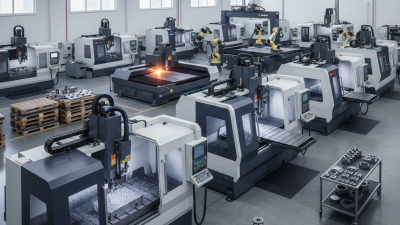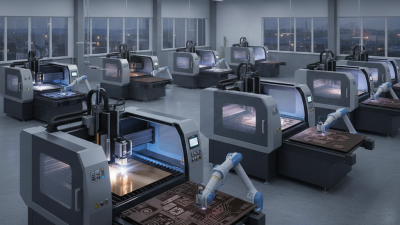


Choosing the right industrial cnc machine can shape production quality, operating costs, and delivery schedules for years. The decision should begin with the workpiece, not the machine brochure. Consider material hardness, part dimensions, required tolerances, surface finish, and daily production volume. A compact aluminum component may need different spindle power and tooling than a large steel housing. Fit matters.
Real workshop experience also reveals details that specifications often hide. Watch the machine in operation, listen for vibration, inspect chip removal, and ask how quickly operators can access the control panel. Small errors matter. A machine with impressive speed may still create delays if tool changes are slow or maintenance is difficult. Review repeatability data, service coverage, training options, and the supplier’s record with similar manufacturers. Independent test results and recognized quality practices can support the decision, but they should not replace practical evaluation.
Budget planning must include installation, software, tooling, coolant systems, energy use, and future repairs. Even experienced buyers get this wrong. A low purchase price may become expensive when spare parts arrive slowly or technicians lack local support. It is also wise to test representative components before signing an order. One sample run can expose chatter, awkward fixturing, or programming limitations. No machine suits every factory. The best choice balances technical capability, operator confidence, verified reliability, and realistic growth plans. Reassess the decision honestly, especially when production needs are changing.

How to Choose the Best Industrial CNC Machine
What Defines an Industrial CNC Machine
An industrial CNC machine is built for repeated production, not occasional workshop projects. Its frame must resist vibration during long cutting cycles. Cast iron or welded steel structures often provide the needed stability. However, material alone does not guarantee accuracy.
A dependable machine combines rigid mechanics, a powerful spindle, precise linear motion, and a capable control system. Check the working envelope against your largest expected part. Leave enough clearance for fixtures, tools, and chip removal. A machine that barely fits today may limit tomorrow’s orders. That mistake is common.
Industrial performance also depends on duty cycle and thermal control. Ask how accuracy changes after several hours of operation. Inspect spindle runout, positioning repeatability, and axis backlash records. These details reveal more than a polished demonstration. Request test cuts using your actual material and tooling. The surface finish should match your drawings, not just a sample part.
Automation can improve output through tool changers, probing systems, pallet handling, and chip management. Yet extra features add maintenance points and training needs. Safety guarding, emergency stops, electrical protection, and documented procedures are essential. Reliable technical support matters too. Spare parts should be available within a realistic timeframe.
Do not judge by size alone. A smaller, rigid machine may outperform a larger but flexible one. Energy use, operator access, software updates, and service costs deserve equal attention. I would also review production data after installation, because early assumptions are often incomplete. A careful choice leaves room for correction.
| Evaluation Category | Key Specification | Typical Industrial Characteristics | Why It Matters | Selection Guidance |
|---|---|---|---|---|
| Machine Structure | Frame and base construction | Heavy-duty cast iron, fabricated steel, polymer concrete, or reinforced composite structures designed for high stiffness. | A rigid structure reduces vibration, improves surface finish, and helps maintain dimensional accuracy during heavy cutting. | Choose a heavier and more rigid frame for hard materials, deep cuts, and continuous production. |
| Work Envelope | Travel and workpiece capacity | Axis travel and table dimensions are matched to the required part size, fixture, tooling, and chip-clearance requirements. | Insufficient travel can limit production flexibility and force additional setups or machining operations. | Allow clearance around the largest workpiece rather than selecting a machine based only on finished-part dimensions. |
| Spindle System | Spindle power, speed, and torque | Industrial systems commonly offer approximately 10–50 hp, with speed ranges selected for roughing, finishing, drilling, or high-speed cutting. | Power and torque determine material-removal capability, while speed affects tool performance and surface quality. | Prioritize torque for steel and heavy roughing; prioritize higher speed for aluminum, plastics, and small cutting tools. |
| Axis Configuration | Number of controlled axes | Three-axis machines handle standard prismatic work; four- and five-axis machines support indexed or simultaneous multi-sided machining. | Additional axes can reduce setups, improve access to complex surfaces, and shorten cycle time. | Use the fewest axes that meet the part geometry to control purchase, programming, and maintenance costs. |
| Positioning Performance | Accuracy and repeatability | Performance depends on machine geometry, guideways, ballscrews or linear motors, thermal control, calibration, and operating conditions. | Repeatable positioning is essential for interchangeable parts, tight tolerances, and reliable multi-operation production. | Review test methods, tolerance requirements, thermal compensation, and real production results rather than relying on one headline value. |
| Feed System | Rapid traverse and cutting feed rate | Industrial machines use servo-driven axes with feed rates selected according to part geometry, material, tooling, and process stability. | Higher usable feed rates can reduce cycle time, but excessive speed may increase vibration, tool wear, or loss of accuracy. | Compare acceleration, maintained cutting feed, and contouring performance—not rapid traverse speed alone. |
| Tool Management | Automatic tool changer capacity | Tool magazines often range from about 12 to more than 100 tools, depending on machining complexity and production volume. | Adequate tool capacity reduces manual intervention and supports unattended or lights-out machining. | Include duplicate tools, probing tools, special cutters, and future production requirements when sizing the magazine. |
| Workholding | Table load and fixture compatibility | The machine must support the combined weight of the workpiece, fixture, tombstone, rotary unit, and cutting forces. | Overloading the table can affect accuracy, damage mechanical components, and create safety risks. | Verify table load, T-slots or pallet interfaces, rotary-axis compatibility, and available clamping space. |
| Control and Automation | CNC control, probing, and monitoring | Industrial controls support multi-axis interpolation, tool offset management, probing, alarms, data collection, and program networking. | Integrated control features improve setup consistency, process visibility, and operator productivity. | Select functions based on operator skill, programming workflow, inspection needs, and required manufacturing connectivity. |
| Chip and Coolant Handling | Chip evacuation and coolant delivery | Typical systems include flood coolant, through-spindle coolant, chip conveyors, filtration, skimmers, and high-pressure delivery options. | Effective chip removal prevents recutting, tool damage, coolant contamination, and interruptions during long cycles. | Match coolant pressure, filtration, conveyor design, and tank capacity to the material and expected chip volume. |
| Thermal Stability | Temperature control and compensation | Industrial machines may use coolant temperature control, spindle growth compensation, enclosure management, and warm-up routines. | Heat generated by the spindle, motors, coolant, and cutting process can shift dimensions during extended production. | Specify thermal requirements when machining tight tolerances or operating continuously across changing ambient conditions. |
| Production Reliability | Duty cycle and maintenance access | Industrial equipment is built for repeated operation, scheduled maintenance, enclosed guarding, lubrication systems, and service diagnostics. | Reliability directly affects uptime, delivery performance, labor utilization, and total operating cost. | Evaluate service intervals, access to wear components, spare-part availability, diagnostics, and expected annual operating hours. |
| Safety and Compliance | Guarding, interlocks, and emergency systems | Industrial CNC equipment requires enclosed work zones, door interlocks, emergency stops, guarding, and appropriate electrical and safety controls. | Proper safeguards protect operators from moving components, rotating tools, chips, coolant, and unexpected machine motion. | Confirm compliance with applicable workplace, electrical, guarding, and risk-assessment requirements before installation. |
| Total Cost of Ownership | Purchase, installation, and operating cost | Costs include the machine, tooling, workholding, coolant systems, power, compressed air, training, maintenance, software, and facility preparation. | A lower purchase price may result in higher costs if the machine has limited productivity, poor uptime, or expensive maintenance. | Compare cost per part, utilization, energy demand, maintenance requirements, expected service life, and resale value. |
Note: The ranges shown are general industry guidance. Actual specifications vary according to machine type, configuration, material, tooling, and production requirements.