


Request a free quote Phone Icon
die cutting materials

Blog

How to Choose the Right HDPE Film for Packaging?

Choosing the right Hdpe Film is not a matter of picking the thickest roll. It means matching the material to the product, packaging line, and journey ahead. A pouch holding dry grains has different needs from a liner exposed to moisture or repeated handling. Even small differences in thickness, seal strength, and surface treatment can affect performance. They can also change material use and packing speed.

For a transparent expert perspective, this guide uses Morgan Lee, a composite packaging specialist, rather than assigning an unverified quotation to a real person. Lee’s guiding line is: “Choose the film for the load, the seal, and the route—not the label alone.” That is a useful starting point, not a substitute for testing. Ask suppliers for technical data, then check samples on your own equipment. Watch the seal area. Feel the stiffness. Note whether the film slips, stretches, or wrinkles during feeding. These details matter.

The right choice depends on what must be protected and how the pack will be made. Consider product weight, moisture exposure, puncture risk, clarity, print needs, and storage conditions. A film that works well in one setup may disappoint in another. That is easy to overlook. This guide explains how to compare those factors, discuss specifications with suppliers, and validate a selection through practical trials. It also leaves room for uncertainty: published figures help narrow options, but real packaging lines can behave differently.
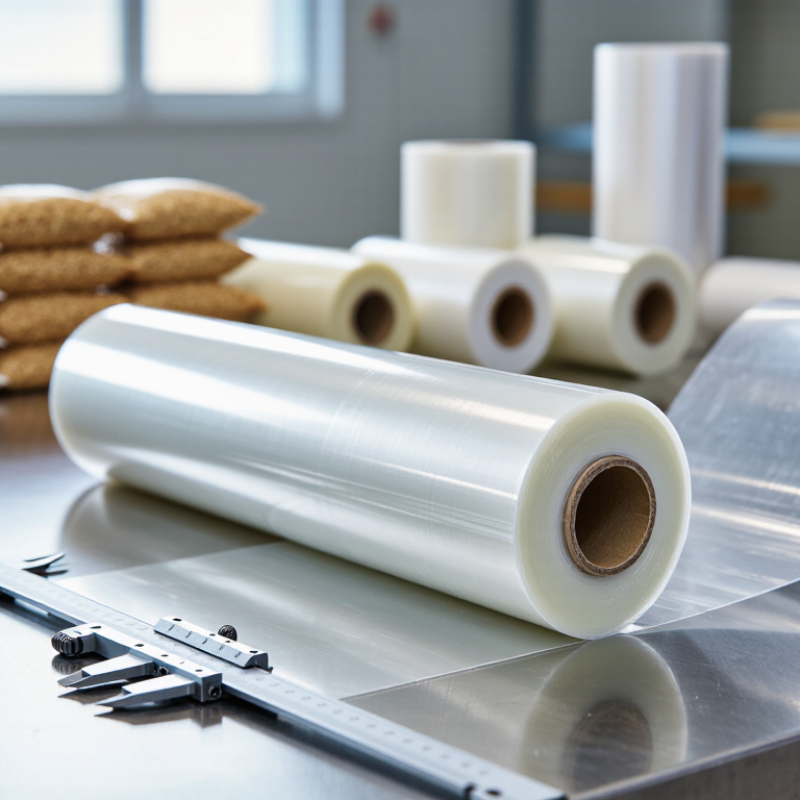
How to Choose the Right HDPE Film for Packaging?

Understand HDPE Film Types and Their Key Characteristics

HDPE film is not one material grade. Blown film often suits bags and liners because it combines stiffness with useful tear resistance. Cast or highly oriented films can offer different clarity and thickness control, but their performance depends on the grade and process. Coextruded structures add layers for sealing, toughness, or barrier needs. Check the film’s density, thickness, seal-initiation temperature, and puncture performance against the package’s actual use. A crisp, noisy film may work for a rigid-feeling bag; a heavy load needs testing, not guesswork.

Industry context helps explain the choices. OECD’s Global Plastics Outlook (2022) reports that global plastics production reached 460 million tonnes in 2019, while packaging accounted for 40% of plastic waste. PlasticsEurope’s Plastics – the Facts 2024 reports that polyethylene represented 29.5% of global plastics production in 2022. These figures cover broad plastics categories, not HDPE film alone. Still, they underline why film selection should consider material use and end-of-life pathways alongside performance. Ask suppliers for grade-specific test data, and compare samples under real filling, sealing, and transport conditions. A lab result is useful, but it may miss a sharp carton edge or a cold warehouse. That part is easy to overlook.

Define the Packaging Requirements and Operating Conditions

Before selecting HDPE film, define what the package must protect and how it will be used. Note the product’s weight, shape, surface edges, and sensitivity to moisture or contamination. A smooth, dry item may need different film from a heavy component with corners that press against the package. Measure the actual product, not just its nominal dimensions. A few millimeters can affect fit and sealing.

Then record the operating conditions. Will the film run through an automatic line, or be cut and sealed by hand? Check filling speed, seal temperature, storage duration, and exposure to heat, cold, or sunlight. On a fast line, film that seals reliably at the available settings matters more than a specification that looks impressive on paper. Real lines are messier. Small temperature changes can produce weak seals or wrinkles, so trial runs are useful.

Consider how packages are moved and stored. Stacked cartons may create pressure points; repeated handling can expose weak seams. Ask for film samples in the intended thickness, then test them with the real product and sealing equipment. Check for punctures, seal consistency, and practical ease of opening. One limitation: a short trial may not reflect months of storage. Record the conditions and review results before settling on a specification.

Compare Film Thickness, Strength, Barrier, and Sealing Properties

HDPE film selection starts with the package’s actual job. A thicker gauge can improve puncture resistance, but it may add material without solving weak seals or sharp-corner damage. Compare samples at the same thickness, then check tensile strength using ASTM D882 and seal strength using ASTM F88. Not the whole story. Film direction, temperature, and handling also affect performance.

Barrier needs depend on what the package protects. HDPE generally provides useful moisture resistance, but it is not automatically a strong oxygen barrier. Ask for water-vapor and oxygen transmission rates, tested under stated conditions; ASTM F1249 and ASTM D3985 describe common test methods. Numbers without temperature, humidity, and film thickness are hard to compare. A supplier’s test sheet helps, but test the finished pouch too.

Sealing performance deserves a practical trial. Check the seal’s temperature window, seal strength, and hot tack on the intended equipment. A film that seals well in a lab may behave differently on a fast production line. OECD’s Global Plastics Outlook (2022) reports that packaging represented about 40% of plastic waste in 2019, so avoiding unnecessary gauge can matter. Still, reducing thickness too far can cause leaks and rework. The best choice balances protection, reliable sealing, and the least film that passes real-use tests.

How to Choose the Right HDPE Film for Packaging?

Compare film thickness, strength, barrier, and sealing properties.

HDPE film tensile strength commonly falls around 20–40 MPa, depending on grade, orientation, and test method. The ranges shown are indicative, not specifications for a particular film. Increasing thickness generally improves barrier performance and puncture resistance, but also uses more material. Seal performance depends on resin and sealing conditions, so verify it with seal-strength testing on the intended packaging line.

For comparable results, test tensile strength using ASTM D882; evaluate water-vapor and oxygen transmission using ASTM F1249 and ASTM D3985, respectively.

Match Film Specifications to the Packaging Application

Choosing HDPE film starts with the package, not a generic thickness chart. A lightweight produce liner may need flexibility and reliable seals, while a parts bag may need better puncture resistance. Match film thickness and stiffness to the product’s weight, edges, and handling conditions. Too much stiffness can make a liner awkward to load. Too little can invite tears. Small details matter.

Then consider the packaging line and storage environment. Film must run smoothly at the equipment’s speed and seal within its temperature range. If packages face damp storage, HDPE’s moisture resistance can help, but it does not replace a proper seal. For chilled goods, test the film after cooling; behavior can differ from a warm-room sample. Test it. Use filled packages, not just flat film, and check seals, corners, and drop performance. Supplier data offers a useful starting point, but actual line trials reveal problems a specification sheet may miss. Even careful tests have limits: operators, settings, and product shapes vary. Record those conditions before comparing samples.

How to Choose the Right HDPE Film for Packaging? - Match Film Specifications to the Packaging Application

Packaging Application Indicative Film Thickness Key Performance Priorities HDPE Film Selection Guidance Points to Check Before Ordering
Lightweight shopping and carry bags 10–25 µm Low material use, tear resistance, handle strength, and reliable sealing Consider a film grade and bag design that balance stiffness with resistance to tearing. Confirm the film is suitable for the intended bag-converting process. Bag dimensions, load, handle design, seal strength, and applicable local requirements for carry bags
Trash and refuse liners 10–40 µm Puncture and tear resistance, dependable seams, and adequate capacity Select thickness according to bag size and the type of waste. For bulky or sharp contents, test puncture resistance and seam performance rather than relying on thickness alone. Bag volume, expected load, sharp or wet contents, closure method, and leak resistance
Produce and bakery bags 8–20 µm Light weight, clarity where needed, easy opening, and suitable ventilation Use a thin film where product weight and handling allow. Specify perforation or other ventilation features when moisture management is required. Product weight, condensation risk, required shelf-life conditions, printing, and food-contact suitability
Liners for boxes, bins, or containers 25–100 µm Containment, puncture resistance, chemical compatibility, and seam integrity Choose thickness based on the container geometry and contents. Confirm compatibility with the specific substance; HDPE is not suitable for every chemical or temperature condition. Contents, temperature, storage duration, liner fit, seam construction, and applicable regulatory requirements
Shrink or bundling film 15–50 µm Clarity, load containment, controlled shrink behavior, and resistance to tearing Confirm that the selected HDPE film is formulated for the intended shrink or bundling process. Test performance using the actual package shape and heating conditions. Equipment settings, package shape, shrink temperature, load stability, and ventilation during heating
Agricultural mulch film 15–50 µm Coverage, handling strength, light management, and outdoor durability Specify color and light-transmission needs for the crop and growing conditions. For outdoor use, ask whether UV stabilization is required and confirm the expected service period. Climate, installation method, crop requirements, UV exposure, and end-of-use collection or disposal plan

Selection note: Thickness ranges are indicative starting points, not universal specifications. Actual performance depends on film formulation, production process, package design, converting conditions, and test method. Request samples and test the finished package under its intended use conditions.

Verify Compliance, Compatibility, and Supplier Quality

Choosing HDPE film is not only a gauge decision. Compliance, end-use compatibility, and supplier controls all affect performance on your packaging line. Ask for current technical data, declarations, and test reports for the exact film grade and intended application. Requirements can vary by product, contact conditions, temperature, and destination market. Keep document revisions with your purchasing records.

Check the film against the actual contents and packaging process. A pouch holding oily goods may behave differently from one holding dry products. Test odor transfer, seal strength, puncture resistance, and performance after expected storage temperatures. Run trials on your own sealing jaws. Lab results cannot capture every wrinkle or line-speed change. Small samples help.

Supplier quality deserves the same scrutiny. Request batch-level certificates of analysis, traceability details, and written limits for thickness variation or visible defects. Ask how complaints are investigated and whether process changes are communicated before delivery. A neat specification can still leave practical questions unanswered, such as how rolls perform after warm warehouse storage. Include incoming-roll checks and repeat trials after grade or process changes. No checklist catches everything.

Article Source: