


Request a free quote Phone Icon
die cutting materials

Blog

How to Choose the Right Wooden Door Hinge?

Choosing the right Wooden Door Hinge is more important than it first appears. A hinge supports the door’s weight, controls its movement, and affects how quietly it closes. A poor match can create rubbing, sagging, loose screws, or visible gaps around the frame. These problems often begin with a simple mistake: selecting by appearance alone.

This guide examines the details experienced installers consider before purchasing. Door weight, thickness, opening direction, hinge size, and screw placement all matter. Solid oak doors may require stronger hinges than lightweight pine doors. Exterior doors also need corrosion-resistant finishes, especially near coastal air or damp entrances. Measure carefully. Guesswork becomes expensive later.

Material quality deserves close attention. Stainless steel, brass, and coated steel each offer different strength and maintenance benefits. Bearing hinges may provide smoother movement for heavier doors, but they are not always necessary indoors. The frame and door edge must also align correctly. Even a well-made hinge can perform poorly when installed unevenly. That is easy to overlook.

Reliable guidance should balance manufacturer specifications with real installation conditions. Check the hinge’s load rating, dimensions, finish, and included fasteners. Confirm that the screws suit the frame material. A beautiful hinge is still the wrong choice if it cannot hold the door securely. There is no perfect option. The best Wooden Door Hinge fits the door, frame, environment, and expected daily use. Some recommendations may need adjustment after a hands-on inspection. That is not failure; it is responsible decision-making.
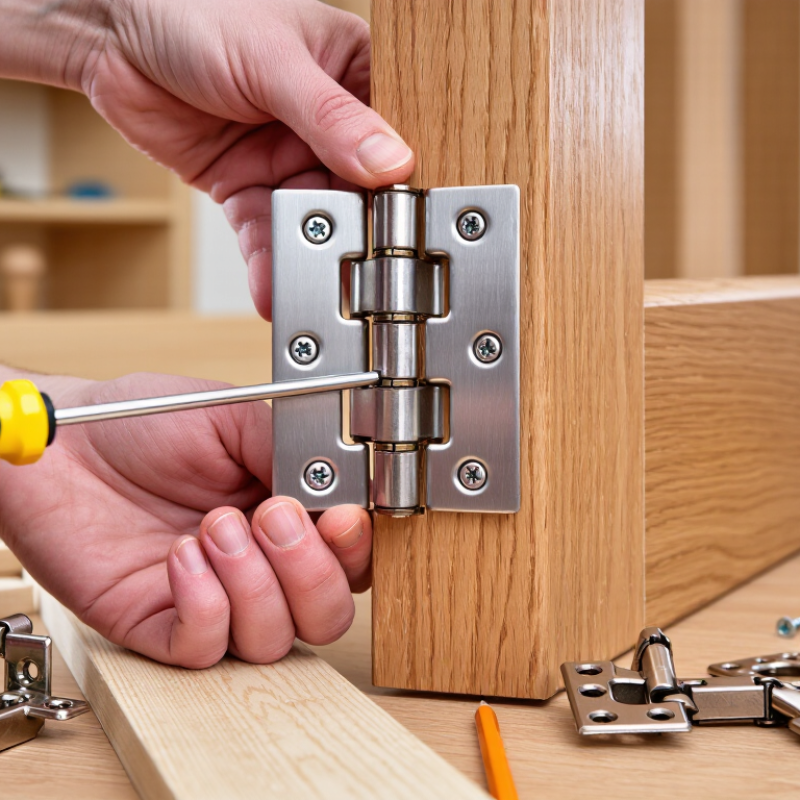
How to Choose the Right Wooden Door Hinge?

Measure Door Height, Width, Mass, and Frequency of Use Before Selection

How to Choose the Right Wooden Door Hinge?

Measure Door Height, Width, Mass, and Frequency of Use Before Selection

A wooden door’s dimensions influence hinge performance more than appearance alone. Measure its height and width with a tape measure, including unusual trims or thick panels. Then estimate the door’s mass, especially if it contains glass, dense hardwood, or internal reinforcement. A tall, wide door creates greater leverage against its hinges. That pressure can cause sagging, scraping, or uneven gaps.

Frequency of use also matters. A bedroom door may open several times daily, while a busy office door may move hundreds of times. Choose hinges with a load rating suitable for the door’s measured mass and expected activity. In my installation experience, three hinges often support ordinary interior doors, but heavy or frequently used doors may need additional support. This is not universal. Door construction changes the result. I once underestimated a solid-core door and had to correct the hinge layout after installation.

Tips: Record every measurement. Check the door’s mass, not just its size. Test the frame for weakness. Place hinges evenly, with extra support near the upper section when appropriate. Leave enough clearance for movement, paint, and seasonal wood expansion. A small measuring error can become a loud rubbing problem later. If the manufacturer’s load data conflicts with your estimate, pause and verify the figures before drilling.

How to Choose the Right Wooden Door Hinge? - Measure Door Height, Width, Mass, and Frequency of Use Before Selection

Door Application Door Height Door Width Approx. Door Mass Frequency of Use Suggested Hinge Size Recommended Number of Hinges Minimum Combined Hinge Load Capacity Selection Guidance
Light Interior Door 1,980–2,100 mm 600–800 mm 15–25 kg Up to 20 cycles per day 75–100 mm butt hinges 2 hinges At least 38 kg Suitable for hollow-core or lightweight solid-wood doors in bedrooms, offices, and low-traffic rooms.
Standard Solid-Wood Interior Door 2,000–2,200 mm 700–900 mm 25–45 kg 20–50 cycles per day 100–125 mm butt hinges 3 hinges At least 68 kg Use three hinges to reduce door sag and distribute the load along the frame and door stile.
Heavy Solid-Wood Entry Door 2,000–2,300 mm 800–1,000 mm 45–75 kg 50–100 cycles per day 100–125 mm heavy-duty hinges 3–4 hinges At least 113 kg Choose ball-bearing or other low-friction hinges when the door is heavy or opened frequently.
Wide or Oversized Wooden Door 2,100–2,400 mm 900–1,200 mm 60–100 kg 20–80 cycles per day 125–150 mm heavy-duty hinges 4 hinges At least 150 kg Verify the frame strength, hinge screw pattern, door thickness, and hinge-side stile width before installation.
High-Traffic Commercial Wooden Door 2,000–2,300 mm 800–1,000 mm 35–70 kg More than 100 cycles per day 100–125 mm commercial-grade hinges 3–4 hinges At least 105 kg Select hinges with a documented cycle rating and use corrosion-resistant finishes where cleaning or humidity is frequent.
Extra-Heavy Acoustic or Fire-Rated Wooden Door 2,000–2,300 mm 800–1,100 mm 70–120 kg 50–150 cycles per day 125–150 mm heavy-duty ball-bearing hinges 4 hinges At least 180 kg Confirm that the hinge type, quantity, and load rating comply with the door assembly and applicable fire or acoustic requirements.

Load capacity values use a practical selection margin of approximately 1.5 times the measured door mass. Always confirm the manufacturer’s tested hinge rating, door thickness, frame construction, screw type, and local building requirements before installation.

Match Hinge Duty to EN 1935 Grades and 200,000-Cycle Minimums

Choosing the right wooden door hinge starts with duty, not finish. A quiet bedroom door needs less resistance than a heavy entrance leaf. EN 1935:2002 evaluates hinges through use, durability, door mass, fire performance, corrosion resistance, and security. Its durability testing includes 10,000, 20,000, and 200,000 opening-and-closing cycles (European Committee for Standardization, EN 1935:2002). For busy corridors, apartments, schools, or public facilities, specify a hinge tested for at least 200,000 cycles.

Match the hinge to the complete door assembly. Measure the leaf weight, height, thickness, closer force, and expected traffic. A tall solid-wood door may create greater edge loading than its weight suggests. The EN 1935 eight-digit classification code should be read as a complete performance record, not one simple strength number. Request an independent test report showing specimen mass, applied load, cycle count, and failure results. Catalogue claims alone are not enough.

A 200,000-cycle rating is useful, but it does not guarantee perfect service on site. Poor alignment, loose screws, moisture, or an overloaded closer can shorten hinge life. I have seen specifications focus on grade while ignoring frame movement. That shortcut is easy, but weak. Check the finished opening after installation, then review wear, noise, and screw movement during maintenance inspections. (CEN, EN 1935:2002; Door and Hardware Institute, door hardware installation guidance)

Calculate Hinge Quantity: Three Hinges for Doors up to 2,100 mm High

How to Choose the Right Wooden Door Hinge?

For a wooden door up to 2,100 mm high, three hinges are a practical starting point. Place one hinge about 150 mm below the top edge, another about 200 mm above the floor, and the third between them. This spacing helps distribute the door’s weight and reduces twisting near the screws. In my installation experience, a solid oak door can still sag when its width, thickness, or hardware adds unexpected weight. Height alone is not enough.

EN 1935 hinge testing classifies certain hinges for up to 200,000 opening cycles. That figure shows why durability matters in busy homes, offices, and rental properties. However, it does not mean every three-hinge layout will perform equally well. A door closer, frequent use, glass panels, or a wide leaf may require a fourth hinge. Check the door manufacturer’s weight guidance and the hinge’s tested load rating. The three-hinge rule is useful, but not perfect.

Tips: Measure the actual door weight before drilling. Use long, suitable screws that reach solid timber, not only the surface veneer. Keep hinge leaves aligned, and avoid forcing the door into position. A small installation error can create a large gap at the latch side. Think about future use, too. A quiet bedroom door and a heavy entrance door should not receive identical hardware.

How to Choose the Right Wooden Door Hinge?

Typical hinge quantity by wooden door height

For wooden doors up to 2,100 mm high, three hinges are a common minimum planning recommendation. Taller or heavier doors generally require additional hinges to improve load distribution and reduce sagging. Always verify the final quantity according to door weight, thickness, usage frequency, and hinge load capacity.

Choose Materials for Load, Corrosion, and Indoor or Outdoor Exposure

How to Choose the Right Wooden Door Hinge?

Choosing the right wooden door hinge begins with the door’s actual load, not its appearance. Solid hardwood doors can be surprisingly heavy. Measure the door’s height, width, thickness, and approximate weight before selecting hardware. A lightweight interior door may work with two hinges. Taller or heavier doors usually need three or more. Hinge load ratings are not always measured the same way. Check tested capacity, screw size, and recommended spacing from a reliable technical source. In practice, extra support often prevents sagging, but excessive hardware can complicate installation.

Material choice matters when moisture, salt, or temperature changes are present. Stainless steel resists rust well and suits bathrooms, kitchens, and exposed entrances. Brass offers attractive corrosion resistance, but its finish can change with handling and cleaning. Zinc-based hinges may suit dry indoor doors, though they deserve caution in damp locations. I once underestimated humidity near a laundry room. The hinge operated smoothly at first, then developed rough movement within months. That mistake showed me that “indoor” does not always mean dry.

For exterior wooden doors, choose corrosion-resistant material and protected screws. Coastal air needs stronger resistance than a sheltered porch. Match the hinge finish with the door environment, not only the handle. Oil-impregnated or sealed bearings can reduce friction, but they still need inspection. Check for loose screws, dark stains, and side movement twice a year. Small details matter. A slightly imperfect fit can become a serious sag after repeated daily use.

Verify Hinge Size, Screw Pattern, Door Clearance, and Opening Angle

How to Choose the Right Wooden Door Hinge?

Verify Hinge Size, Screw Pattern, Door Clearance, and Opening Angle

Choosing a wooden door hinge starts with accurate measurements, not appearance. Measure the existing hinge height, width, and leaf thickness. I also check the door weight and wood condition before selecting a replacement. A larger door may need wider leaves or additional hinges. Small differences matter.

Match the screw pattern carefully. Place the new hinge over the old mortises and compare every hole. Misaligned screws can weaken the timber and leave visible gaps. I once trusted a similar-looking hinge, but its holes sat several millimeters apart. The door began to sag. That shortcut was avoidable. Record the measurements.

Then inspect door clearance and opening angle. Close the door slowly and watch the hinge edge, frame, and nearby wall. A tight reveal can cause rubbing, while a deep stop may limit movement. Check whether the door must open 90, 105, or 180 degrees. The wrong angle can damage handles or trim. Do not guess.

Tips: Use a ruler and paper template before drilling. Test the hinge with two temporary screws. Check that the door closes without force. Confirm the screw length suits the timber without breaking through the opposite face. Leave room for adjustment; perfect alignment is rarely achieved on the first attempt.