Cold Rolled Coil Best Uses and Benefits Explained
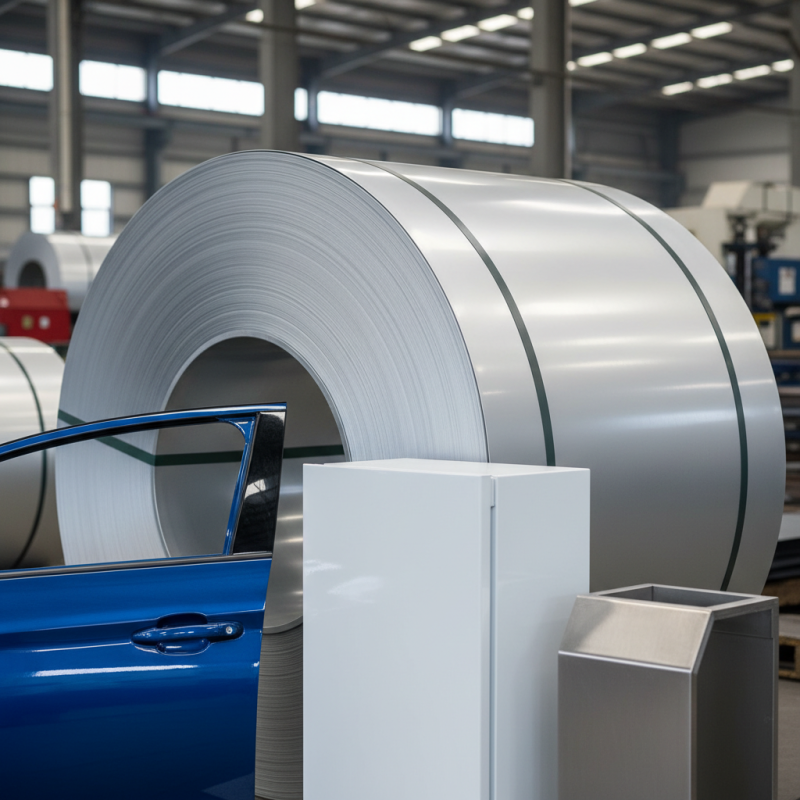
Cold Rolled Coil is a versatile material used in various industries. Its smooth finish and precise dimensions make it ideal for applications like automotive parts and appliances. However, not all uses maximize its potential.
One significant benefit of Cold Rolled Coil is its strength. It provides excellent durability in demanding environments. Yet, some may overlook this feature, opting for cheaper alternatives that can lead to higher maintenance costs. The smooth surface enhances paint adhesion and reduces friction, a crucial detail in manufacturing processes.
Choosing Cold Rolled Coil could streamline production and improve product quality. But businesses must carefully assess their specific needs. Understanding its advantages and limitations is essential for optimal use. Informed decisions can lead to better outcomes and increased efficiency in production.
Cold Rolled Coil: Definition and Production Process Overview
Cold rolled coil (CRC) is an essential steel product. It begins as hot rolled steel and undergoes further processes. During cold rolling, the steel is passed through rollers at room temperature. This method increases strength and reduces thickness. According to industry reports, cold rolled steel has a tighter tolerance and improved surface finish. These qualities make it ideal for many applications.
In the automotive sector, CRC is widely used. Components like body panels and frames benefit from its durability. The manufacturing industry also employs cold rolled coils for appliances. Refrigerators and washing machines often use CRC due to its attractive finish. Many companies are shifting towards cold rolled products because of their efficiency.
Tips: Choose CRC suppliers cautious about their production methods. Quality control can vary greatly. Conduct thorough research before purchasing. Investing time in assessing suppliers can save money and frustration later. The right choice can prevent long-term issues such as corrosion.
Cold Rolled Coil Best Uses and Benefits
| Dimension | Data |
| Definition | Cold rolled coil is a type of steel that has been processed at ambient temperature to enhance strength and surface finish. |
| Production Process | Includes pickling, cold rolling, and annealing to achieve desired thickness and mechanical properties. |
| Common Applications | Used in automotive parts, appliances, furniture, and construction materials. |
| Benefits | Better surface finish, improved strength, and tighter tolerances compared to hot rolled steel. |
| Thickness Range | Typically ranges from 0.15 mm to 3.0 mm. |
| Surface Treatment Options | Coating options include galvanizing, painting, and phosphating. |
| Market Trends | Increasing demand in automotive and construction industries drives production rates. |
Key Characteristics and Mechanical Properties of Cold Rolled Coil
Cold rolled coil is widely appreciated for its precise dimensions and improved surface finish. It is produced by further processing hot rolled steel. The result is a thinner and stronger product. This makes it ideal for applications requiring tighter tolerances. Industries often utilize this material in automotive and appliance manufacturing.
The mechanical properties of cold rolled coil are significant. It boasts higher strength compared to hot rolled variants. The yield strength is notably increased, providing added resilience. This is essential for components subject to high stress. Moreover, the process enhances surface hardness, which can be beneficial for durability. However, these benefits come at a cost. The increased hardness can make the material less ductile. This trade-off may complicate certain forming processes.
Cold rolled coils also display excellent flatness and uniformity. These characteristics are crucial for applications like stamping. However, the additional processing can lead to residual stresses. These stresses may require careful management during fabrication. Users should assess their specific needs. Not all applications may benefit from the attributes of cold rolled steel.
Common Applications of Cold Rolled Coil in Manufacturing Industries
Cold rolled coil is a versatile material used across various manufacturing industries. It stands out for its smooth surface finish and superior tolerance. Commonly, it finds applications in the automotive sector, where precision is critical. Car bodies and components are often crafted from cold rolled coil because it offers strength without excessive weight.
In construction, cold rolled coil is valued for its durability. It is seen in the making of beams and metal frames. These structures require materials that can withstand harsh conditions. However, the cost of cold rolled products can be higher than alternatives. Some manufacturers express concern over this pricing issue.
Electronics manufacturers also benefit from cold rolled coil. It is used for enclosures and brackets, providing electrical and mechanical stability. These products must be lightweight yet robust. Yet, some users find it challenging to source the right specifications. Matching the exact thickness and finish can be problematic. Overall, while cold rolled coil is essential, challenges remain in its wider application.
Economic Benefits of Using Cold Rolled Coil in Production
Cold rolled coil offers multiple economic benefits in production. Its tight tolerances and smooth surfaces allow for high-quality output. This precision reduces waste, making it a cost-effective choice for manufacturers. Businesses save on materials and labor costs by minimizing scrap rates. The efficiency of cold rolled coil leads to shorter production cycles.
Additionally, using cold rolled coil can enhance product durability. Stronger materials require less frequent replacements, which means lower long-term expenses. However, not every process is suited for cold rolled steel. In some cases, alternative materials might be a better fit. It’s important to analyze each project's specific needs.
Investing in cold rolled coil does involve initial costs. These may be higher compared to other materials. Companies must weigh these expenses against long-term savings. A decision should consider not just immediate benefits, but also future production goals. Crafting a strategy around these factors can maximize efficiency and sustainability.
Economic Benefits of Using Cold Rolled Coil in Production
Market Trends and Future Outlook for Cold Rolled Coil Demand
The demand for cold rolled coil (CRC) is experiencing notable shifts in the market. According to industry reports, the global cold rolled steel market is expected to reach approximately $350 billion by 2025. Factors driving this growth include increased demand from the automotive and construction sectors. However, the market also faces challenges, such as fluctuating raw material prices and evolving regulations.
Future outlooks suggest an increase in CRC applications. The construction industry alone is projected to account for 30% of the CRC demand by 2024. With the rise of innovative building methods, this material will play a crucial role. Yet, manufacturers must adapt to changing sustainability standards. Overcoming these issues will require a commitment to invest in greener processes and technology.
Market trends indicate a shift towards lightweight materials in automotive design. This is expected to enhance fuel efficiency and reduce emissions. Despite this, there are concerns about potential supply chain disruptions. Businesses must stay agile. The ability to quickly pivot will determine success in this evolving landscape.