What is a hot forging press and how does it work?
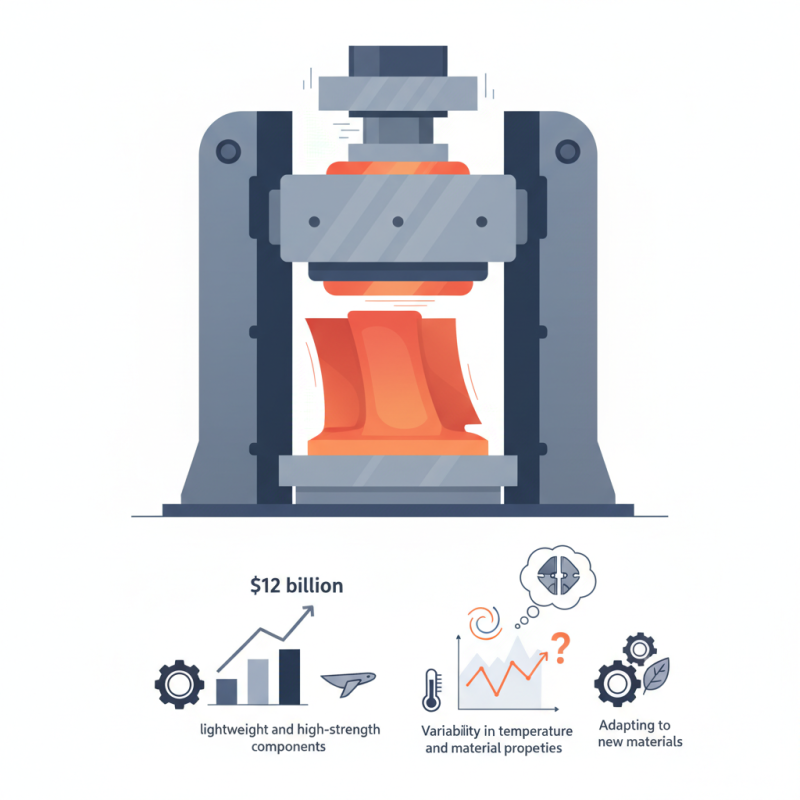
hot forging presses play a crucial role in the manufacturing industry. These machines heat metal to the point of deformability, allowing for precise shaping. According to a recent report by Global Market Insights, the hot forging market is projected to reach $12 billion by 2026. This growth reflects the increasing demand for lightweight and high-strength components across various sectors.
Experts highlight the significance of hot forging presses in enhancing product performance. John Smith, a leading authority in metalworking technology, notes, "The precision of a hot forging press can significantly influence the durability of complex parts." This emphasizes the need for reliable machinery in producing components that withstand high-stress environments.
Despite advancements, challenges remain in optimizing the process. Variability in temperature and material properties can impact the final product's quality. Continuous improvement in hot forging techniques is essential. Adapting to new materials and processes will ensure the industry meets evolving demands. The focus on innovation and precision makes hot forging presses pivotal in shaping the future of manufacturing.
What is a Hot Forging Press?
A hot forging press is a type of machinery used in metalworking. It applies high pressure and heat to deform metal into the desired shape. By using this process, manufacturers can create intricate shapes and components efficiently. The heat allows the metal to become more malleable, reducing the required force for deformation.
Typically, the forging process involves heating metal above its recrystallization temperature. This makes it easier to manipulate. Different types of metals can be forged, including steel and aluminum. When properly conducted, the result usually enhances the metal’s properties, such as strength and durability. However, maintaining consistent temperature and pressure can be challenging. It requires skilled operators to monitor the process closely.
Hot forging also comes with its complexities. Factors like tool wear and temperature distribution can impact results. Mistakes in temperature control can lead to defects in the final product. In some cases, a lack of appropriate cooling can lead to unintended brittleness. It’s a careful balance of technique, knowledge, and experience to achieve the desired outcome in this field of manufacturing.
Components of a Hot Forging Press
Hot forging presses are essential tools in the manufacturing industry. They operate by shaping metal through high temperature and pressure. Various components make up a hot forging press, each playing a crucial role.
The main component is the ram. It exerts force on the metal workpiece. The die set is equally important, as it defines the desired shape. It includes a stationary die and a movable die. Proper alignment is critical, but mistakes can happen. Issues with alignment can lead to defective products.
Additionally, the hydraulic system powers the press. It provides the necessary force for accurate shaping. Control systems monitor the pressure and temperature, ensuring optimal conditions. Operators must pay close attention to these readings. They need to adjust settings based on the metal being forged. Improper temperature control can cause failures.
Regular maintenance of the components is vital for efficiency. Consistent oversight can prevent unexpected breakdowns. Each part of a hot forging press is designed for precision. However, even experienced operators must remain vigilant to avoid mistakes.
The Hot Forging Process Explained
The hot forging process is a critical technique in metalworking, enabling manufacturers to produce strong and durable components. This process involves heating metal to a temperature that makes it malleable, allowing it to be shaped under high pressure. According to a report from the International Journal of Advanced Manufacturing Technology, the hot forging method can enhance the mechanical properties of metals significantly, yielding parts with improved strength and fatigue resistance.
During hot forging, the metal is typically heated to over 50% of its melting point. This high temperature helps reduce the energy required to deform the material, promoting internal grain refinement. A 2020 research study showed that hot forging can lead to a remarkable 20% increase in yield strength compared to cold forging. Moreover, defects such as porosity and micro-cracking are less prevalent due to the plasticity of the heated material.
However, the process is not without challenges. Temperature control is vital, as overheating can lead to oxidation and deterioration of the material. Additionally, operators must ensure consistent pressure application to avoid inconsistencies in finished products. These complexities warrant the need for skilled personnel, emphasizing the importance of experience in operating hot forging presses efficiently.
Advantages of Using a Hot Forging Press
Hot forging presses are essential tools in metal shaping. They apply immense pressure and heat to shape metal into desired forms. One significant advantage of hot forging is improved material properties. The high temperatures allow for enhanced ductility. This makes the metal easier to mold and reduces the risk of cracks during the process.
Another advantage is the reduction in machining time. With hot forged components, the need for extensive machining is minimized. This not only saves time but also cuts down on manufacturing costs. Additionally, hot forging often results in stronger and more durable parts. The process refines the grain structure, leading to enhanced mechanical properties.
However, there are challenges to consider. The energy required for heating can be significant. This could impact operational costs. Moreover, controlling the temperature and pressure is critical. Any slight deviation might lead to defects. These factors highlight the need for precise engineering and monitoring in hot forging. Careful consideration of these details ensures optimal performance and quality in forged components.
What is a Hot Forging Press and How Does It Work? - Advantages of Using a Hot Forging Press
| Dimension | Description |
| Temperature | Typically heated to 1,100 - 1,200 °C (2,012 - 2,192 °F) |
| Pressure | Pressures can range from 1,000 to 10,000 tons |
| Cycle Time | Cycles typically range from 5 to 30 seconds |
| Material Types | Common materials include steel, titanium, and aluminum |
| Advantages | Improves strength, reduces grain size, and enhances toughness |
| Applications | Used in automotive, aerospace, and heavy machinery industries |
Applications of Hot Forging in Various Industries
Hot forging is a vital process in various industries, transforming metal into strong components. This method is widely used in aerospace, automotive, and heavy machinery sectors. According to a report by Global Industry Analysts, the hot forging market is projected to reach USD 27 billion by 2027, reflecting the increasing demand for durable and lightweight materials.
In the automotive industry, for instance, hot forging plays a crucial role in creating vital components such as connecting rods and crankshafts. The precision of this method allows manufacturers to produce parts that withstand high pressure and temperature. Aerospace applications also benefit, as hot-forged components can handle extreme conditions, ensuring safety and reliability.
Tips: When considering hot forging, understanding material properties is essential. Each metal behaves differently under heat. Experimenting with various temperatures can yield unexpected results. Moreover, maintain consistency in heating, as variations can lead to defects.
Nevertheless, hot forging does present challenges. The initial investment in machinery can be significant. Companies must also invest in skilled labor and ongoing maintenance. Regular training can help mitigate these issues, ensuring the process remains efficient and cost-effective. Such considerations are crucial for achieving optimal performance in hot forging operations.
Applications of Hot Forging in Various Industries