How to Choose a Top Drum Chipper in 2026?
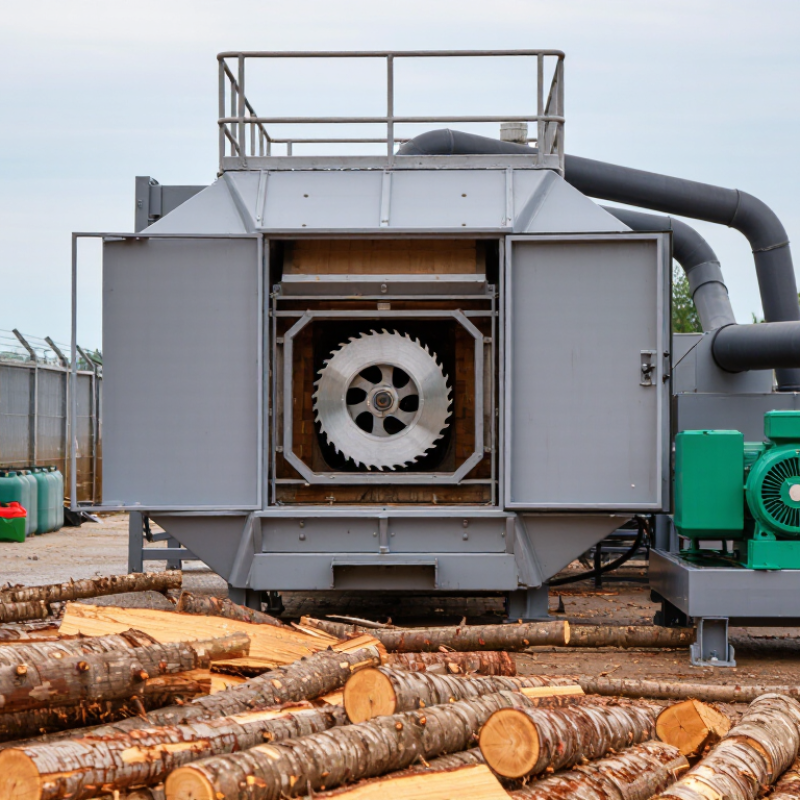
Choosing a top Drum Chipper in 2026 starts with the material you process, not a bold horsepower claim. Note the typical branch diameter, wood species, moisture, and daily workload. A machine that handles occasional pruning may struggle with dense hardwood and continuous feeding. Capacity figures are useful, but check how the manufacturer defines them and whether they match your actual conditions.
Look closely at the feed opening, drum design, blade access, and power source. Ask for clear maintenance intervals, replacement-part availability, and written warranty details. If possible, watch the chipper process material similar to yours; listen for uneven operation and inspect the resulting chips. That matters. Safety features deserve equal attention, including accessible emergency stops, guards, and practical feeding controls. Confirm that operators can follow the supplied instructions and site procedures.
It is easy to overvalue horsepower. Small details count. Fuel use, transport dimensions, noise, and service access can shape the real cost of ownership. Compare specifications from reliable manufacturers, then verify important claims with documentation or a demonstration. A larger model is not automatically the better choice, and a lower purchase price may leave important needs unmet. The best fit is the Drum Chipper that handles your workload consistently, can be maintained locally, and suits the people who will operate it. Some decisions still involve judgment; record your assumptions before comparing models, and revisit them when your workload changes.
Set Required Throughput in t/h and Power Demand in kW
How to Choose a Top Drum Chipper in 2026?
Start with the material you actually process, not the largest throughput figure in a brochure. Record the required output in tonnes per hour and clarify whether that means incoming wood or finished chips. The difference matters when moisture, bark, and oversized pieces vary. USDA Forest Products Laboratory’s Wood Handbook notes that green-wood moisture content can exceed 100% on an oven-dry basis for some species. Wet feed can therefore distort comparisons based on tonnes per hour alone. Keep a simple log of species, moisture, piece size, and hourly output. Real loads are rarely uniform.
Then ask for continuous power demand in kilowatts under your feed conditions, not just the engine’s peak rating. A useful check is measured energy use in kWh per tonne multiplied by target throughput in t/h. For example, 12 kWh/t at 8 t/h implies about 96 kW at the measured operating point, before allowing for drive losses and auxiliaries. Treat this as a planning estimate, not a guaranteed motor size. A field trial is better. Watch for feed stalls, speed drops, and chip-size changes.
Compare the trial’s results with the supplier’s rated capacity and document the test conditions. The U.S. Department of Energy’s 2023 Billion-Ton Report discusses how biomass resources differ by type and location; that variability is a practical warning against choosing from a single headline number. Ask how the machine performs with your wettest routine material, and leave room for brief peaks. A tidy spreadsheet can still mislead. I would revisit the assumptions after a week of real production.
Match Drum Infeed Capacity to Maximum Log Diameter and Feedstock
Choosing a drum chipper starts with the largest log you actually expect to process, not the average piece in the pile. Compare that diameter with the machine’s stated infeed limit, and check the opening’s width and height too. A thick, straight trunk may fit where a crooked one will not. Leave a practical margin rather than feeding every log at the limit. Real piles are messy.
Feedstock matters just as much. Dense hardwood, wet material, forked limbs, and tangled brush can feed differently from clean, straight softwood. A chipper’s maximum diameter does not guarantee steady output across every material. Check the manufacturer’s guidance for acceptable feedstock, and consider engine power, feed-roller grip, and the chip size you need. These details affect real throughput. A wide opening alone is not enough.
Before buying, measure several representative logs and inspect the most awkward pieces. If possible, arrange a supervised test with similar material. Note whether the infeed handles branches smoothly, stalls, or produces inconsistent chips. I would recheck the capacity rating against the actual pile; paper specifications can feel generous. A modest buffer may save time and reduce strain on the machine.
Specify Chip Dimensions with ISO 17225-4 Classes P16S, P31S, and P45S
A top drum chipper should be selected around the chip size your customer needs, not maximum advertised output. ISO 17225-4:2021 defines graded wood-chip classes by particle-size distribution. In its P16S, P31S, and P45S classes, the main fraction is sized around nominal upper limits of 16, 31.5, and 45 mm. P16S can suit equipment needing finer, more uniform chips; P45S allows larger pieces. P31S sits between them. The class name alone does not describe every particle: fines and oversize pieces also matter.
Ask suppliers to run your actual logs through the chipper, then sieve samples against the required class. ISO 17827-1:2016 describes sieve analysis for solid biofuels; use a consistent method when comparing samples. Check the fines, oversize share, and chip shape, not just average length. Test a batch. Record throughput and energy use, too. Wet, crooked branches may produce a different distribution from dry, straight logs, even with the same screen. I would treat one trial as a starting point, not proof: knife wear, feed speed, and wood species can shift results. A screen change may help, but it cannot guarantee compliance by itself.
How to Choose a Top Drum Chipper in 2026? Specify Chip Dimensions with ISO 17225-4 Classes P16S, P31S, and P45S
ISO 17225-4 class limits shown: at least 60% of the chips by mass must fall within the main size fraction. Fines and oversize values are maximum limits by mass. P16S: 3.15–16 mm main fraction, fines ≤15%, oversize above 31.5 mm ≤6%; P31S: 3.15–31.5 mm, fines ≤10%, oversize above 45 mm ≤6%; P45S: 3.15–45 mm, fines ≤10%, oversize above 63 mm ≤6%. Select the class that matches the particle-size requirements of the intended handling and end-use system.
Compare Fuel Use, Knife Life, and Downtime per Operating Hour
A top drum chipper is not simply the machine with the lowest fuel figure. Compare fuel use under similar workloads, recording litres per operating hour and tonnes of usable chips produced. A wet, knotty hardwood load can consume more fuel than dry, straight branches. Keep a basic log of wood type, moisture, and output; otherwise, the numbers can mislead.
Knife life deserves the same careful tracking. Record hours or tonnes between sharpening, plus the number of sharpening cycles before knives need replacement. Inspect chip size and cut quality as blades wear. Dull knives may raise fuel consumption and produce uneven chips, even when the machine keeps running. Small details matter.
Downtime can quietly outweigh a modest fuel saving. Count knife changes, sharpening stops, blockages, and routine servicing per operating hour. Then compare lost hours with actual production, not just the time the engine was running. The comparison is imperfect, but useful. I still find it easy to overlook short stoppages; a few minutes here and there become a real cost across a long shift. Ask operators to note the cause and duration of each stop, and compare results across several shifts before choosing.
Verify Safety Against ISO 11850 and Calculate Lifecycle Cost
How to Choose a Top Drum Chipper in 2026?
When comparing drum chippers in 2026, treat ISO 11850 as a verification point, not a sales claim. Ask for the exact standard edition, risk assessment, and conformity documents covering the configuration you plan to buy. Check guards around the feed opening, emergency-stop access, controls, and jam-clearing procedures. These details matter. Request a witnessed test or inspect a unit under controlled conditions. Paperwork alone cannot show whether operators can reach controls quickly or see the discharge area clearly. Read the operator manual for clearly explained residual risks.
Lifecycle cost can overturn a low purchase price. Estimate fuel per operating hour, blade sharpening and replacement, scheduled service, downtime, transport, and expected resale value. Use your own feedstock and shift pattern. Wet or dirty wood can increase wear and reduce throughput. Compare cost per saleable tonne, not theoretical hourly capacity. Record your assumptions, then check them against a short production trial. Some figures will remain estimates; label them honestly.
Tips: Ask for maintenance intervals and typical blade life. Check parts lead times. Record fuel use and tonnes during a trial. Leave room for uncertainty; a spreadsheet helps, but it is not infallible.