Top 5 Tips for Choosing Drip Line Irrigation Hose?
Choosing the right Drip Line Irrigation Hose can significantly impact crop yield and water efficiency. According to a report by the Irrigation Association, efficient irrigation practices can increase agricultural productivity by up to 40%. In areas facing water scarcity, optimal irrigation systems are essential. Studies show that drip irrigation systems can reduce water usage by approximately 30% to 50% compared to traditional methods.
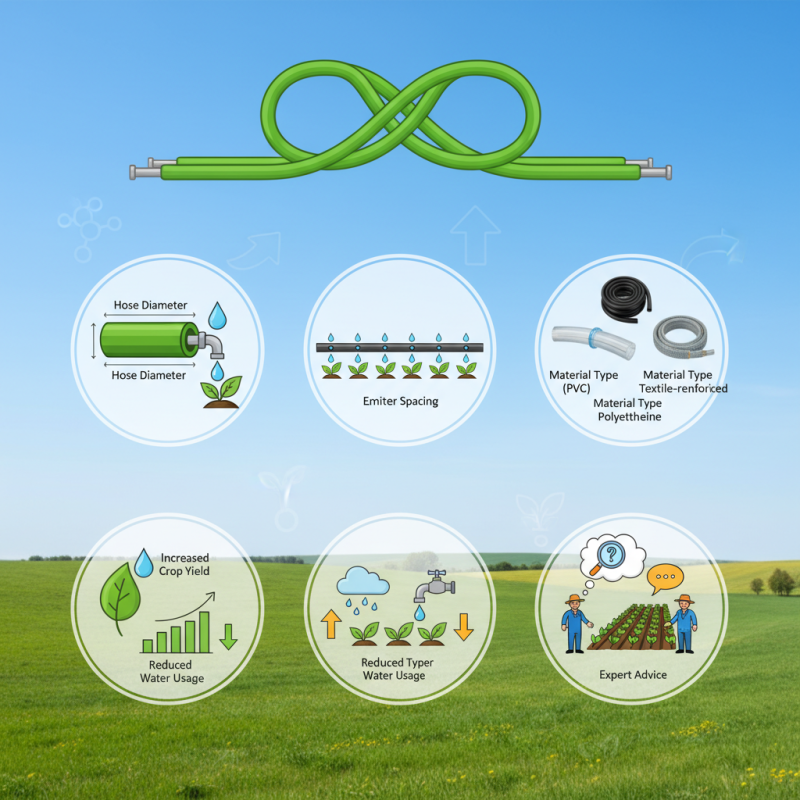
The selection process for a drip line is not as straightforward as it seems. Factors like hose diameter, emitter spacing, and material type must be carefully evaluated. Improper choice can lead to uneven water distribution and wasted resources. The USDA highlights that a third of agricultural water use is inefficient, underscoring the need for informed decisions.
Understanding the nuances of Drip Line Irrigation Hose can optimize both water management and crop health. With precision being key, growers should reflect on their specific needs and local conditions. This will help in making a choice that not only conserves water but also enhances agricultural resilience. Seeking expert advice can also aid in navigating this complex decision-making process.
Understanding Drip Line Irrigation: Key Concepts and Benefits
Drip line irrigation is an efficient method for watering plants. It delivers water directly to the root zone. This reduces evaporation and runoff. According to the American Society of Agricultural and Biological Engineers, drip irrigation can conserve up to 50% more water than traditional systems. This efficiency is crucial in drought-prone areas.
Understanding the key concepts of drip line irrigation helps optimize its use. The system consists of tubing with emitters placed along its length, providing precise water application. Each emitter should be strategically located for maximum effectiveness. Research shows that proper spacing can enhance both crop yield and water efficiency. Not all plants have the same water needs. Therefore, the flexibility of drip irrigation allows for tailored watering.
Benefits extend beyond water conservation. Improved soil structure and reduced weed growth are notable advantages. However, improper installation can lead to inconsistent watering, which may stress plants. Regular maintenance is essential for sustained effectiveness. Leaks or clogs can waste water and resources. According to a report by the Irrigation Association, around 30% of existing systems fail to operate as intended. This highlights the need for diligence in system management.
Top 5 Factors to Consider When Choosing Drip Line Irrigation Hose
Evaluating Soil Types for Optimal Drip Irrigation Performance
Choosing the right drip line irrigation hose is crucial for effective watering. Soil type plays a significant role in determining which system will perform best. Different soils absorb and retain water differently. Sandy soil drains quickly, while clay holds moisture. Understanding these characteristics can guide your selection.
Clay soil may benefit from a slower drip rate. This allows the water to penetrate deeply without running off. Conversely, sandy soil requires a hose that emits water more rapidly. Evaluating your soil type can help avoid common issues. For instance, using a slow-drip hose in sandy soil might lead to under-watering.
Organic matter in the soil can also influence irrigation choices. Soil with higher organic content retains moisture better. This means you may need less frequent watering. However, it can also become compacted, affecting water distribution. Regular soil tests can provide valuable insights into these conditions. Adjusting your hose choice according to these factors enhances watering efficiency.
Selecting the Right Hose Diameter for Efficient Water Distribution
When choosing a drip line irrigation hose, selecting the right diameter is crucial. A smaller diameter hose can deliver water more slowly and evenly. This is beneficial for delicate plants that require precise moisture levels. On the other hand, a larger diameter can handle heavier flow. This is ideal for larger gardens where water needs to travel farther.
Consider the specific requirements of your plants. Some may thrive with less water, while others need more. The hose diameter will affect both water pressure and flow rate. A mismatch can lead to overwatering or underwatering. Verify the water pressure in your system before making your choice.
In practice, testing different diameters can yield valuable insights. You might find that a seemingly perfect size can still lead to wasteful runoff. Observing how water disperses during irrigation can inform your choice. Take time to experiment and adjust as necessary. Gardening often requires reflection and adaptation to achieve the best results.
Assessing Flow Rate Requirements for Effective Irrigation Design
Choosing the right drip line irrigation hose involves understanding the flow rate requirements for effective irrigation design. The flow rate is crucial. It determines how much water can be delivered to your plants. According to industry reports, optimal flow rates typically range between 0.5 to 1.5 gallons per hour for many crops.
Different plants have varying water needs. A vegetable garden may require a higher flow rate compared to a flower bed. Assessing soil type is essential too. Sandy soils drain quickly, needing faster flow rates. Conversely, clay soils retain moisture, which demands careful management. Overwatering can lead to root problems. It's a balance that requires observation.
One common mistake is ignoring local climate factors. For instance, regions with high temperatures may require adjustments in flow settings. According to research, plants in arid climates need 30% more water than those in humid areas. Adjusting your hose's flow rate for seasonal changes is often overlooked. Keeping an eye on plant health will help refine your approach. This combination of knowledge allows for better planning and improved irrigation efficiency.
Comparing Material Durability and Longevity in Drip Irrigation Hoses
When choosing a drip line irrigation hose, material durability is crucial. Different materials impact the hose's lifespan and performance. Common options include polyethylene, PVC, and rubber. Each has unique strengths and weaknesses. Polyethylene is lightweight and flexible but may degrade under UV exposure. PVC is more rigid, offering strength but can be less flexible. Rubber hoses provide excellent longevity but may come with a higher initial cost.
It's essential to consider environmental factors when selecting your hose material. High temperatures can accelerate damage to weaker materials. Cold weather may make them more prone to cracking. Ensure you assess how frequently you will replace the hoses. This decision impacts both your budget and the effectiveness of your irrigation system.
The longevity of drip irrigation hoses also depends on proper maintenance. Regularly inspect for leaks and clogs. Neglect can lead to reduced efficiency and wasted resources. Reflecting on these factors will help you choose a hose that meets your gardening needs. The right decision will enhance your garden's health and productivity.