


Request a free quote Phone Icon
die cutting materials

Blog

Top 10 Industrial Transformer Manufacturers Worldwide

Choosing the right Industrial Transformer manufacturer affects grid stability, operating costs, safety, and long-term maintenance. A transformer may work quietly for decades, yet one weak design decision can create expensive downtime.

This guide examines ten leading manufacturers serving utility, industrial, renewable energy, and infrastructure projects worldwide. It considers engineering capability, production scale, product efficiency, testing standards, service coverage, and documented market experience. Practical details matter here. A factory’s testing laboratory, for example, can reveal more than a polished brochure. Temperature-rise tests, insulation checks, noise measurements, and oil analysis all support better purchasing decisions.

The selected companies are assessed through publicly available technical information, industry reputation, regional presence, and customer support capabilities. Their portfolios may include dry-type transformers, oil-immersed units, cast-resin designs, and customized high-voltage systems. Each option suits different conditions. A mining facility, offshore wind project, and urban substation rarely need the same specification.

No ranking is perfectly universal. Project voltage, climate, load profile, installation space, and local service access can change the result. Some manufacturers excel globally but respond slowly in smaller markets. Others offer strong regional support with less international visibility. That difference deserves attention.

This overview aims to provide a reliable starting point, not a final purchasing verdict. Engineers should still verify certifications, warranty terms, lifecycle costs, factory acceptance testing, and after-sales support before signing a contract. Real projects are less tidy than comparison tables. That is worth remembering.
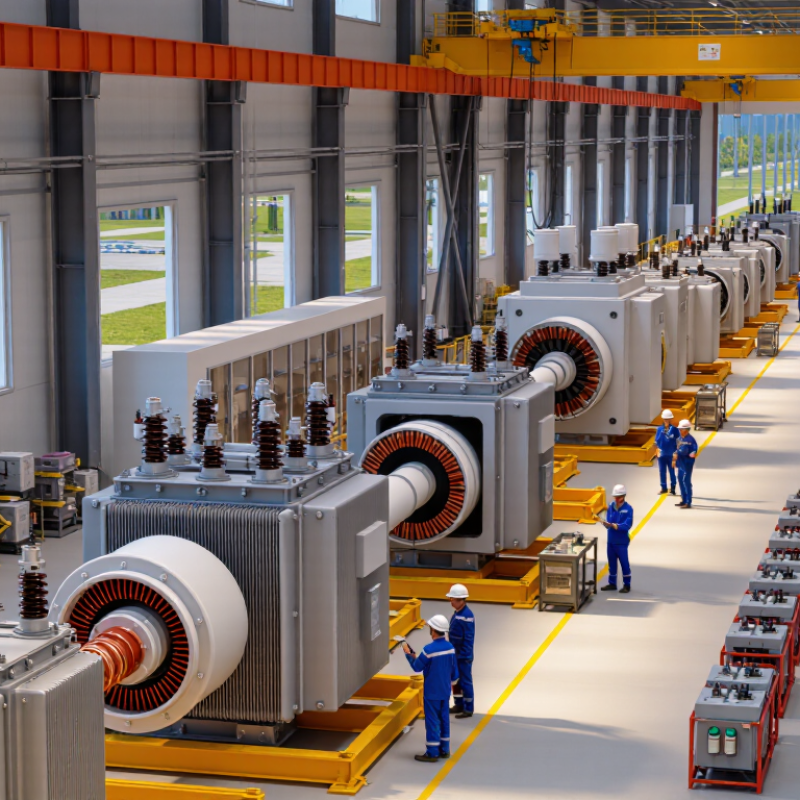
Top 10 Industrial Transformer Manufacturers Worldwide

Definition and Role of Industrial Transformers in Global Power Systems

Industrial transformers are essential devices in modern power systems. They transfer electrical energy between circuits through electromagnetic induction. Their main purpose is changing voltage levels safely and efficiently. High-voltage transmission reduces energy loss across long distances. Distribution transformers then lower voltage for factories, buildings, and transport networks.

In industrial facilities, transformers support motors, furnaces, pumps, control systems, and sensitive automation equipment. Their design depends on load capacity, frequency, cooling method, insulation, and installation conditions. Oil-filled units often serve high-capacity applications, while dry-type units suit indoor environments with stricter fire-control requirements. Protection systems monitor temperature, pressure, current, and insulation performance. A small weakness can become an expensive outage. Field inspections often reveal loose connections, blocked cooling paths, or moisture damage. These details are easy to underestimate.

Tips: Check the expected load before selecting a transformer. Leave room for future expansion. Review efficiency at realistic operating loads, not only peak ratings. Confirm noise limits, ventilation, grounding, and maintenance access. Digital monitoring can identify abnormal heat or partial discharge early. Still, sensors are not perfect. Regular visual inspections remain necessary. Manufacturer reliability should be judged through verified testing, service records, warranty terms, and compliance with recognized electrical standards.

Criteria for Evaluating Leading Industrial Transformer Manufacturers

When comparing the top 10 industrial transformer manufacturers worldwide, technical capability should lead the assessment. Review transformer designs, voltage ranges, cooling methods, insulation systems, and short-circuit strength. A credible manufacturer provides test records, traceable materials, and clear compliance documentation. Factory acceptance testing matters. It should cover temperature rise, losses, impulse withstand, noise, and partial discharge.

Site experience reveals details that brochures often miss. Inspect winding workmanship, oil-sealing points, cable termination quality, and lifting arrangements. Ask whether engineers have handled humid plants, dusty substations, or unstable grids. A supplier’s response to unusual load profiles shows practical expertise. Digital monitoring should provide useful alarms, not merely attractive dashboards. Independent laboratory results and audited quality systems add authority. Verified references from comparable facilities are stronger than generic testimonials.

Lifecycle performance deserves equal weight. Compare guaranteed no-load and load losses, maintenance intervals, spare-part access, delivery controls, and technician training. Calculate ownership costs over twenty years, not only the purchase price. Safety procedures, environmental controls, and responsible oil handling must be documented. Financial stability also reduces project risk during long installations. No scorecard is perfect. Weighting efficiency too heavily can hide weak service support, while focusing only on price can invite costly downtime. Record every assumption, challenge optimistic claims, and leave room for evidence that changes the ranking.

Top 10 Industrial Transformer Manufacturers Worldwide – Criteria for Evaluating Leading Industrial Transformer Manufacturers
Rank Manufacturer Code Industrial Transformer Portfolio Typical Maximum Voltage Class Typical Product Capacity Technology and Monitoring International Standards Lifecycle Service Capability Global Delivery Capability Evaluation Score
1 Manufacturer A Power, distribution, furnace, rectifier, traction and renewable-energy transformers Up to 550 kV class From small industrial units to 1,000+ MVA power transformers Online dissolved-gas monitoring, fiber-optic temperature sensing, bushing monitoring and digital asset management IEC 60076, IEEE C57, transformer energy-efficiency requirements and ISO-certified manufacturing systems Condition assessment, refurbishment, spare parts, field testing and long-term maintenance agreements Manufacturing and service coverage across multiple continents 95/100
★★★★★
2 Manufacturer B Power, industrial distribution, renewable integration, traction and special-application transformers Up to 550 kV class Medium- and large-power transformers exceeding 500 MVA in suitable applications Load monitoring, thermal modeling, digital protection interfaces and remote diagnostic platforms IEC 60076, IEEE C57, ANSI requirements and internationally recognized quality-management systems Installation supervision, oil analysis, emergency response, modernization and technical training Established project execution and service networks in major energy markets 93/100
★★★★★
3 Manufacturer C Power, distribution, cast-resin, oil-immersed, traction and offshore transformers Up to 420 kV class Industrial distribution units through several-hundred-MVA power transformers Digital temperature control, partial-discharge monitoring, remote supervision and grid-automation compatibility IEC 60076, IEC 60071, IEEE C57 and applicable utility qualification standards On-site commissioning, diagnostics, repair, retrofit engineering and asset-life extension Strong regional manufacturing base with international project support 91/100
★★★★★
4 Manufacturer D Power, distribution, dry-type, renewable-energy and industrial process transformers Up to 420 kV class Dry-type units below 100 MVA and oil-immersed units extending into the high-MVA range Smart sensors, SCADA integration, thermal monitoring and predictive-maintenance support IEC 60076, IEC 600726, IEEE C57 and regional fire-safety requirements for dry-type units Technical consulting, commissioning, testing, spare parts and maintenance contracts Broad distribution channels and project delivery across industrial and utility markets 89/100
★★★★☆
5 Manufacturer E Power, distribution, furnace, rectifier, mining and high-current industrial transformers Up to 345 kV class Special-purpose units from several MVA to several-hundred-MVA ratings Advanced cooling controls, winding-temperature measurement, protection relays and remote alarms IEC 60076, IEEE C57, NEMA-related practices and customer-specific utility specifications Factory acceptance testing, field service, oil processing, repair and replacement support Competitive international supply capability with strong industrial-sector coverage 87/100
★★★★☆
6 Manufacturer F Distribution, power, cast-resin, renewable-energy, railway and marine transformers Up to 245 kV class Low-voltage and medium-voltage distribution through medium-size power transformers Temperature sensors, digital protection, condition monitoring and renewable-plant integration IEC 60076, IEC 600726, IEEE C57 and applicable environmental and fire-performance standards Commissioning, preventive maintenance, diagnostics and localized service support Reliable regional coverage with selected international export capability 85/100
★★★★☆
7 Manufacturer G Distribution, power, dry-type, mining, offshore and industrial process transformers Up to 245 kV class Distribution units through approximately 200 MVA in selected product families Online temperature monitoring, digital communications, power-quality measurement and remote diagnostics IEC 60076, IEEE C57, CSA-related requirements and project-specific grid codes Site testing, installation assistance, refurbishment and technical support agreements Well-developed industrial-market reach and regional service partners 83/100
★★★★☆
8 Manufacturer H Power, distribution, furnace, traction and renewable-energy transformers Up to 220 kV class Medium-voltage distribution through medium-size power transformers Digital temperature control, protection integration, oil-level monitoring and remote alarms IEC 60076, IEEE C57 and national utility and industrial compliance requirements Installation, maintenance, testing, repair and spare-parts coordination Strong export presence with project-dependent local service coverage 81/100
★★★★☆
9 Manufacturer I Distribution, dry-type, renewable, data-center and industrial facility transformers Up to 145 kV class Low-voltage and medium-voltage products through selected medium-size power ratings Temperature monitoring, energy-management interfaces, digital protection and low-noise designs IEC 60076, IEC 600726, IEEE C57 and regional efficiency and fire-safety standards Commissioning, testing, preventive maintenance and application engineering Good availability through established distributors and regional manufacturing facilities 79/100
★★★★☆
10 Manufacturer J Distribution, power, dry-type, renewable-energy and industrial automation transformers Up to 145 kV class Low-voltage and medium-voltage distribution through selected high-capacity units Digital thermal monitoring, remote status indication, protection coordination and energy-efficiency analysis IEC 60076, IEEE C57, ISO 9001 quality systems and applicable local certification requirements Product support, commissioning, troubleshooting, spare parts and maintenance guidance Growing international coverage supported by distributors and system integrators 77/100
★★★☆☆
Evaluation criteria: The comparative score is based on documented product breadth, voltage capability, capacity range, digital-monitoring features, standards compliance, lifecycle service, manufacturing scale and international project capability. Voltage and capacity values represent typical published product ranges and may vary by model, market and project specification.

Regional Distribution of the Top 10 Manufacturers Worldwide

Regional Distribution of the Top 10 Manufacturers Worldwide

The top ten industrial transformer manufacturers are concentrated across Asia, Europe, and North America. Asia usually holds the largest share, supported by rapid grid expansion, renewable projects, and strong electrical equipment supply chains. Several leading producers operate in East Asia and South Asia, where large factories can serve domestic and export markets. Europe remains influential through advanced engineering, strict efficiency standards, and specialized high-voltage equipment. North American manufacturers benefit from replacement demand, grid modernization, and nearby industrial customers.

This distribution is not fixed. Rankings change with revenue definitions, product categories, and reporting years. A factory may be located in one region while its engineering center operates elsewhere. That detail is easy to miss. From practical procurement reviews, delivery distance often affects transformer selection as much as technical specifications. Local service teams can reduce commissioning delays, spare-parts risks, and communication problems. However, regional production does not always guarantee better quality. Inspection records, factory testing, warranty terms, and field experience still require careful review.

Tips: Compare manufacturers by regional service coverage, not factory location alone. Check climate design, transport limits, tested capacity, and maintenance support. Ask for recent project references in similar environments. A supplier with fewer global facilities may still perform better in a demanding local application. This is where many evaluations need more reflection. Statistic-heavy rankings can hide important operational differences.

Profiles of the Top 10 Industrial Transformer Manufacturers

Top 10 Industrial Transformer Manufacturers Worldwide

The leading industrial transformer manufacturers compete on capacity, reliability, and project execution. Their profiles reveal ten distinct strengths across the global market.

The first group specializes in ultra-high-voltage transformers for long-distance transmission. These manufacturers manage demanding insulation systems, factory testing, and strict grid codes. Another group focuses on distribution transformers, where low losses and compact designs matter more than extreme voltage ratings. The International Energy Agency’s Electricity 2024 report expects global electricity demand to grow by an average of 3.4% annually through 2026. That growth increases pressure on both categories.

Renewable-energy specialists design transformers for solar farms, wind projects, and battery installations. Their equipment must handle rapid load changes and harsh outdoor conditions. Several manufacturers concentrate on HVDC systems, industrial furnaces, rail networks, or offshore platforms. Dry-type transformer producers serve hospitals, factories, and dense commercial buildings, where fire safety is critical. Digital monitoring experts add temperature sensors, dissolved-gas analysis, and remote diagnostics. Useful, but not perfect.

The strongest profiles also include regional manufacturers with shorter delivery routes and customized engineering teams. Some provide mobile transformers for emergency restoration, while others rebuild aging units and extend service life. The U.S. Department of Energy’s transformer supply-chain assessments have reported lead times exceeding 100 weeks for certain large units. This makes manufacturing capacity, component access, and after-sales service important ranking factors. Still, published market rankings often rely on revenue estimates, so buyers should verify factory audits, test records, warranty terms, and field performance before choosing a supplier.

Industry Trends Shaping the Future of Industrial Transformers

Industry Trends Shaping the Future of Industrial Transformers

Industrial transformer design is changing as factories adopt renewable power, automation, and electrified heating. Variable loads now create sharper thermal and electrical stress. Engineers increasingly specify transformers with digital temperature sensors, online oil monitoring, and stronger overload capability. These features help maintenance teams detect hot spots before insulation damage becomes expensive.

Across the top 10 industrial transformer manufacturers worldwide, efficiency is becoming a practical differentiator. Low-loss cores can reduce energy waste throughout decades of operation. Dry-type transformers are gaining attention in indoor facilities because they reduce fire-related risks and maintenance needs. However, they may require careful ventilation and humidity control. No forecast is perfect. Site conditions still decide performance.

Tips: Measure the real load profile before selecting capacity. Check harmonics from drives and converters. Leave room for future expansion, but avoid excessive oversizing. Ask for verified temperature-rise data, acoustic ratings, and service records. A factory floor tells engineers more than a brochure.

Digital twins and remote diagnostics are also reshaping service models. Operators can compare vibration, temperature, and load data over time. This supports condition-based maintenance instead of fixed inspection schedules. Still, poor sensor calibration can produce confident but misleading decisions. Human review remains necessary, especially during unusual production cycles. Transformer specifications should reflect local grid quality, ambient temperature, installation height, and available technical support.