Top 10 Types of Mineral Machines for Global Buyers
Buying a Mineral Machine is not simply a matter of comparing prices and motor power. Global buyers must connect equipment choice with ore characteristics, production goals, maintenance capacity, and local operating conditions. A jaw crusher may suit hard, coarse feed, while a flotation machine may be essential for separating valuable sulfide minerals. The wrong match can create excessive dust, unstable recovery, or expensive downtime.
Dr. Barry A. Wills, a respected mineral-processing author, describes mineral processing as “the process of separating commercially valuable minerals from their ores.” This principle remains practical today. Every Mineral Machine should support that separation objective, from crushing and grinding to screening, gravity concentration, magnetic separation, and dewatering. Buyers should examine feed size, moisture, abrasiveness, required capacity, energy consumption, spare-part availability, and operator training. A machine that performs well in a dry laboratory may behave differently beside a humid mine site.
Details matter.
This guide reviews ten major types of Mineral Machine used by international buyers. It considers real purchasing concerns, including installation space, control systems, safety features, and after-sales service. It also recognizes an uncomfortable limitation: no equipment ranking fits every deposit. Ore variability can change results quickly. Pilot testing, verified technical data, and supplier references remain essential before signing a purchase agreement. Some specifications look impressive on paper but reveal little about long-term recovery. Experienced buyers inspect the complete process, not one attractive machine.
Mineral Machine Categories and Their Roles in Modern Mining
Top 10 Types of Mineral Machines for Global Buyers
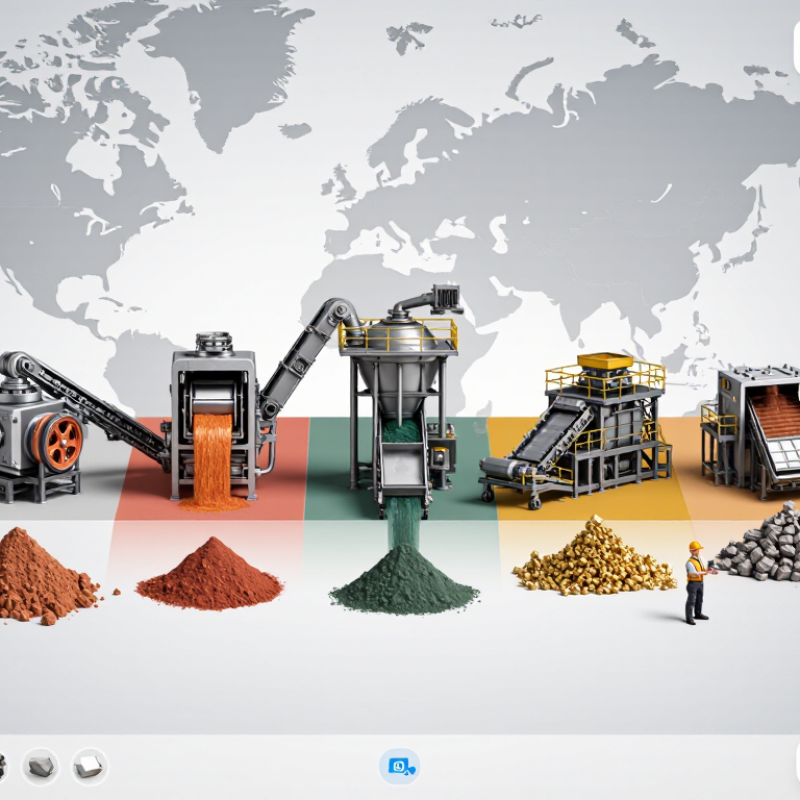
Mineral machine categories define how efficiently a mine handles raw material. Crushers reduce large rocks into manageable pieces. Feeders control the material flow. Vibrating screens separate particles by size. Conveyors then move ore between processing stages with fewer loading delays. Grinding mills create finer particles for further recovery. Classifiers divide ground material according to settling behavior. Magnetic separators remove responsive minerals from mixed streams. Flotation machines use air bubbles and reagents to concentrate selected minerals. Thickener tanks recover water from slurry. Filter presses produce drier mineral cake for transport or storage.
Each machine has a specific role. A crusher may need abrasion-resistant surfaces when handling hard ore. A screen requires suitable openings, because poor sizing can overload the grinding circuit. Conveyors depend on correct belt width, incline, and dust control. Flotation performance changes with feed chemistry, particle size, and water quality. Dewatering equipment can reduce pond volume, but it cannot correct weak upstream separation. No machine is perfect. Field evaluations often expose maintenance access problems that catalog pages overlook.
Tips: Compare the complete process, not one machine alone. Request capacity data based on your actual ore, moisture, and feed size. Check local power standards, spare-part availability, guarding, noise limits, and operator training. A small pilot test may reveal more than impressive laboratory figures. Leave room for uncertainty. Mineral behavior can change within the same deposit.
Excavators, Drilling Rigs, and Loaders for Mineral Extraction
Top 10 Types of Mineral Machines for Global Buyers
Mineral extraction depends on machines that match the ground, depth, and production target. Excavators handle overburden removal, trenching, and selective digging around exposed ore. Hydraulic excavators offer strong bucket force and steady control on uneven benches. Their operating weight must suit haul roads and site conditions.
Drilling rigs prepare accurate blast holes or exploration points. Rotary rigs work efficiently in softer formations, while down-the-hole systems perform well in harder rock. Buyers should compare drilling diameter, compressor capacity, mast reach, and maintenance access. Small errors matter here. Poor alignment can increase fragmentation costs and delay loading.
Loaders move broken material from the face to trucks, crushers, or stockpiles. Wheel loaders provide speed on firm surfaces, while underground loaders need compact frames and articulated steering. Other useful machine types include bulldozers, dump trucks, crushers, screeners, conveyors, and graders. Each one supports a different stage of mineral handling. Check fuel use, hydraulic response, tire or track wear, and operator visibility before purchase. In my field observations, specifications often look impressive, yet service access is overlooked. That choice can become expensive. Local technicians, parts availability, safety systems, and documented testing deserve equal attention. A machine should perform reliably after the first season, not only during a demonstration.
Top 10 Types of Mineral Machines for Global Buyers
Indicative operating-mass ranges for commonly used machines in surface and underground mineral extraction. Actual specifications vary by configuration, mine conditions, and application.
Heavy haul trucks and large dozers generally have the highest operating mass, while underground drilling equipment and graders are typically more compact for restricted working environments.
Washers, Separators, and Concentrators for Mineral Recovery
Top 10 Types of Mineral Machines for Global Buyers
Washers, separators, and concentrators play different roles in mineral recovery. Their performance depends on ore size, density, clay content, and water quality. A rotary scrubber can break down sticky clay around valuable particles. Log washers provide stronger agitation for difficult, weathered feed. A trommel washer combines washing and screening inside a rotating drum.
Separators divide minerals through physical differences. Hydrocyclones classify particles by size and density, often before concentration. Magnetic separators remove magnetic minerals from non-magnetic material. Dense media separators use controlled fluid density for sharp separation. Each option requires careful feed preparation. Poor sizing can reduce recovery quickly.
Concentrators upgrade valuable minerals after washing and separation. Gravity concentrators use differences in density, while shaking tables offer visible control over fine particles. Centrifugal concentrators can handle fine heavy minerals with strong recovery potential. However, higher recovery does not always mean better concentrate quality. Testing matters.
Real operating experience shows that water balance is often underestimated. Recycled water may carry clay and reduce separation efficiency. Wear parts also need inspection in abrasive conditions. No machine is perfect. A buyer should compare laboratory results, pilot trials, energy use, maintenance access, and local service capability. Ore behavior changes across deposits, so a standard equipment list may fail. That is an uncomfortable but practical lesson. Reliable suppliers should provide clear specifications, operating limits, safety information, and performance data from comparable materials.