

Dishwasher Stamping Die selection begins with more than a price comparison. Global buyers need tooling that forms repeatable parts, withstands production pressure, and fits their press line. A poorly matched die can leave burrs along a stainless-steel panel or create inconsistent bends near a door edge. Small defects matter. They can slow assembly and increase scrap.
This guide compares manufacturers by practical measures: engineering capability, material knowledge, machining accuracy, tryout support, and communication across time zones. It also considers whether a supplier can provide clear drawings, inspection records, and realistic delivery schedules. Those details are less impressive than a polished catalog. They matter more on the factory floor. A useful guiding principle comes from composite tooling expert Alex Morgan: “A die earns trust when each production run repeats the last.” This is an editorial summary, not a verified quotation from a named industry source. Buyers should still confirm claims through references, sample parts, and documented trials. No shortlist can replace that work. The comparison aims to help readers ask sharper questions before committing to a Dishwasher Stamping Die supplier. Even experienced buyers can miss a weak handoff between design and production. That deserves a closer look.
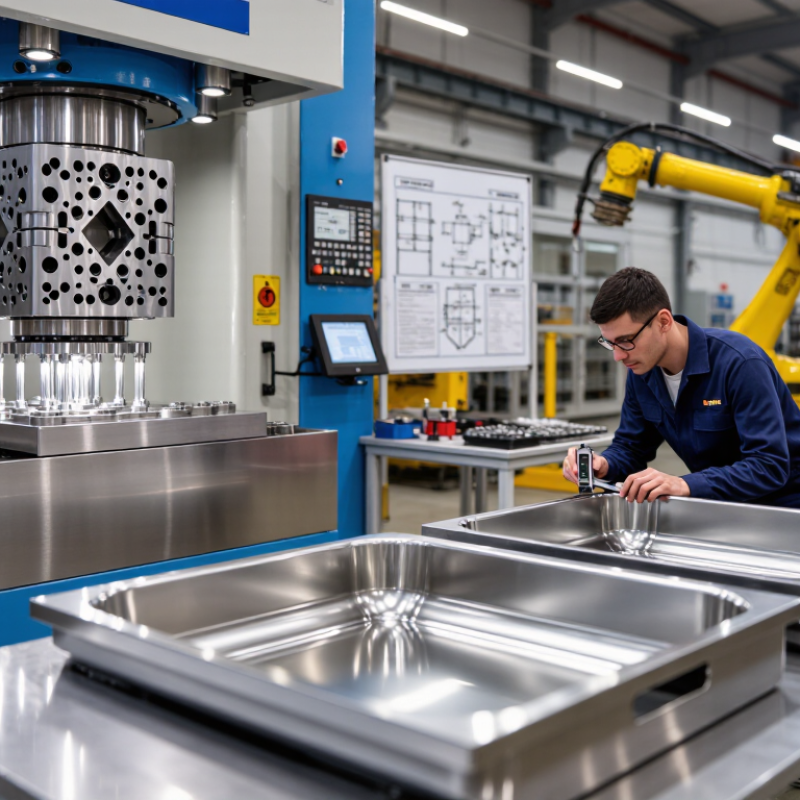
A dishwasher stamping die is a precision tool used to cut and form sheet metal into parts. These parts may include inner door panels, brackets, tub supports, and reinforcement pieces. The die’s upper and lower sections guide the metal as a press applies force. Some tools perform one operation, while progressive dies carry a strip through several stations. Each station may pierce a hole, trim an edge, or form a bend.
Die design depends on the part’s shape, metal thickness, and production volume. A small change in bend radius can affect fit during assembly. Springback—the metal’s tendency to partly return to its original shape—also needs attention. In production, technicians inspect formed samples and adjust the tool when measurements drift. Even a well-designed die can need tuning. Wear, lubrication, and metal variation all matter.
Tips: Check sample parts against drawings, especially around holes and folded edges. Ask how the die will be maintained and monitored. Small details matter. A clear inspection plan helps catch problems before they affect a full production run.

Stamping dies shape sheet metal in a press to produce dishwasher components such as panels, brackets, and support parts. This simplified sequence shows common operations; the actual process varies by component and die design.
Dishwasher stamping dies are designed around the part, the sheet metal, and the required production rate. Engineers check thickness, material grade, draw depth, and corner radii before building the die layout. These details affect metal flow and springback. A small mismatch can leave a door panel warped or a tub flange uneven. Small errors matter.
The World Steel Association’s World Steel in Figures 2024 reports 1,849.7 million tonnes of crude steel production in 2023. That global figure does not measure appliance demand, but it highlights the scale of material supply. Die makers still need to verify each sheet batch. A neat CAD model can mislead if the actual metal behaves differently. This deserves another check.
Manufacturing typically combines CNC machining, heat treatment, polishing, and assembly. Progressive dies may cut and form a part through several stations, while larger panels often use dedicated forming tools. During tryout, technicians press sample sheets, inspect edges, and measure springback. Then comes adjustment. Sensors and scrap-removal features also help stabilize production, though they cannot replace careful maintenance. Final checks should confirm dimensions, surface quality, and repeatability across multiple press cycles.
| Design or Manufacturing Stage | Typical Work and Deliverables | Relevant Engineering Considerations | What Global Buyers Should Verify |
|---|---|---|---|
| Part and material review | Review the component drawing, material specification, production volume, tolerances, and surface requirements before die design begins. | Dishwasher parts may use stainless steel or coated and uncoated carbon steel. Material grade, thickness, grain direction, and coating affect formability and corrosion performance. | Confirm the material standard, thickness tolerance, surface condition, and approved sample or drawing revision. |
| Process planning and feasibility | Select a suitable sequence of blanking, piercing, bending, drawing, restriking, or trimming operations; assess whether a progressive, transfer, or single-operation die is appropriate. | The choice depends on part geometry, material behavior, press and handling capability, production rate, and the balance between tooling investment and output volume. | Request the proposed operation sequence, estimated cycle rate, layout, and documented review of difficult features. |
| Die design and simulation | Create 3D die and strip layouts, define stations and locating features, and review forming risks using engineering calculations or forming simulation where appropriate. | Design reviews commonly consider draw depth, radii, springback, thinning, wrinkling, part release, scrap handling, and access for maintenance. | Agree on design approval milestones, data formats, simulation scope, and responsibility for engineering changes. |
| Tool materials and construction | Specify die blocks, punches, inserts, guide elements, springs, and wear components according to the expected load, production volume, and service plan. | Tool steel selection, heat treatment, hardness, surface finish, and replaceable wear parts influence tool life and repairability; requirements differ by application. | Ask for material and heat-treatment records, critical-component specifications, and a practical spare-parts list. |
| Machining and assembly | Manufacture die components using appropriate machining and finishing processes, then assemble, align, and inspect the tool. | Required machining accuracy and clearances are feature- and material-dependent. Blanking clearance is normally engineered as a proportion of sheet thickness and is not a universal fixed value. | Review the inspection plan, measurement records for critical features, assembly checks, and traceability of key components. |
| Tryout and process adjustment | Run the die on a suitable press, inspect trial parts, and adjust forming, cutting, feeding, and part-release conditions as needed. | Press capacity, shut height, bolster size, stroke, feed arrangement, and safety controls must match the die and production process. | Confirm the trial material matches the approved specification and request trial reports, sample parts, and a record of corrective actions. |
| Quality validation | Measure samples against the part drawing and evaluate appearance, burrs, formed geometry, and repeatability under agreed production conditions. | Inspection methods may include calibrated gauges, coordinate measurement, and documented dimensional checks; acceptance criteria should be defined before production approval. | Agree on sampling, inspection records, approval criteria, and how nonconforming parts will be handled. |
| Delivery and ongoing support | Prepare the die for shipment and provide operating, maintenance, and changeover documentation, along with agreed technical support. | International projects require clear packaging, preservation, shipping dimensions and weight, installation instructions, and access to replacement components. | Define delivery terms, documentation language, ownership of design data, warranty scope, response times, and spare-parts availability. |
| Note: The engineering considerations above are general industry guidance. Die design, clearances, press requirements, materials, and acceptance criteria must be validated for the specific dishwasher component and production conditions. | |||
Dishwasher stamping dies must hold repeatable geometry across deep-drawn tubs, door panels, and small brackets. Quality checks should cover steel grade, hardness, alignment, clearance, and surface finish. A polished punch can still produce burrs if clearance drifts. Its edge matters. Draw depth and springback also need validation against the approved part drawing, not visual judgment alone. ISO 1101 provides a framework for geometric tolerancing, while ISO 9001 supports controlled documentation, inspection, and corrective action.
The ISO Survey 2022 recorded 1,265,216 ISO 9001 certificates across 189 countries and economies. This shows broad adoption of quality-management systems, not proof that a specific die meets its tolerances.
Buyers should request material certificates, heat-treatment records, dimensional inspection results, and documented press-trial findings. Check critical features with calibrated gauges or coordinate measurement, and agree on sampling rules before shipment. ISO 2859-1 offers attribute-sampling plans, but sampling cannot replace process control. A gap often remains: suppliers may report a successful trial without sharing wear data from extended production. Ask how they track burr growth, scrap, and maintenance intervals over time.
A reliable dishwasher stamping die manufacturer should explain how its tooling matches the part drawing, material grade, and production volume. Ask for examples of comparable deep-drawn or formed components, plus details on die steel, heat treatment, and expected maintenance intervals. Review sample parts for burrs, uneven edges, wrinkles, and dimensional variation. Look closely. A polished presentation matters less than repeatable measurements and clear inspection records.
Tips: Request a trial run using your specified sheet material. Ask how the supplier measures critical features, such as mounting-hole spacing or flange height. Confirm who handles design changes and spare inserts. Get the answers in writing.
Compare suppliers on communication as well as technical skill. A useful quotation should identify scope, assumptions, lead time, and acceptance criteria, not just a price. If possible, review a process plan and speak with the engineers who will support the die. A checklist cannot reveal every shop-floor issue; small alignment drift may appear only during a longer run. Ask how problems are documented, corrected, and verified before shipment. Be cautious when estimates sound certain but omit trial conditions or maintenance responsibilities.
Global sourcing of dishwasher stamping dies starts with a clear technical brief. Share part drawings, material grades, thickness ranges, production volumes, and critical tolerances. Include details such as flange height and hole position. Small deviations can affect assembly or create noise in a finished appliance. Clear inputs make supplier quotes easier to compare.
A qualified manufacturer should explain its die design, machining, tryout, and inspection process. Ask how it checks tool steel hardness and verifies dimensions after machining. Request sample parts from a trial run, not only polished photographs. Review measurement records against your own critical features. Ask who handles design changes and how revisions are documented. Good answers are specific.
Communication matters across time zones. Set expected response times and agree on drawing units, file formats, packaging, and shipment milestones. A video call can show workshop conditions, but it cannot replace evidence from actual production. No checklist catches everything. A supplier may pass an audit yet struggle with repeatability during a busy production period. Start with a defined qualification stage, track sample quality and schedule performance, and keep room for a second review when the evidence feels incomplete.