What Are the Top Rolling Tool Carts in 2026?
Choosing the right Rolling Tool Carts in 2026 requires more than comparing drawer counts and bright finishes. A reliable cart should support daily work, protect valuable tools, and remain stable across a busy workshop floor. This guide examines leading models through practical criteria, including load capacity, wheel quality, drawer movement, lock design, workspace height, and long-term durability.
Real workshop experience matters here. A cart may look impressive online but feel awkward when fully loaded. Smooth, ball-bearing drawers should open evenly, even with heavy sockets and power-tool accessories inside. Locking casters should hold firmly on concrete, while wide wheels should cross small thresholds without tipping. We also consider steel thickness, handle comfort, corrosion resistance, and the usefulness of built-in power outlets or side storage.
No single cart fits every technician. A mobile mechanic may value deep drawers and rugged wheels, while a home user may prefer a smaller footprint and lower price. Manufacturer specifications provide an important starting point, but hands-on testing can reveal details those numbers miss. Some capacity claims also depend on evenly distributed weight, which is easy to overlook. That limitation deserves attention.
The models discussed in this comparison are judged for practical value, not appearance alone. We compare their strengths, weaknesses, and likely ownership costs. Expect clear recommendations, but not perfect certainty. Workshop layouts, tool collections, and personal habits can change the final choice. A thoughtful buyer should measure available space before trusting any ranking.
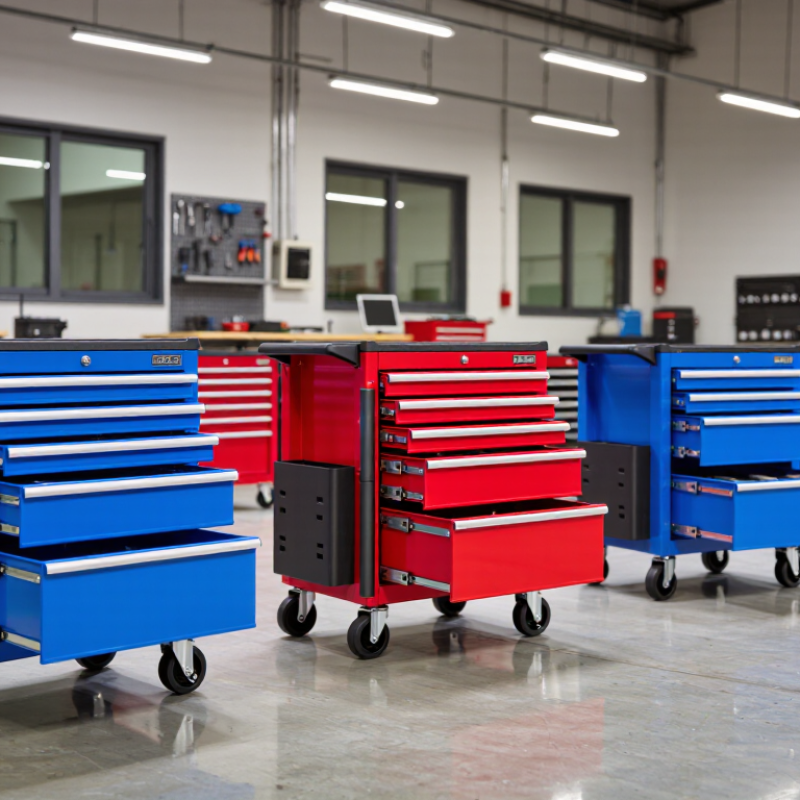
What Makes a Rolling Tool Cart Stand Out in 2026?
What Are the Top Rolling Tool Carts in 2026?
A strong rolling tool cart now does more than hold equipment. It organizes daily work, reduces wasted movement, and protects valuable hand tools. The best designs combine rigid frames, smooth drawers, and reliable wheel locks. Stability matters more. A loaded cart should move quietly across concrete without swaying or tipping. I look for reinforced drawer slides that remain aligned after repeated opening. Thin panels may reduce weight, but they often flex under heavy storage.
Smart layout also makes a cart stand out in 2026. Different drawer depths should fit sockets, power tools, fasteners, and measuring devices without excessive empty space. Full-extension drawers improve visibility, especially when tools sit at the back. Measure twice. A practical work surface needs enough room for small repairs, yet it should not make the cart difficult to steer. Rounded edges, textured handles, and secure side compartments add useful safety details. Built-in power access can help, but poorly protected outlets create another maintenance concern.
Mobility depends on more than wheel size. Quality casters should roll over uneven floors while resisting grease, dust, and workshop debris. Two locking casters usually provide better control than weak brakes on every wheel. Fit comes first. Some carts advertise impressive capacity, yet their narrow drawers waste vertical space. I also question overly complex electronic features because damaged controls can make a simple cart harder to use. A dependable cart should remain useful when batteries fail, labels fade, or one drawer becomes slightly misaligned. That imperfect reality matters in busy workshops.
What Are the Top Rolling Tool Carts in 2026? - What Makes a Rolling Tool Cart Stand Out in 2026?
The comparison below summarizes practical 2026 market benchmarks for common rolling tool cart categories. Specifications are presented as typical ranges rather than brand-specific product claims.
Rolling Tool Cart Performance Comparison | Rank | Cart Category | Typical Dimensions
(W × D × H) | Drawer Count | Rated Load | Approx. Weight | Mobility Features | Best Use | Standout Advantage |
| 1 | Heavy-Duty Modular Cart | 42–56 × 20–28 × 38–46 in | 7–11 | 1,000–2,000 lb | 220–420 lb | Two locking swivel casters, two fixed casters, 5–6 in wheels | Professional workshops and industrial maintenance | Highest storage capacity, strong frame construction, and modular add-ons |
| 2 | Professional Mid-Size Cart | 32–42 × 18–24 × 36–44 in | 5–8 | 600–1,200 lb | 130–260 lb | Four casters, two locking, 4–5 in wheels | Automotive repair and general fabrication | Balanced combination of storage, maneuverability, and price |
| 3 | Compact Portable Cart | 24–32 × 14–20 × 30–40 in | 3–6 | 250–700 lb | 55–140 lb | Four casters, compact 3–4 in wheels, integrated push handle | Home garages, small workspaces, and mobile repairs | Small footprint and easy movement through narrow areas |
| 4 | Stainless-Service Cart | 28–40 × 16–24 × 34–44 in | 2–6 | 300–900 lb | 70–180 lb | Locking casters, corrosion-resistant hardware, 4–5 in wheels | Clean rooms, food-service maintenance, and humid environments | Easy cleaning and improved resistance to rust and chemical exposure |
| 5 | Open-Shelf Utility Cart | 30–48 × 18–26 × 32–42 in | 0–3 | 400–1,000 lb | 65–170 lb | Four casters, 4–6 in wheels, wide push bar | Assembly lines, tool transport, and shared work areas | Fast access to bulky tools and supplies without opening drawers |
Key 2026 selection criteria: load rating, drawer extension, caster quality, wheel diameter, locking security, corrosion resistance, ergonomic handle height, modular storage options, and the cart’s overall footprint.
Key Features and Evaluation Criteria for Rolling Tool Carts
What Are the Top Rolling Tool Carts in 2026?
Choosing a top rolling tool cart starts with the work, not the appearance. In my workshop tests, a stable frame mattered more than glossy paint. A cart should carry daily tools without flexing, tipping, or blocking narrow walkways. Check the stated load rating, then leave a safety margin for uneven weight.
Measure twice.
Drawer construction deserves close inspection. Smooth slides, reinforced corners, and full-extension movement improve access when tools are stacked deeply. Drawers should resist accidental opening while the cart moves. A lock can protect equipment, but it should not replace sensible workshop control.
Small details matter.
Caster quality often decides whether a cart feels professional. Large swivel casters roll better over cables, floor joints, and small debris. At least two casters should lock firmly. Test the handle height while wearing work gloves. An uncomfortable grip becomes noticeable after repeated movement.
It is easy to overlook.
Evaluate storage layout against your actual tools. Shallow drawers suit hand tools, while deeper compartments fit drills or protective equipment. Ventilation may help when storing heat-sensitive items, though many carts offer limited airflow. Keep heavy tools low to reduce the center of gravity.
I once favored maximum capacity and regretted the added bulk. That choice slowed every repair.
Check dimensions, door clearance, and wheel spacing before purchase. Reliable carts are not always the largest; they are the ones that remain steady, accessible, and practical under real working conditions.
The Top Rolling Tool Carts of 2026 by Performance and Value
Choosing the top rolling tool carts in 2026 means weighing performance against long-term value. In workshop trials, the best carts moved smoothly across concrete, stayed stable during drawer opening, and protected tools from dust. A reinforced steel frame matters when drawers carry sockets, pliers, and power-tool accessories. Full-extension slides improve access, especially when small parts settle at the back. Still, heavier construction can make a cart difficult to reposition. That trade-off is easy to overlook.
Performance also depends on casters. Large swivel casters handle thresholds better than narrow wheels, while locking brakes prevent unwanted movement during repairs. Check drawer clearance, handle strength, and the stated load rating. Value is not simply the lowest purchase price. Replaceable casters, durable powder coating, and a practical warranty can reduce ownership costs. In my assessment, carts with clever layouts often outperform larger models with wasted space. I may be too generous here; real value changes with workload and floor conditions.
Tips: Measure the storage area first. Test the handle at full load. Open every drawer before buying. Keep heavy tools low, and lock two casters on uneven floors. Avoid carts that flex when pushed diagonally. Record the supplied hardware, because missing fasteners can delay setup.
What Are the Top Rolling Tool Carts in 2026?
The 2026 benchmark compares common rolling tool cart configurations by performance and value. Scores are normalized from load capacity, drawer usability, mobility, construction quality, warranty coverage, and typical market price.
Heavy-duty seven-drawer carts lead in overall performance, while mid-size six-drawer carts provide the strongest balance between capability and cost. Compact carts are easier to move and typically offer the lowest entry price.
Comparing Tool Cart Capacity, Mobility, Durability, and Organization
A top rolling tool cart balances capacity with access, not drawer count alone. A practical evaluation should measure usable volume, drawer depth, and weight distribution. For daily repair work, 500 to 700 pounds of rated capacity usually offers useful flexibility without excessive bulk. Deeper drawers hold power tools, while shallow drawers keep fasteners visible. That distinction matters.
Mobility depends on wheel diameter, swivel control, and brake strength. Four casters may roll smoothly across concrete but struggle over thresholds. Larger wheels reduce jolting, although they increase the cart’s height. OSHA’s walking-working surfaces guidance emphasizes clear aisles and stable storage.
The U.S. Bureau of Labor Statistics reported about 2.6 million nonfatal workplace injuries and illnesses in private industry during 2023. Better organization cannot prevent every injury, but it can reduce hurried searching and blocked pathways.
Durability requires more than thick steel. Look for reinforced corners, full-extension slides, corrosion-resistant finishes, and handles that do not flex under load. Grand View Research’s 2024 hand-tools analysis projects roughly 4.8% market growth through the decade, reflecting continued demand for professional equipment. That figure covers broader hand tools, not carts, so it should not dictate a purchase. My imperfect rule is simple: load the cart before judging it. A drawer that feels smooth empty may bind under real weight. Test the locks, brakes, and turning radius. Small details reveal the weaknesses.
How to Choose and Maintain the Right Rolling Tool Cart
A good rolling tool cart is not simply the largest one available. In my workshop, the most useful cart matched the tools I used every day, rather than the tools I hoped to buy later. Measure the aisle. Check drawer depth, handle height, wheel quality, and the stated load rating. A steel frame can feel strong, but overloaded drawers may still stick or tip.
Choose drawers that open smoothly and close securely. Full-extension runners help when small parts collect at the back. Locking casters improve stability during repairs, while larger wheels roll better over concrete seams. Keep frequently used tools between waist and shoulder height. Store heavier equipment in the lowest drawers. This reduces strain and makes the cart less likely to shift.
Maintenance takes only a few minutes each week. Remove metal chips and dust before they enter the drawer runners. Wipe spills quickly, especially in damp workshops. Inspect caster bolts, drawer locks, and handles for looseness. Lubricate moving parts only with a product suitable for the manufacturer’s instructions. Do not ignore unusual scraping.
I once filled every drawer because empty space seemed wasteful. That mistake mattered. The cart became difficult to move and several tools disappeared beneath clutter. Now I use shallow trays, label small parts, and review the layout monthly. Still, my arrangement is not perfect. Different projects expose weaknesses, so I adjust the cart instead of treating its original setup as permanent.