


Request a free quote Phone Icon
die cutting materials

Blog

Top 10 Telemecanique Sensors Suppliers for Global Buyers

Industrial automation depends on small components that must perform reliably in demanding conditions. Telemecanique Sensors products serve applications such as position detection, limit switching, and machine monitoring. For global buyers, choosing a supplier involves more than comparing unit prices. Stock availability, product authenticity, documentation, and technical support all matter.

The International Federation of Robotics reported 553,052 industrial robots installed worldwide in 2022, a 5% increase over 2021. Its World Robotics 2023 report points to expanding automation, where dependable sensing helps machines detect position and respond to changing conditions. IFR President Marina Bill said, “The new World Robotics report shows the highest level of robot installations in history.” That growth offers useful context, though robot figures alone cannot measure demand for any specific sensor brand.

This guide compares ten suppliers of Telemecanique Sensors for buyers serving different regions and industries. It considers product range, purchasing access, delivery reach, and after-sales assistance. A listing is not a guarantee of suitability. Check exact model references, certificates, lead times, and warranty terms before ordering. Ask for written confirmation. Even a polished catalogue may leave important details unclear. That is worth remembering when production depends on a sensor arriving on time and matching the machine specification.
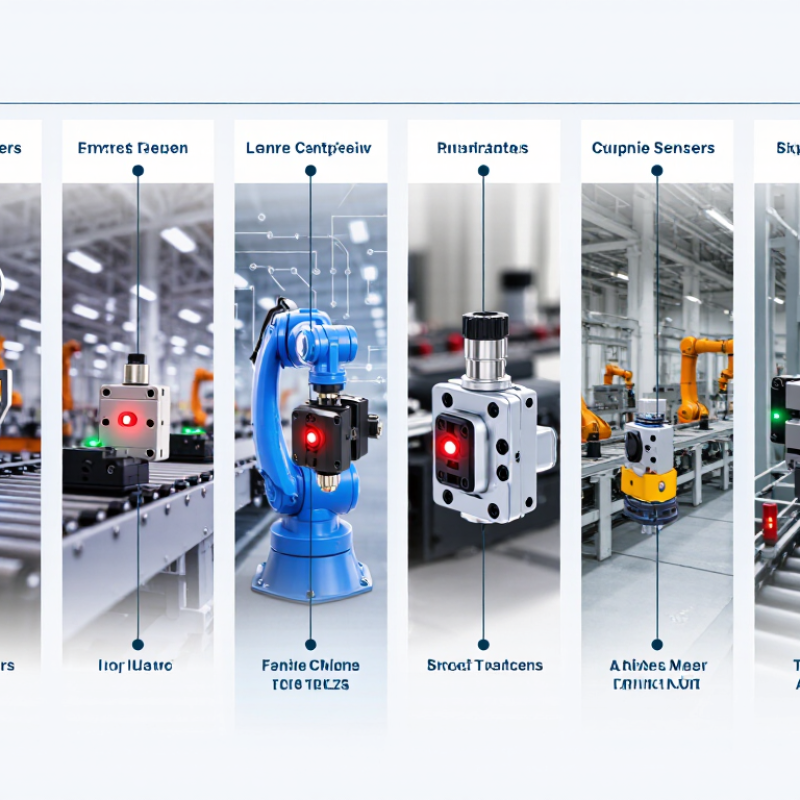
Top 10 Telemecanique Sensors Suppliers for Global Buyers

Understanding Telemecanique Sensors and Their Role in Automation

Industrial sensors turn physical events into usable signals. A proximity sensor can detect a metal part on a moving conveyor; a photoelectric sensor can confirm that a carton has reached the packing station. Controllers use these signals to adjust motion, trigger alarms, or stop equipment before a collision. Small devices. Big consequences.

The scale of automation makes dependable sensing essential. The International Federation of Robotics reported 4,281,585 industrial robots operating worldwide at the end of 2023, 10% more than a year earlier, in World Robotics 2024. Deloitte’s 2024 Smart Manufacturing Survey found that 86% of surveyed manufacturing executives expect smart manufacturing solutions to drive competitiveness within five years. Sensors provide much of the real-time information those systems need, including position, temperature, pressure, and vibration. Yet a sensor is only as useful as its installation and maintenance. Dust, vibration, poor alignment, or an unsuitable detection range can produce unreliable readings. That part is easy to underestimate. Buyers should compare sensing distance, response time, environmental protection, and compatibility with control systems, then test performance on the actual production line. A catalogue specification cannot fully predict shop-floor behavior.

Key Factors for Evaluating Global Sensor Suppliers

A sensor supplier should be assessed on performance in the buyer’s actual operating conditions, not only on catalogue specifications. Check repeatability, response time, ingress protection, operating temperature, and documented test methods. Ask for sample results from wet, dusty, or vibration-heavy environments. Small differences matter. A sensor that performs well on a clean bench may drift beside a hot motor. McKinsey’s 2020 supply-chain survey found that 93% of leaders planned to increase resilience. For buyers, that makes regional stock, realistic lead times, and clear escalation channels practical evaluation points—not optional extras.

Integration and long-term support deserve equal scrutiny. The International Federation of Robotics reported 4,281,585 industrial robots in operation worldwide in 2023, up 10% from 2022. That growth points to increasingly connected production lines, where sensor compatibility, stable communications, and replacement availability affect uptime. Request wiring diagrams, protocol details, calibration records, and a named technical contact before approval. Test units with the intended controller and cable length. Then verify performance after installation. Reports show broad industrial trends, not the reliability of any specific sensor supplier. That gap matters. Buyers should compare measured results, service response, and total replacement effort; a polished audit document alone is not proof.

Profiles of 10 Telemecanique Sensors Suppliers

A useful supplier profile should cover more than product availability. Buyers need verified part numbers, stock visibility, technical support, and clear return terms. These ten profiles represent different sourcing strengths, not a universal ranking.

Supplier 1 is a regional automation distributor with local inventory and fast dispatch.

Supplier 2 specializes in proximity sensors and can confirm sensing distance and mounting limits.

Supplier 3 focuses on photoelectric models, including options for dusty or reflective environments.

Supplier 4 serves OEMs and can support repeat orders across production lines.

Supplier 5 offers cross-reference assistance for older components, though substitutions need careful validation.

Supplier 6 supplies safety-related sensing devices and provides relevant documentation.

Supplier 7 supports export orders with traceable shipping records.

Supplier 8 serves maintenance teams needing small quantities quickly.

Supplier 9 provides engineering help for wiring, output types, and control-system compatibility.

Supplier 10 offers procurement support across several regions, but delivery performance should be checked.

Scale matters. The International Federation of Robotics’ World Robotics 2024 report counted 4,281,585 industrial robots operating in factories worldwide in 2023, up 10% from 2022. That growth makes dependable sensing and replacement access important. It does not prove that every supplier can meet a buyer’s needs.

Request current stock evidence, datasheets, and written confirmation of the exact model before purchasing. Some listings look alike; they may not be interchangeable.

Comparing Supplier Product Range, Availability, and Support

When comparing suppliers of industrial sensors, product range matters only when it fits the actual job. Check whether a catalog covers inductive, photoelectric, and limit sensors, then compare sensing distance, output type, connector, and ingress rating. A sensor rated for a clean assembly line may not suit a washdown area. Details matter.

Availability needs the same scrutiny. Ask whether quoted units are physically in stock, where they ship from, and how often inventory is updated. A short lead time on a quote can change before purchase. Request an estimated dispatch date and check minimum order quantities, especially when replacing a single failed unit. Verify product traceability and documentation before installation; a low price alone proves little. That matters.

Support can separate a useful supplier from a basic reseller. Look for staff who can discuss wiring diagrams, mounting clearances, and equivalent specifications without promising a perfect match. Ask how returns and warranty claims are handled, and whether technical help is available in your time zone. I would not rely on a quick cross-reference without checking the machine’s operating conditions. Even careful comparisons can miss a small connector difference. A written confirmation helps.

Matching a Supplier to Your Application and Region

Choosing a sensor supplier starts with the machine, not the catalog. A photoelectric sensor facing a dusty conveyor needs different support from an inductive sensor mounted near cutting fluid. Share the target material, sensing distance, switching frequency, and operating temperature before comparing quotations. Details matter. Ask whether the supplier can provide wiring diagrams, dimensional drawings, and test data for the exact model. A familiar product description is not enough if the connector, output type, or mounting space differs from your design.

Region affects more than delivery time. Check local stock, typical replenishment periods, and access to technical support in your working hours. For a production line in a humid coastal facility, confirm enclosure ratings and corrosion considerations; for a compact machine, verify connector clearance and cable bend radius. Ask how substitutions are handled when a part is unavailable. A lower price can become expensive if replacement units need new brackets or control-system changes. Request sample units where practical, then test them under real operating conditions. Even careful selection has limits: supplier specifications may not reflect every installation, and field conditions can be messier than a test bench. Human checks still count.

Top 10 Telemecanique Sensors Suppliers for Global Buyers - Matching a Supplier to Your Application and Region

A practical comparison of supplier types, not a verified ranking of individual companies. Confirm product compatibility, authorization, stock, and regional service directly with each prospective supplier.

Supplier type Typical applications Regional fit Potential advantage What to verify
1. Authorized automation distributor Routine replacement and new installations using proximity, photoelectric, limit, or pressure sensors. Best where the distributor has an established local branch or documented cross-border service. May offer product selection support and access to manufacturer documentation. Authorization status, exact part number, stock location, warranty terms, and delivery lead time.
2. Industrial automation distributor Control panels, packaging lines, conveyors, and general factory automation. Suitable for buyers sourcing within a regional industrial market. Can often consolidate sensors with related automation components. Sensor-specific technical knowledge, availability of accessories, and compatibility with the existing control system.
3. Sensor specialist Applications needing careful selection of sensing distance, output, housing, or environmental protection. Useful in regions with access to application engineering or remote technical support. May provide more focused guidance on sensor operating principles and installation conditions. Experience with the required sensor family, response times, and support for commissioning.
4. Machine builder or OEM supplier Replacement sensors for equipment supplied by a machine manufacturer or original equipment builder. Strong fit when the machine builder supports the buyer’s installation region. Can help identify the sensor specified in the machine’s bill of materials. Current part number, approved substitutes, machine revision, and availability of spare parts.
5. Systems integrator Retrofits and projects combining sensors with PLCs, drives, safety equipment, or data systems. Appropriate in markets where local engineering and on-site commissioning are available. Can assess sensor selection as part of the complete control application. Project scope, commissioning responsibility, documentation, and ongoing service coverage.
6. Regional importer or trading distributor Buyers sourcing imported components where local availability is limited. May serve markets through regional warehouses or international shipments. Can provide access to products not routinely stocked in the buyer’s immediate area. Traceability, product authenticity, import duties, applicable certifications, returns, and delivery terms.
7. MRO and maintenance supplier Plant maintenance, breakdown response, and replenishment of commonly used spare parts. A practical option where the supplier has local delivery and account support. May simplify procurement of sensors alongside other maintenance items. Exact specification, stock status, substitute approval, and emergency delivery options.
8. Online industrial parts seller Standardized replacement purchases when the required part number is already known. Can suit buyers in regions supported by the seller’s shipping and returns network. Convenient product searches and electronic order processing. Seller identity, item condition, stock location, delivery estimate, return policy, and documentation.
9. Electrical wholesaler Common electrical and automation maintenance needs in facilities with established wholesaler accounts. Most useful where local counter service or regional branch delivery is available. May offer convenient local purchasing and consolidated electrical supplies. Whether the required sensor range is stocked and whether staff can confirm technical specifications.
10. Independent repair and spare-parts supplier Legacy equipment, discontinued items, and urgent sourcing when standard channels cannot meet a need. May help in markets with limited local inventory, subject to shipping and import requirements. Can assist with hard-to-source parts or identification of possible replacements. Part condition, provenance, test records, warranty, and engineering approval of any substitute.