Who Are the Top Tunnel Kiln Manufacturers in China?
Choosing a Tunnel Kiln manufacturer in China is not just a matter of comparing prices. A kiln may look impressive in a brochure, yet perform differently under a factory’s actual firing schedule. Buyers should examine the products being fired, required temperature range, daily output, fuel options, and available floor space. Small details matter. A burner layout, insulation thickness, or poorly planned loading area can affect energy use and production consistency.
This guide looks at leading Chinese manufacturers and the factors that help distinguish them. Rather than treating “top” as a fixed ranking, it considers engineering experience, project references, customization, quality controls, and after-sales support. Ask for drawings, operating data, and examples of installations with similar products. If possible, speak with existing customers or inspect a running kiln. That is worth the effort. Manufacturer claims alone are not enough. The right supplier should explain how its design addresses your process, from kiln-car movement to temperature uniformity and maintenance access. Some buyers may also need clearer information about commissioning, operator training, spare parts, and response times. These points are easy to overlook when comparing quotations. No single manufacturer will suit every plant, and published specifications may not tell the whole story. A careful comparison can still narrow the field and help buyers ask better questions before investing.
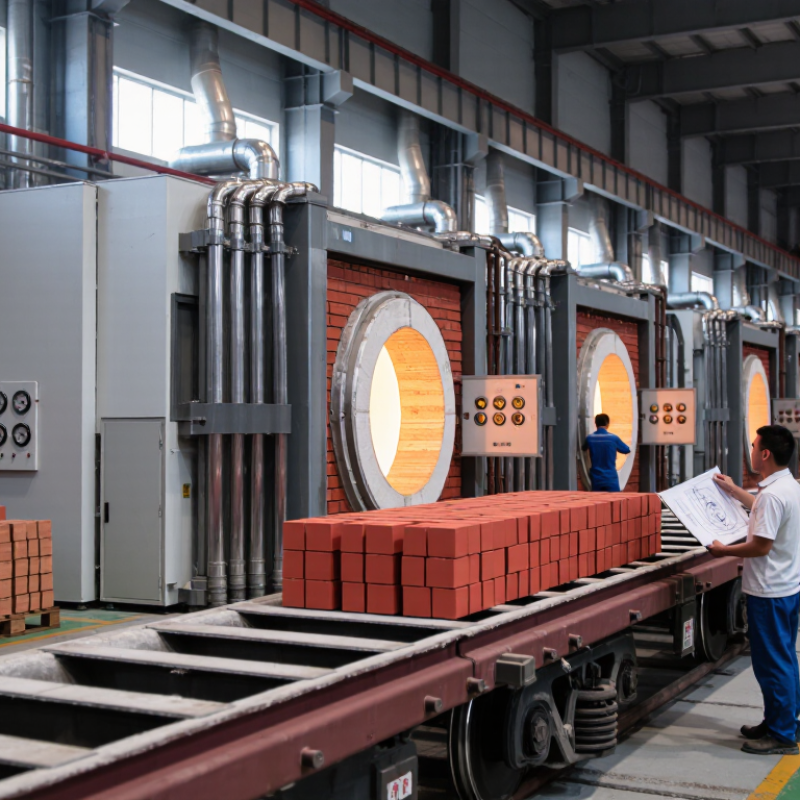
How Tunnel Kilns Work: Continuous Firing at Typical 900–1,400°C
A tunnel kiln fires ceramic ware continuously as kiln cars travel through preheating, firing, and cooling zones. Unlike batch firing, this steady movement supports consistent production. Burners and airflow shape the heat profile, while sensors help operators track temperatures across the kiln. The firing zone commonly operates within 900–1,400°C, depending on the clay body and product.
The European Commission’s Ceramic Manufacturing Industry BREF reports typical firing temperatures of about 1,000–1,300°C for many ceramic tiles, while brick products often use lower temperatures. In practice, operators adjust the heating curve, atmosphere, and travel speed to limit cracking and uneven color. A kiln can show the target temperature and still have cooler spots. Small shifts matter. That is why temperature readings need to be checked against the ware itself.
Tip: Keep thermocouples calibrated, and compare readings from different kiln zones. Watch for warping, hairline cracks, or uneven glaze after cooling; these clues may reveal a poor heat profile. The curve is rarely perfect, so firing records should guide careful adjustments.
How Tunnel Kilns Work: Continuous Firing at Typical 900–1,400°C
In a continuous tunnel kiln, products move steadily through preheating, firing, and cooling zones. This illustrative profile shows a peak firing temperature of 1,300°C, within the typical 900–1,400°C range; actual temperature curves vary with the material, product, and kiln settings.
China’s Leading Tunnel Kiln Manufacturers: Products and Market Segments
China’s tunnel kiln manufacturers serve several distinct markets rather than one standard customer. Many build kilns for clay bricks and roof tiles, where steady firing temperatures and reliable car movement affect product consistency. Others supply systems for ceramic tiles, sanitaryware, refractories, or technical ceramics. Each segment needs a different kiln layout, temperature profile, and atmosphere control.
Product offerings can include kiln design, combustion systems, insulation, control cabinets, kiln cars, and commissioning support. Some suppliers also retrofit older lines with improved burners or monitoring equipment. For a brick plant, the priority may be high daily output and uniform color across long firing zones. A technical ceramics producer may need tighter temperature control and carefully managed cooling. Small details count.
Market fit depends on more than the kiln’s advertised capacity. Buyers should compare fuel options, firing curves, energy use, spare-parts access, and service response. Ask for operating data from installations with similar products and raw materials. A specification sheet cannot show every production challenge. Clay moisture, loading patterns, and operator training can all change results, and supplier claims deserve practical verification.
Comparing Manufacturers by Capacity (t/day), Fuel Use (GJ/t), and Controls
When comparing tunnel kiln manufacturers in China, check rated capacity against output from a similar product and firing schedule. A 100 t/day rating may assume dry, uniform ware and continuous operation. Ask for actual production records, kiln-car spacing, and planned maintenance downtime. These details make capacity claims easier to assess.
Tips: Compare fuel use in GJ/t using the same product, moisture level, and firing temperature. Request the measurement period and clarify whether the figure includes preheating. Small differences in fuel accounting can distort a comparison.
Controls matter every day. Look for separate zone temperature readings, adjustable kiln-car speed, and alarms for pressure or burner faults. Ask how operators review trends and correct uneven heating. A clear control interface helps, but it cannot fix poor insulation or inconsistent loading. I would not judge a supplier by a neat dashboard alone. Request commissioning criteria, operator training details, and references with comparable kiln layouts. Actual fuel use varies with product shape, moisture, and plant conditions; a spreadsheet can still mislead.
Who Are the Top Tunnel Kiln Manufacturers in China? - Comparing Manufacturers by Capacity (t/day), Fuel Use (GJ/t), and Controls
Company names are omitted. The capacity bands below are broad planning categories, not verified specifications from individual manufacturers. Fuel-use figures are indicative benchmarks for efficient fired-brick production; actual consumption varies with product, moisture, firing curve, kiln design, and fuel.
| Anonymous supplier / system category | Indicative capacity (t/day) | Indicative fuel use (GJ/t) | Typical control-system scope | Best suited to |
| Compact production line | About 50–150 | About 1.0–1.8* | PLC-based temperature and burner sequencing; operator-set firing zones; basic alarms and data logging. | Smaller plants, product trials, or projects with moderate output requirements. |
| Medium production line | About 150–300 | About 1.0–1.8* | PLC with HMI/SCADA monitoring; multi-zone temperature control; burner and fan interlocks; trend and alarm records. | Continuous production where process visibility and repeatable firing are important. |
| Large production line | About 300–500+ | About 1.0–1.8* | Integrated PLC/SCADA; automated zone control; variable-speed fans; fuel-flow monitoring; optional oxygen, pressure, and emissions instrumentation. | High-throughput plants requiring coordinated kiln, handling, and production monitoring. |
| Custom-engineered line | Project-specific | Requires product-specific performance data | Controls are specified to the process; confirm instrumentation, automation scope, data access, and integration requirements in the technical offer. | Unusual product dimensions, fuel choices, firing schedules, or plant-integration needs. |
*Indicative brick-firing benchmark only, not a guaranteed performance figure or a like-for-like comparison across products. Request guaranteed output and fuel consumption on an agreed test basis, including product type, moisture, fuel calorific value, and measurement boundary.
Tunnel Kiln Applications in Brick, Ceramic, and Refractory Production
Tunnel kilns support continuous production by moving loaded cars through preheating, firing, and cooling zones. This steady flow suits brick plants, where clay units need consistent strength, color, and dimensions. Operators adjust firing curves to match the clay body and product size. A small change in airflow can leave bricks with uneven shades or weak edges.
Ceramic production calls for close control of temperature and atmosphere. Tiles, tableware, and technical ceramics may each need different heating rates and cooling schedules. Setters, kiln furniture, and glaze behavior also affect results. Small details matter. A schedule that works for one body may cause warping in another, so test loads and recorded measurements are more reliable than assumptions.
Refractory products often require high firing temperatures and careful management of dense, heavy loads. Slow heating can help reduce thermal stress, though it may limit output. There is no universal kiln setting. Reliable selection depends on throughput, fuel use, product range, and maintenance access. A kiln may look efficient on paper but still perform poorly if temperature varies across the car width. Regular checks of burners, airflow, and temperature sensors help reveal these issues.
How to Verify Supplier Claims: Temperature Uniformity, Emissions, and Output
A tunnel kiln supplier’s temperature claim should be checked across the full firing zone, not at one convenient point. Request a temperature-mapping report from a loaded kiln, with sensor locations, calibration dates, and the difference between the hottest and coolest readings. Ask for results at the proposed firing curve and product load. A smooth chart is not enough; request raw readings and repeatability data. If testing happens only under empty conditions, the evidence is incomplete.
Emissions and output need equally specific proof. Ask for measured fuel use and emissions per tonne of saleable product, including the test method, load, and operating conditions. The International Energy Agency’s Industry tracking report estimates that industry uses about 37% of global final energy, making energy intensity a practical comparison point. For output, verify sustained tonnes per day, firing cycle, rejected-product rate, and planned downtime using a witnessed production run. One strong shift may not represent normal operation.
Tips: Put acceptance limits in the purchase specification. Check instrument calibration records, and compare like-for-like products and firing schedules. Request a third-party test when results are disputed. Supplier figures can be useful, but they are not independent evidence. Even a well-run test has limits. Source: International Energy Agency, Tracking Clean Energy Progress 2023, “Industry.”