
A metal cutting CNC machine is more than a computer-controlled saw or mill. It combines programmed motion, rigid mechanics, cutting tools, coolant, and operator judgment. In a busy machine shop, a steel billet may become a precise valve body within minutes. The process looks automatic. It is not.
Industry data shows why this technology matters. Grand View Research reports continued growth in the global CNC machine market, driven by automotive, aerospace, medical, and general manufacturing demand. Fortune Business Insights also identifies automation and high-precision production as major market forces. However, these reports use different definitions and forecasting methods. Their figures should guide decisions, not replace technical evaluation.
Machining researcher Tony Schmitz often emphasizes, “The goal is to maximize material removal rate while avoiding chatter.” That principle explains the real value of a metal cutting CNC machine. Speed alone can damage tools, leave poor surfaces, or distort thin parts. A successful setup balances spindle speed, feed rate, depth of cut, workholding, and tool geometry.
Experience still matters. A trained operator can hear unstable cutting before software displays an alarm. A sharp carbide insert leaves a different finish from a worn one. Small details matter.
This guide examines machine types, cutting methods, controls, materials, accuracy, safety, maintenance, and buying criteria. It also questions a common assumption: automation always lowers costs. Sometimes, poor programming or weak fixturing simply creates expensive mistakes faster. Reliable results require verified data, practical testing, and honest attention to limitations.
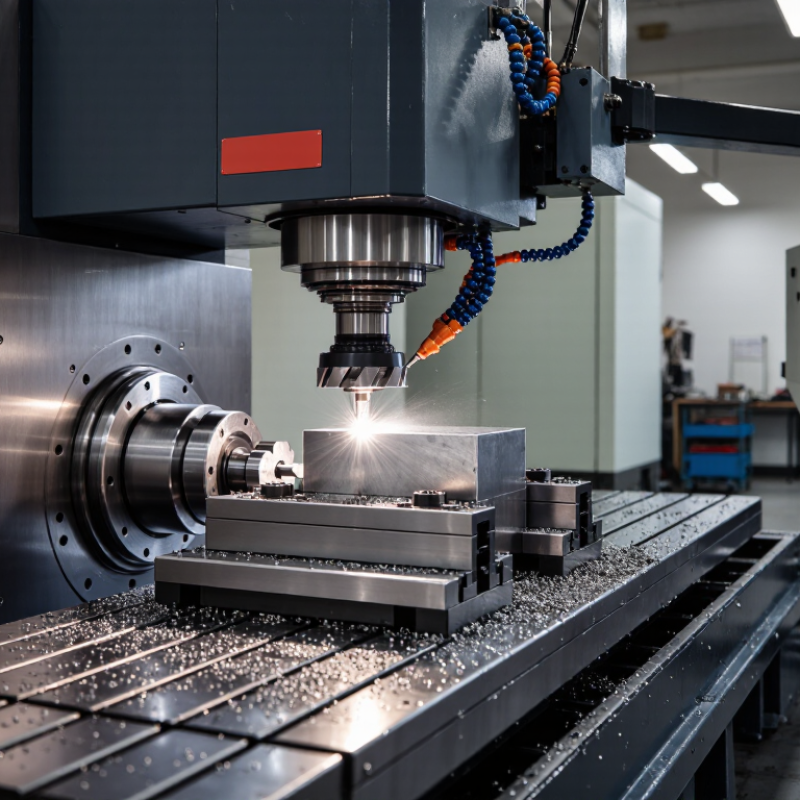
A metal cutting CNC machine is a computer-controlled tool that removes material from metal stock. CNC means computer numerical control. The machine follows coded instructions to move cutting tools along planned paths. Its purpose is to produce accurate parts with repeatable dimensions. Common operations include milling, turning, drilling, and threading. A machinist may cut steel, aluminum, brass, or other selected alloys. Each material needs suitable speed, feed rate, tooling, and coolant control. A small setup error can affect the entire batch.
In practical use, the operator loads a digital drawing, secures the workpiece, and checks tool offsets. Sensors, measuring tools, and test cuts help confirm the result. The machine can create brackets, shafts, housings, and detailed production components. It improves consistency, but it does not remove human responsibility. Poor fixturing, worn tools, or incorrect code may cause scrap or unsafe movement. I have found that the first test piece deserves more attention than rushed production. Automation is powerful, yet it can repeat a mistake perfectly.
Tips:
Clean the work area before setup. Verify the program and material dimensions. Use proper guarding and personal protective equipment. Check the first part with calibrated measuring tools. Record tool wear and unusual sounds. If the cut looks wrong, stop and investigate. Guessing is expensive.
What Is a Metal Cutting CNC Machine?
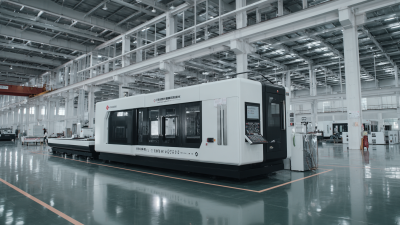
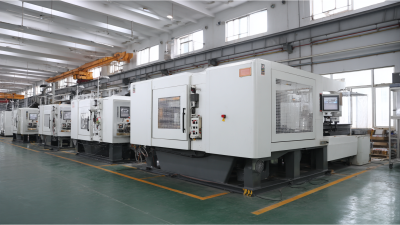
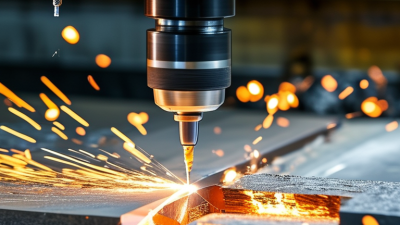
A metal cutting CNC machine removes material through programmed tool movement. Its core components determine accuracy, speed, and production stability. The machine bed and frame provide rigidity. They must resist vibration when a cutter meets steel or aluminum. Even a small structural deflection can leave visible chatter marks.
The spindle supplies rotational power to the cutting tool. Its bearings, motor, and cooling system affect surface finish and tool life. Linear guides support controlled movement along the machine axes. Ball screws then convert motor rotation into precise table or tool travel. Servo motors move these assemblies, while encoders report their actual positions. The controller reads the program and coordinates every motion. It also manages feed rate, spindle speed, alarms, and tool offsets. Coolant systems reduce heat and flush chips from the cutting zone. Workholding devices keep the metal fixed under cutting forces. Poor clamping remains a surprisingly common source of dimensional errors.
Grand View Research estimated the global CNC machine market at about 88.7 billion dollars in 2023, with continued growth through 2030. Deloitte’s 2024 smart manufacturing survey found that 86% of executives expect smart manufacturing to become a major competitiveness factor within five years. These figures explain why controllers increasingly connect with sensors and production software. Still, connectivity cannot repair a weak frame or a dull tool. I would not judge a machine by control features alone. Real performance depends on alignment, maintenance, cutting data, and operator judgment. Sometimes, the simplest component causes the largest deviation.
Core components and their primary control or operating roles
A metal cutting CNC machine combines a numerical controller, coordinated machine axes, a spindle, workholding, tooling, feedback devices, and auxiliary systems. The chart shows the representative number of dedicated control or operating channels associated with each core component. The X, Y, and Z axes provide three-dimensional linear movement, while the spindle performs the cutting rotation.
What Is a Metal Cutting CNC Machine?
How Metal Cutting CNC Machines Operate
A metal cutting CNC machine converts digital coordinates into controlled tool movement. The controller reads G-code, then directs motors along the X, Y, and Z axes. A spindle rotates the cutter while coolant reduces heat and carries chips away. Cutting speed, feed rate, and depth determine how much material disappears per pass. Small errors matter.
Before cutting, an operator fixes the workpiece against a rigid fixture. They measure tool length and set the work coordinate system. The machine then checks programmed limits, spindle speed, and coolant flow. During machining, encoders report axis positions to the controller. This feedback helps maintain repeatable movement, although it cannot correct poor fixturing or a worn tool. NIST research identifies thermal deformation as a major machine-tool accuracy concern. The International Energy Agency’s Energy Efficiency 2023 report states that industry uses about 37% of global final energy, making efficient machining important. The U.S. Department of Energy also notes that compressed-air systems can lose 20–30% of output through leaks.
Tips: Use a sharp, suitable tool for the alloy. Confirm zero points twice. Watch chip shape, not only surface finish. A blue chip may indicate excessive heat. Reduce feed carefully, because slower cutting is not always safer. Record tool life and inspection results after each batch. Skilled judgment still matters.
| Machine Type | Primary Cutting Method | Typical Number of Axes | Common Materials | Typical Workpiece or Sheet Thickness | Typical Cutting Accuracy | How the Machine Operates | Typical Applications |
|---|---|---|---|---|---|---|---|
| CNC Milling Machine | Rotating multi-point cutting tools remove material from a fixed or moving workpiece. | 3 to 5 axes | Aluminum, steel, stainless steel, brass, titanium, and engineering plastics | Determined by work envelope and tool access; commonly used for parts from a few millimeters to several hundred millimeters thick. | Approximately ±0.01 to ±0.05 mm, depending on machine condition, tooling, material, and setup. | A computer-controlled spindle rotates an end mill, face mill, drill, or other tool while programmed axes move the tool and workpiece along coordinated paths. | Engineered components, slots, pockets, holes, molds, brackets, and complex 3D surfaces. |
| CNC Turning Center | A rotating workpiece is cut by a stationary or controlled cutting tool. | 2 to 4 axes; live-tooling versions may include additional milling axes. | Steel, stainless steel, aluminum, brass, copper alloys, and titanium | Commonly processes round parts from approximately 5 to 500 mm in diameter, depending on the machine. | Approximately ±0.01 to ±0.05 mm for many standard operations. | The chuck or collet rotates the workpiece while turning tools move along the longitudinal and radial axes to remove material. | Shafts, pins, bushings, threaded parts, flanges, and rotational components. |
| CNC Fiber Laser Cutter | A focused laser beam melts or vaporizes material, assisted by a pressurized gas jet. | Typically 2 linear cutting axes, with optional rotary or multi-axis features. | Mild steel, stainless steel, aluminum, brass, and copper alloys | Approximately 0.5 to 25 mm for many industrial applications; maximum thickness depends strongly on laser power and material. | Approximately ±0.05 to ±0.15 mm in suitable production conditions. | CAD/CAM instructions guide the laser head along a programmed path while assist gas removes molten material from the kerf. | Sheet-metal profiles, electrical enclosures, machine panels, brackets, signs, and precision plate components. |
| CNC Plasma Cutter | A high-temperature plasma arc melts metal, while compressed gas ejects the molten material. | Usually 2 linear cutting axes, with optional bevel or pipe-cutting axes. | Mild steel, stainless steel, and aluminum | Approximately 1 to 50 mm for common production work; heavy-duty systems can process thicker plate. | Approximately ±0.2 to ±1.0 mm, depending on thickness, consumables, speed, and machine setup. | An electrically conductive workpiece completes an arc circuit. The plasma torch follows a programmed path and cuts through the sheet or plate. | Structural parts, brackets, agricultural equipment, frames, repair work, and medium-to-thick plate cutting. |
| CNC Waterjet Cutter | A high-pressure water stream, often mixed with abrasive particles, erodes the material. | 2 to 5 axes | Steel, stainless steel, aluminum, copper, titanium, stone, glass, and composites | Approximately 1 to 150 mm or more, depending on material, pump pressure, nozzle, and required edge quality. | Approximately ±0.05 to ±0.2 mm for precision systems; edge taper and cutting speed affect final accuracy. | A narrow high-pressure jet travels through a nozzle. Abrasive particles are added when cutting hard metals and other difficult materials. | Heat-sensitive parts, thick plate, mixed-material assemblies, decorative profiles, and components requiring minimal heat-affected zones. |
| CNC Oxy-Fuel Cutter | A fuel-gas flame preheats steel, and a stream of oxygen oxidizes and removes the heated material. | Usually 2 linear cutting axes, with optional bevel or pipe-cutting axes. | Low-carbon steel and other ferrous materials that support oxygen cutting | Approximately 6 to 300 mm or more, depending on torch design and equipment capacity. | Approximately ±0.5 to ±2.0 mm for typical plate-cutting operations. | The torch preheats the plate and then releases cutting oxygen. The CNC controller moves the torch along the programmed profile. | Heavy structural plate, shipbuilding components, bridges, machinery bases, and large steel fabrications. |
| CNC EDM Machine | Controlled electrical discharges erode conductive material without direct cutting-tool contact. | Typically 3 to 5 axes | Hardened tool steel, carbide, titanium, nickel alloys, and other electrically conductive materials | Limited by the machine's work tank, electrode geometry, and dielectric circulation system. | Approximately ±0.005 to ±0.03 mm for many precision operations. | Electrical sparks form between an electrode and the workpiece in a dielectric fluid or through a moving wire, gradually removing microscopic particles. | Dies, molds, fine slots, sharp internal corners, miniature features, and hardened-part machining. |
| CNC Band Saw | A continuously moving toothed blade mechanically removes material through sawing. | 1 to 3 controlled axes | Carbon steel, stainless steel, aluminum, copper alloys, and structural sections | Commonly cuts bars, tubes, and profiles from approximately 10 to 600 mm across, depending on saw capacity. | Approximately ±0.2 to ±1.0 mm for standard cut-to-length operations. | The CNC controller regulates blade movement, feed rate, workholding, and automatic material indexing for repeated cuts. | Bar stock preparation, tube cutting, structural fabrication, and high-volume blank production. |
A metal cutting CNC machine uses computer-controlled movement to remove or separate metal with consistent accuracy. The cutting method depends on thickness, alloy, edge quality, and production volume. A thin aluminum plate may need different settings than a thick steel block.
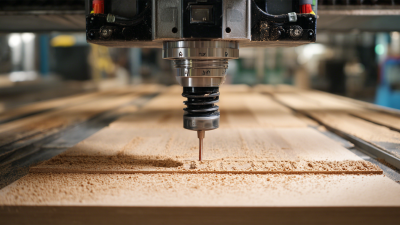
CNC milling uses rotating cutters to shape steel, aluminum, brass, copper, and many engineering alloys. It can produce slots, pockets, holes, and contoured surfaces.
Turning is suitable for round parts, such as shafts and tubes. It commonly cuts steel, stainless steel, aluminum, brass, and titanium. Tool wear matters. A dull insert can leave visible lines around a machined edge.
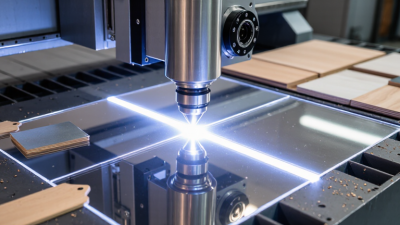
Laser cutting works well on thin to medium sheets, especially mild steel, stainless steel, and aluminum. It creates narrow cuts and usually reduces secondary finishing.
Plasma cutting handles thicker mild steel and stainless steel efficiently, but its edge may need cleaning.
Waterjet cutting suits heat-sensitive metals, including titanium, aluminum, copper, and hardened steel. It leaves no heat-affected zone, though cutting can be slower.
Oxy-fuel cutting is mainly used for thick carbon steel. It is less suitable for stainless steel and aluminum because their chemical behavior resists the process. Material reflectivity, hardness, and thermal conductivity can change the result. In practice, settings are rarely perfect on the first attempt. Operators may adjust feed rate, cutting speed, gas pressure, or tool geometry after inspecting the edge. A test cut often reveals more than a specification sheet.
Applications, Benefits, and Operational Limitations
A metal cutting CNC machine removes material through programmed movements and controlled cutting tools. It commonly processes steel, aluminum, copper, and other industrial metals. In a workshop, operators use it for brackets, gears, panels, shafts, and custom machine parts. A digital drawing guides the toolpath. The machine then repeats each movement with impressive consistency.
Its main benefit is predictable production. CNC cutting can reduce manual measuring errors and maintain tight dimensions across many parts. It also supports complex profiles that would be difficult to produce by hand. In busy facilities, automated cycles can improve output and reduce physical strain. A clean fixture, sharp tool, and stable workpiece still matter greatly. Small setup mistakes create expensive scrap.
The limitations deserve equal attention. Cutting speed depends on material hardness, thickness, tool condition, and machine power. Heat may distort thin sections or damage sensitive surfaces. Programming also requires trained judgment, not just software access. Poor feeds, incorrect clamping, or neglected maintenance can cause vibration and rough edges. The equipment may be costly for small workshops. It also needs electricity, floor space, ventilation, and regular inspection. No setup is perfect. Even experienced teams must review tolerances, tooling, and safety procedures before production. Some applications remain better suited to manual methods or alternative forming processes.