


Request a free quote Phone Icon
die cutting materials

Blog

Who Are the Top Steel Rebar Manufacturers Worldwide?

Choosing the world’s leading rebar producers is not as simple as comparing company names. Rebar is a long steel product used in concrete foundations, bridges, roads, and high-rise buildings. Buyers also weigh consistency, delivery reliability, available grades, and regional supply. The best-known producer is not automatically the best fit for every project.

The World Steel Association’s World Steel in Figures 2024 reports that global crude steel production reached about 1.89 billion tonnes in 2023. That figure provides useful industry context, but it is not a rebar production ranking. Many producers do not publish comparable rebar-only output, and company disclosures differ by year and market. The comparison therefore needs care. Edwin Basson, Director General of worldsteel, has emphasized the importance of reducing emissions across steelmaking while maintaining supply. That challenge matters for rebar manufacturers, too: buyers increasingly look beyond mill capacity to production practices and traceable product information.

This guide examines major Steel Rebar Manufacturer names across key steel-producing regions, using scale, product range, market reach, and disclosed information as practical indicators. A ranking can help narrow a supplier search, but it cannot replace checking local specifications, certificates, lead times, and project requirements. Details matter. Public data is imperfect, and some comparisons remain uncertain; that limitation deserves honest attention.
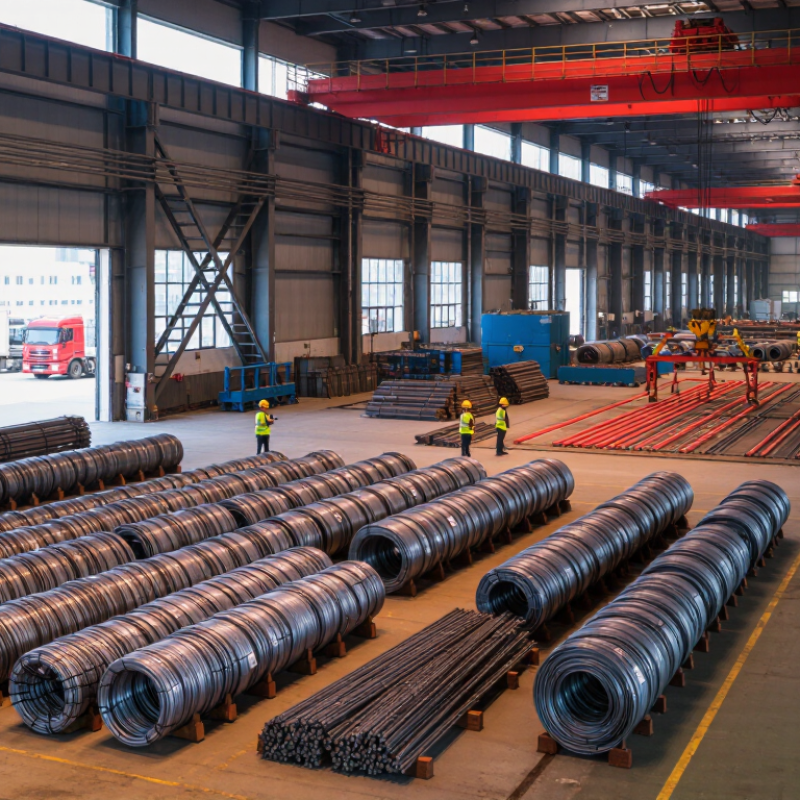
Who Are the Top Steel Rebar Manufacturers Worldwide?

What Steel Rebar Is and How It Supports Construction

Steel rebar is a ribbed steel bar embedded in concrete to help resist tension. Concrete handles compression well, but performs poorly under pulling forces; rebar helps bridge that weakness. Its raised ribs grip the surrounding concrete, transferring loads along the bar.

Crews lay bars in measured grids, tie intersections, and preserve concrete cover before pouring. Small errors matter.

This pairing supports slabs, columns, beams, and foundations under loads from traffic, structures, and wind. Bar diameter, spacing, bends, lap lengths, and steel grade must match the engineer’s drawings; more steel is not automatically safer. Poor cover or crowded bars can hinder concrete flow and raise corrosion risks.

Still, rebar is not magic. UNEP and GlobalABC’s 2023 Global Status Report puts buildings and construction at 34% of global energy demand in 2022. It attributes 37% of energy- and process-related CO₂ emissions to the sector. These figures are not rebar-specific, but they make efficient detailing and reducing cut-off waste worth attention.

How Global Rebar Manufacturers Are Compared

Global Steel Rebar Manufacturers are best compared through measurable performance, not reputation alone. Check whether the producer can supply the required grades, bar diameters, and lengths consistently. Review test documents for tensile strength, elongation, bend performance, and heat or batch traceability. Details matter. A clear link between each bundle and its inspection records makes incoming checks easier.

Compare quality systems alongside practical delivery factors. Ask about production capacity, typical lead times, export packaging, and how the manufacturer handles nonconforming material. Freight distance can change the landed cost substantially, while a low quoted price may exclude testing or special handling. Requirements also vary by destination, so confirm that product documentation matches the project’s specifications. A scorecard helps, but it has its limits: one factory visit cannot guarantee every shipment will be consistent. I would treat recent batch records as stronger evidence than polished claims.

Tips: Request sample inspection documents before placing an order. Compare the same grade, size, quantity, and delivery terms across suppliers. Check bundle labels on arrival, and retain records for later verification.

Leading Steel Rebar Manufacturers Around the World

Leading steel rebar manufacturers operate across East Asia, South Asia, Europe, the Middle East, and the Americas. Some mills produce steel from raw materials, while others re-roll purchased billets into finished bars. Their scale and capabilities vary. A large plant may supply major infrastructure projects, while a regional mill can serve nearby contractors with shorter delivery times.

Production quality depends on more than output volume. Manufacturers control chemical composition, rolling temperatures, rib patterns, and bar dimensions. Testing can include tensile strength, bend performance, and checks against the project’s required standard. Traceable test certificates help buyers verify each batch. Details matter.

For buyers, the best supplier is not automatically the biggest. Compare certified grades, available diameters, production capacity, and delivery schedules. Ask how the mill handles changing orders and reports test results. Rebar bundles may look similar on a truck, yet their properties and paperwork can differ. Shipping distance, port access, and local requirements also affect cost and timing. Even careful comparisons have limits: quoted lead times can shift when demand rises or transport is delayed. A clear specification helps, but it cannot remove every uncertainty.

Production Methods, Product Grades, and Standards

Steel rebar begins as billets made through two main routes: blast-furnace/basic-oxygen-furnace production or electric-arc furnaces using scrap and direct-reduced iron. The World Steel Association reported 1,882.6 million tonnes of crude steel production worldwide in 2024. That figure covers all crude steel, not rebar alone. It still shows the scale of the material supply behind reinforcement markets. After casting, billets are reheated and rolled into ribbed bars. Some mills use controlled cooling to improve strength while retaining ductility. The ribs matter: they help concrete grip the bar.

Grades and standards determine whether a bar suits a project. ASTM A615 covers common carbon-steel reinforcement grades, while ASTM A706 places tighter controls on chemistry and tensile properties for applications requiring improved weldability. ISO 6935-2 specifies requirements for ribbed reinforcing bars; regional specifications may add different grade names and testing rules. Buyers should compare yield strength, tensile strength, elongation, bend performance, and chemical composition—not rely on grade labels alone. A practical detail: mill test certificates should match the delivered heat and bar size. Standards can look comparable on paper, yet acceptance rules differ. This is easy to miss. Production route alone does not guarantee performance, and I would verify the project’s governing specification before ordering.

Who Are the Top Steel Rebar Manufacturers Worldwide? - Production Methods, Product Grades, and Standards
Dimension Method, market, or standard Typical rebar grades or products Key production or specification facts
Production route Integrated blast furnace–basic oxygen furnace (BF–BOF) Billets rolled into plain or ribbed reinforcing bars Uses iron ore and metallurgical coke to make hot metal, which is refined in a basic oxygen furnace. The route can produce a broad range of steel compositions and products.
Production route Electric arc furnace (EAF) Rebar made from recycled steel scrap, direct-reduced iron, or a mix Melts metallic feed using electric arcs. Product chemistry and properties depend on feedstock, refining practice, and process controls; the route commonly enables high scrap use.
Strengthening method Thermo-mechanical treatment (TMT), often called quenching and self-tempering Ribbed bars with a harder outer layer and a more ductile core Hot-rolled bars are rapidly water-cooled at the surface and then self-tempered by heat from the core. Final properties depend on controlled processing and testing.
Strengthening method Microalloying and controlled rolling Rebar designed for specified strength and ductility Small additions of elements such as vanadium or niobium, together with controlled processing, can refine grain structure and improve strength. The permitted chemistry depends on the applicable product standard.
United States ASTM A615/A615M; ASTM A706/A706M A615 Grades 40, 60, 80, and 100; A706 Grade 60 is a common weldable, low-alloy specification A615 grade numbers correspond to minimum yield strengths in ksi (for example, Grade 60 is 60 ksi, approximately 420 MPa). A706 includes requirements for controlled chemistry and enhanced weldability.
Europe and UK EN 10080; national product standards, including BS 4449 in the UK B500B and B500C are commonly specified under BS 4449 “500” denotes a characteristic yield strength of 500 MPa. The letters indicate ductility classes; requirements and designations depend on the national standard in use.
Japan JIS G 3112 Examples include SD295A, SD345, SD390, and SD490 The grade number identifies the specified strength class. The standard also sets requirements such as dimensions, mechanical properties, and testing.
India IS 1786 Examples include Fe 415, Fe 500, Fe 500D, Fe 550, and Fe 600 The grade number indicates the minimum yield strength in MPa. The “D” suffix identifies a grade with enhanced ductility requirements compared with the corresponding non-D grade.
Quality checks Mechanical, dimensional, and chemical testing Yield strength, tensile strength, elongation, bend or rebend performance, mass, and rib geometry Acceptance criteria are defined by the governing standard and contract. Mill test certificates commonly record grade, heat or batch identification, and test results.
Note: Grade designations and test requirements are not directly interchangeable between standards. Confirm the project’s specified standard, edition, and jurisdiction before procurement or design.

Regional Strengths and Trends in the Rebar Industry

Rebar production follows construction demand, raw-material access, and transport costs. East Asia has large mills and dense supply networks, supporting high-volume infrastructure and building projects. India’s market is expanding alongside urban growth and public works, while local producers adapt output to varied project requirements. Scale matters. Yet nearby supply can be more useful than the largest mill when delivery schedules are tight.

In Europe, producers face strong pressure to reduce emissions and improve material efficiency. Some mills use electric-arc furnaces, which can process recycled steel when suitable scrap is available. North American demand is shaped by housing, transport upgrades, and regional sourcing needs. Product specifications differ between projects, so buyers must check grade, ductility, and testing records rather than rely on a generic label. Details count.

The Middle East invests in transport links and major developments, often requiring consistent supply across large sites. In parts of Africa, infrastructure demand is rising, but logistics and access to dependable inputs can constrain production. Across regions, mills are pursuing lower-carbon processes, digital quality control, and more flexible product ranges. Progress is uneven. A mill’s reported capacity does not always reflect what it can deliver locally, especially when ports, power supply, or rebar processing equipment become bottlenecks.