How to Choose a Laser Cutting Machine in 2026?
In 2026, choosing a laser cutting machine is less about buying the highest wattage and more about matching the system to real work. A workshop cutting 3 mm acrylic has different needs from a fabrication team processing thick carbon steel every shift. Start with materials, maximum thickness, sheet size, and expected production volume. Be specific. A sample cut can reveal edge quality, heat marks, burrs, and speed more clearly than a brochure. Ask the supplier to test your own material, not only a polished showroom sample.
Then compare laser type, power, bed dimensions, loading options, software, and extraction requirements. Fiber systems often suit metals, while CO2 machines commonly handle wood, acrylic, and other non-metal materials. The right choice still depends on the exact job. Check what routine maintenance involves, how quickly replacement parts are available, and whether local technicians can support the machine. A low purchase price may not mean a low operating cost. No checklist removes uncertainty. Even a detailed specification sheet cannot predict every production issue, and that is worth remembering. Before committing, calculate the full cost, including installation, training, energy use, consumables, and downtime. This guide explains how to weigh those factors, compare practical options, and choose a laser cutting machine that fits your workload without paying for capacity you may never use.
Laser Cutting Machine Types and How They Work
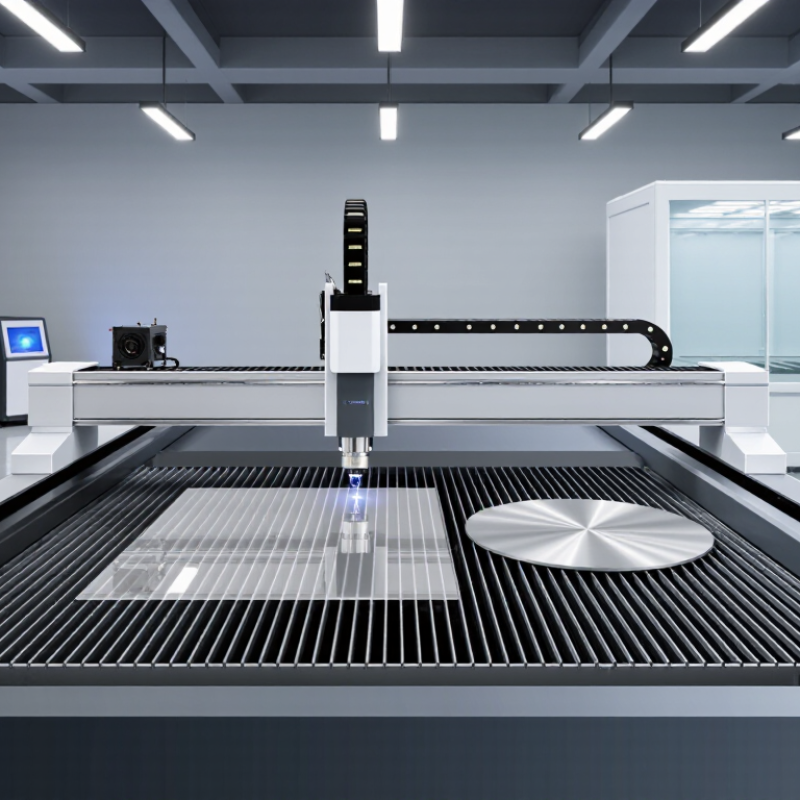
Laser cutting machines are classified mainly by their laser source. CO2 machines use an electrically excited gas to create an infrared beam, directed through mirrors to the cutting head. They handle wood, acrylic, and some thicker non-reflective materials well. Fiber machines generate light with diode modules and guide it through an optical fiber. Their concentrated beam cuts sheet metals quickly, often leaving a narrow kerf and a small heat-affected zone. Watch the material, though: highly reflective metals need suitable machine settings and safeguards.
Solid-state systems, including pulsed lasers, deliver short bursts of energy for detailed cuts or fine features. They can suit precision work, but may cost more to operate than a straightforward sheet-metal setup. On a workshop floor, the difference is tangible: a fiber machine may cut a thin steel panel quickly, while a CO2 machine is more at home shaping acrylic. Not interchangeable.
The market is growing, but that alone does not identify the right machine. Grand View Research estimated the global laser cutting machine market at USD 5.8 billion in 2023 and forecast a 7.1% compound annual growth rate from 2024 to 2030. Market estimates depend on how analysts define the category. For a practical comparison, check the material, thickness, edge quality, assist-gas use, and daily cutting time. A glossy sample cut can mislead. Test production parts, including awkward corners and small holes, before choosing a source.
How to Choose a Laser Cutting Machine in 2026?
Laser Cutting Machine Types and How They Work
CO₂ machines typically emit at 10.6 μm, while fiber and Nd:YAG systems operate near 1.06–1.07 μm. CO₂ lasers generate light in a gas mixture; fiber lasers amplify light in an optical fiber; and Nd:YAG lasers use a solid crystal. Wavelength affects how materials absorb laser energy, but machine choice also depends on material, thickness, power, assist gas, and production needs.
Wavelengths shown are representative values. The vertical axis uses a logarithmic scale.
Match the Laser Source to Your Materials and Cutting Tasks
Choosing a laser source starts with the material, not the machine’s headline power.
Fiber lasers are commonly suited to cutting sheet metal, while CO2 systems can handle many nonmetallic materials, including acrylic and wood. Diode systems may fit lighter-duty work, but their cutting speed and material range can be limited.
Thickness matters.
Check the source’s capabilities against the materials you actually process, including coatings and reflective surfaces.
Then match the machine to the job.
A shop cutting thin steel all day has different needs from one producing detailed acrylic signs or occasional custom parts. Compare cut quality, edge finish, operating speed, and the thickness you need to process regularly.
Test real samples.
Ask for cuts on your own material, and inspect the edge for burrs, discoloration, or excess melting. A clean result on a showroom sample may not reflect your production conditions.
Consider the full workflow, too.
Fume extraction, bed size, maintenance access, and operator training can affect daily output as much as the laser source.
A common buying mistake is focusing on maximum wattage while overlooking the most frequent job.
That number can be useful, but it does not tell the whole story. List your usual materials, thicknesses, and batch sizes before comparing machines. If your work varies widely, a compromise may be necessary—and worth reviewing against real production needs.
Compare Power, Work Area, Precision, and Production Speed
When comparing laser power, match the source to your material and thickness—not the largest number on a brochure. Higher wattage can cut thicker sheet, but it may not improve thin-sheet quality or lower total job time. Grand View Research estimated the global laser cutting machine market at about USD 5.5 billion in 2023, with a projected 7.5% annual growth rate through 2030. That expansion reflects demand, not a guarantee that a high-power machine suits every shop.
Work area should fit the largest part you actually run, plus room for loading and sheet movement. A 1,500 × 3,000 mm bed may handle standard sheet, yet long parts or frequent nesting can make a larger table worthwhile. Precision needs equal scrutiny. Ask for repeatability and positioning accuracy separately, and request a sample cut in your own material. ISO 9013 provides a framework for classifying thermal-cut edge quality; the finished edge still depends on setup and material.
Production speed is more than the machine’s peak cutting rate. Piercing, acceleration, toolpath changes, unloading, and operator handling all affect parts per shift. Watch a timed job with realistic geometry. Small holes and tight corners slow down. A little awkward, but important. Compare cycle times for your common parts, then check whether the quoted figure includes loading and finishing. Leave some capacity for future work, though planning too far ahead can inflate the purchase.
Assess Safety Features, Software, Maintenance, and Operating Costs
When choosing a laser cutting machine in 2026, look beyond its advertised cutting speed. Check for an enclosed work area, door interlocks, an accessible emergency stop, and clear instructions for handling smoke and heat. Ask how the exhaust system is sized for your materials and workspace. A safety feature is only useful when operators understand it and use it consistently. Small details matter.
Test the software with files your team actually uses. Can it import them reliably, flag open paths, and show a realistic preview before cutting? Try a small sample job and watch how easily an operator can adjust power, speed, and focus. Clear controls reduce avoidable mistakes, though no interface can replace training. I would not assume a polished demonstration reflects everyday use.
Estimate operating costs over a full year, not just the purchase price. Include electricity, extraction filters, lenses, replacement parts, scheduled service, and staff time. Ask what routine maintenance looks like, how often components need cleaning, and which tasks require a technician. Keep a simple maintenance log; it can reveal recurring issues before they interrupt production. Downtime is easy to underestimate. The right machine depends on your materials, workload, and available support, and those assumptions deserve a careful second look.
Verify Machine Support, Compliance, and Supplier Reliability
When choosing a laser cutting machine in 2026, treat support as part of the purchase, not an optional extra. Ask who handles installation, operator training, and fault diagnosis. Confirm support hours, response-time targets, and which replacement parts are stocked nearby. A five-minute call can reveal a lot. Speak with recent customers about how service worked after installation, not only during the sales process.
Check that the exact machine configuration meets safety and electrical requirements at your site. Request current conformity documents, electrical diagrams, risk assessments, and guidance on fume extraction and guarding. Requirements vary by location and application, so ask a qualified local professional to review the paperwork. Request a sample cut using your material, then inspect its edges, dimensions, and consistency. A polished demonstration is useful, but it is not proof of reliable production. I would leave room for doubt.
Tips: Keep a written checklist of promised training, service response times, spare parts, and warranty coverage. Ask for each item in writing. Details matter.