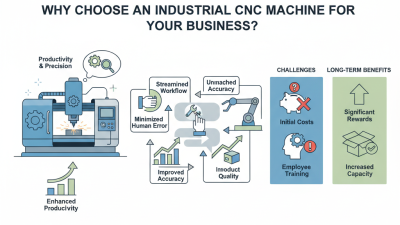
How to Choose the Best Industrial CNC Machine in 2026?
Choosing the best industrial cnc machine in 2026 starts with the work, not the brochure. A shop cutting aluminum brackets has different needs from one machining stainless steel housings. Part size, material, tolerances, and daily volume shape the right choice. A bright touchscreen may be appealing, but it cannot compensate for weak rigidity or poor service access. Details matter.
This guide examines machine types, spindle power, travel, tool capacity, controls, and automation through practical buying questions. It also considers floor space, operator skills, maintenance, and total ownership costs. These factors often determine whether a machine earns its place in the shop. Buyers should verify specifications against real parts and request a cutting demonstration when possible. Bring a sample drawing. Ask about achievable tolerances, cycle time, tooling, chip handling, and service response. A quoted accuracy figure alone may not describe performance across a full shift. Small details, such as door clearance or coolant access, can affect everyday operation.
There is no universal winner. The right machine balances capability with the shop’s current workload and realistic plans for growth. A checklist can miss things. Supplier claims still need checking against your own parts, processes, and operators. This overview offers a clear framework for comparing options, while leaving one useful question open: are you buying capacity you will use, or capacity that merely looks impressive?
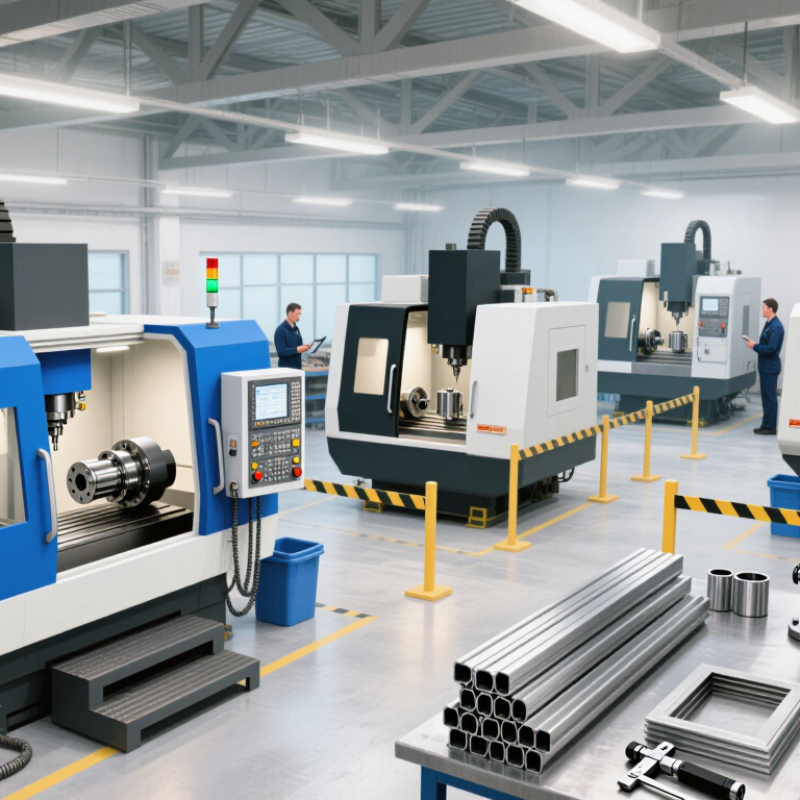
Define the Production Needs and Materials the CNC Machine Must Handle
Before comparing machine specifications, define what the shop needs to make each day. List the part dimensions, required tolerances, batch sizes, and expected production hours. A machine cutting a few aluminum brackets has different demands from one machining steel housings across long shifts. Write down the largest workpiece, too. It is easy to overlook.
Material choice affects the whole setup. Aluminum cuts quickly but can leave long, sticky chips. Stainless steel often needs more cutting force and careful heat control. Wood and plastics bring their own dust, melting, and surface-finish concerns. Ask whether the machine can handle the actual stock size and whether its spindle, tooling, coolant, and chip management suit that material. A specification sheet alone cannot answer every shop-floor question.
Think about how parts will be held and checked. Thin plates may flex under clamping, while irregular castings can need custom fixtures. If a job requires close tolerances, consider machine rigidity, thermal stability, probing, and how often operators can measure parts during a run. Be specific about the finish customers expect. A shiny sample is not the same as repeatable production. That sounds obvious. It is not always. Review a typical job with an experienced operator, and include awkward setups—not just the easiest part—when estimating capacity. The first plan may be imperfect; refine it using real cycle times and scrap data.
Compare CNC Machine Types by Process, Capacity, and Application
How to Choose the Best Industrial CNC Machine in 2026?
The right CNC machine depends on how a part is made, not just its price or advertised speed. A milling center removes material with rotating tools and suits housings, brackets, and complex surfaces. A CNC lathe rotates the workpiece, making it useful for shafts, bushings, and other cylindrical parts. Sheet-metal shops may compare laser, plasma, or waterjet cutting; each process handles different materials and edge requirements. Small details matter.
Compare working capacity with the parts you actually run. Check table size, axis travel, workpiece weight, spindle power, and tool capacity. A machine that fits a large part may still struggle with its weight or required cutting forces. Ask suppliers for test cuts using your material, tool, and target tolerance. Published figures alone can miss the real bottleneck.
Match the process to production needs. A job shop making varied aluminum components may value quick setup and flexible tooling. A plant producing long steel shafts may prioritize turning capacity and stable cycle times. For sheet parts, consider thickness, sheet size, edge quality, and how often material changes. It is tempting to buy extra capacity for future work; that can tie up floor space and budget. I would revisit that assumption against actual order history, though forecasts are rarely perfect.
Evaluate Core Specifications, Controls, Automation, and Safety
Choosing an industrial CNC machine starts with the part, not the brochure.
Match work envelope, spindle power, torque, tool capacity, and axis travel to your largest regular jobs. Check repeatability under sustained cutting, not only unloaded positioning accuracy. A machine that fits today’s flagship part may leave little room for tomorrow’s fixture. That matters.
Controls should make setup, program review, and recovery clear to operators. Ask to test a representative job, including a tool change and a restart after interruption. Automation may improve throughput, but it adds integration and maintenance demands.
The International Federation of Robotics’ World Robotics 2024 report counted 4.28 million industrial robots operating worldwide in 2023, a 10% year-over-year increase. This signals growing automation, not proof that every shop needs a robot. Be skeptical of that leap.
Tips: Bring one real part drawing and its cutting tools to supplier demonstrations. Check guarding, interlocks, emergency stops, and safe access during setup. Confirm training and service response in writing. A polished demo can hide awkward daily routines; I would revisit that judgment after operators try the interface.
Assess Supplier Support, Compliance, and Total Cost of Ownership
When choosing an industrial CNC machine in 2026, assess the supplier’s support before comparing purchase prices. Ask who handles commissioning, operator training, and software updates, and get response times in writing. Check whether common spare parts are stocked locally. A machine that sits idle while a specialist travels can disrupt a production schedule. The 2024 Deloitte and MAPI Smart Manufacturing Survey found that 92% of manufacturers expect smart manufacturing to drive competitiveness within three years. Connected equipment can help, but only when support and staff training keep pace.
Compliance needs evidence, not promises. Request risk assessments, electrical schematics, guarding details, and operating manuals. Confirm which standards and certifications apply to your location and intended use. Then calculate total cost of ownership: installation, tooling, energy, maintenance, training, financing, and likely downtime. A low quote may omit fixtures or integration work. One uncomfortable truth: precise forecasts are difficult, so record your assumptions and test a slower-production scenario.
Tips: Ask for a written service-level agreement, a sample maintenance schedule, and a full list of excluded costs. Compare costs over the same operating period. Check the figures with your production and maintenance teams before signing.
Match Machine Capabilities to 2026 Production Goals and Verify the Choice
Choosing an industrial CNC machine starts with the work it must actually perform. List the materials, part sizes, tolerances, and weekly volumes expected in 2026. Then compare those needs with the machine’s work envelope, spindle torque, axis travel, tool capacity, and duty rating. Peak speed sounds useful, but steady performance during a long production run may matter more. Small details count.
Match the machine to realistic production goals, not an ideal forecast. If jobs change often, measure setup time and tool-change needs. For repeat batches, check whether the machine can hold required dimensions across a full run. A spreadsheet can make this look cleaner than it is. Ask the supplier to cut a representative part using your material, then inspect the finished dimensions and record cycle time. Measure twice. Include operator access, chip removal, coolant handling, and maintenance clearance in the trial. These details can affect usable output, even when they do not appear in a headline specification. Review installation requirements, training, and service response before approving the purchase. One assumption may be wrong. Revisit the production plan with operators and engineers, especially if demand or product mix is uncertain.
How to Choose the Best Industrial CNC Machine in 2026?
Match machine capabilities to production goals, then verify the choice against your part requirements.
Indicative tolerance ranges (μm): milling 50–130, turning 25–130, and grinding 5–25. Lower values indicate tighter tolerances. These are general process ranges, not machine guarantees; material, part geometry, tooling, setup, and thermal conditions affect results. Before buying, confirm capability with a representative test part and documented acceptance criteria.